Uzbekistan: Cities of the Dead

30 seconds after having my passport stamped with the official Uzbekistan seal I was offered my first glass of fermented camel’s milk. “You have glass”? A jolly looking official asked me. “Umm… yeah what for”? The next thing I knew my sporty, pop-top cycling water bottle was filled to the brim with a thick, white, sour-smelling fluid. “Drink”!!! The official lifted his half empty bottle in a cheers motion and not wanting to be rude I took a rather large sip. “Yup… that’s camel’s milk” was all I could say before gagging a bit as the warm fluid went down my throat. Welcome to Uzbekistan!!

One of the many lonely desert camps

One of the many lonely desert camps

The Uzbekistan border was marked by a tall fence and a small rectangular building in the middle of nowhere. Leaving Beynue, the last city in Kazakhstan, I was told that somewhere down a long rough, dusty dirt road, lay the entrance to the mystical country of Uzbekistan. With good spirits I pedaled on hoping that traveling conditions would improve upon entered the new country. (They did, but I wouldn’t notice for a few thousand kilometers). After drinking camels milk and having my bags inspected for drugs I pedaling into Uzbekistan. I was shocked that there was no town, city or village insight. At every border I have encountered there always seems to be a few shops selling over priced goods to travelers wanting to get rid of their extra currency, in Uzbekistan there were only auto repair shops.  After asking a few locals I was told that the nearest ATM or Bank was over 300 km away.
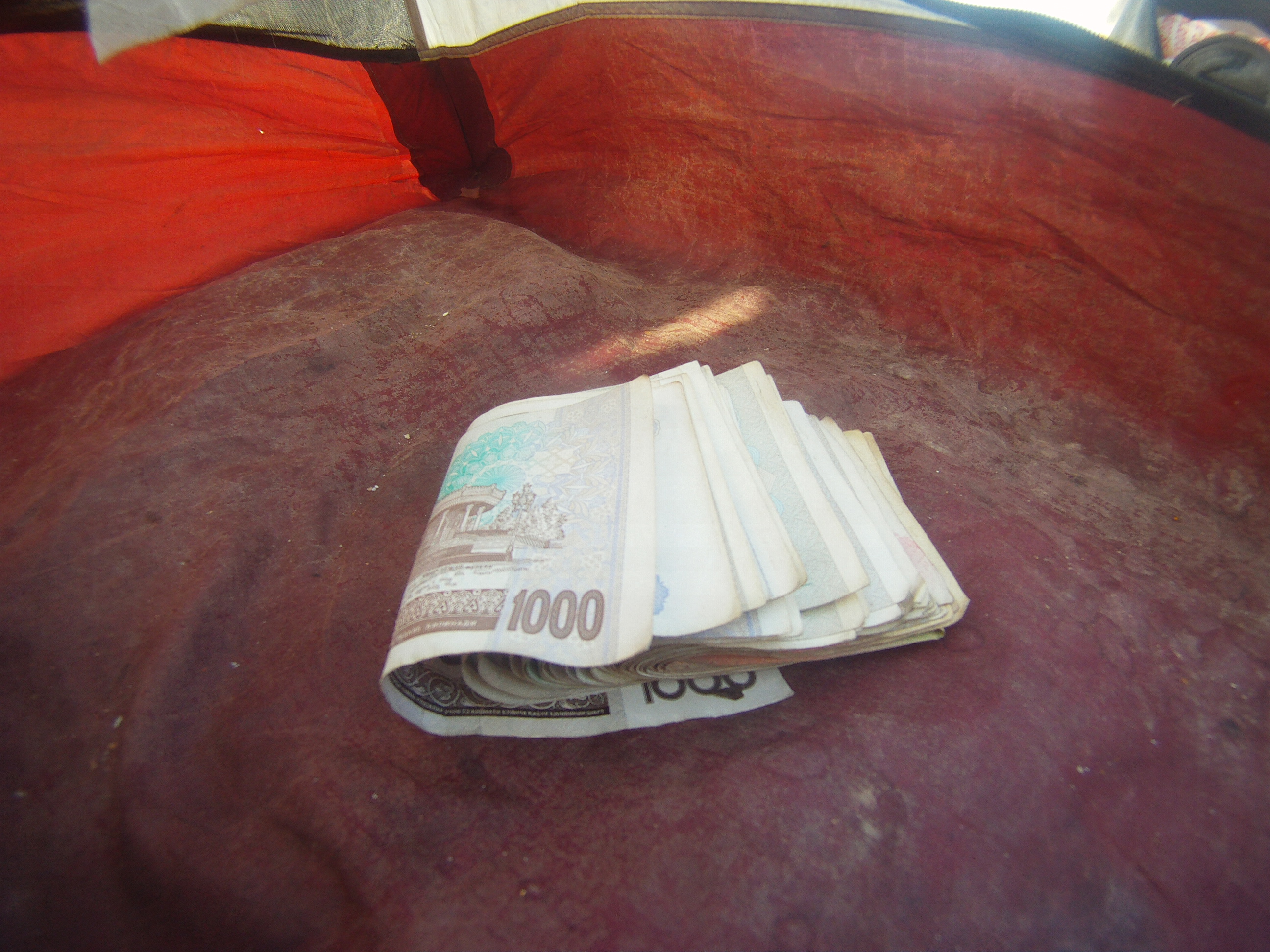
Close to $10 in Uzbekistani SOM

Close to $10 in Uzbekistani SOM

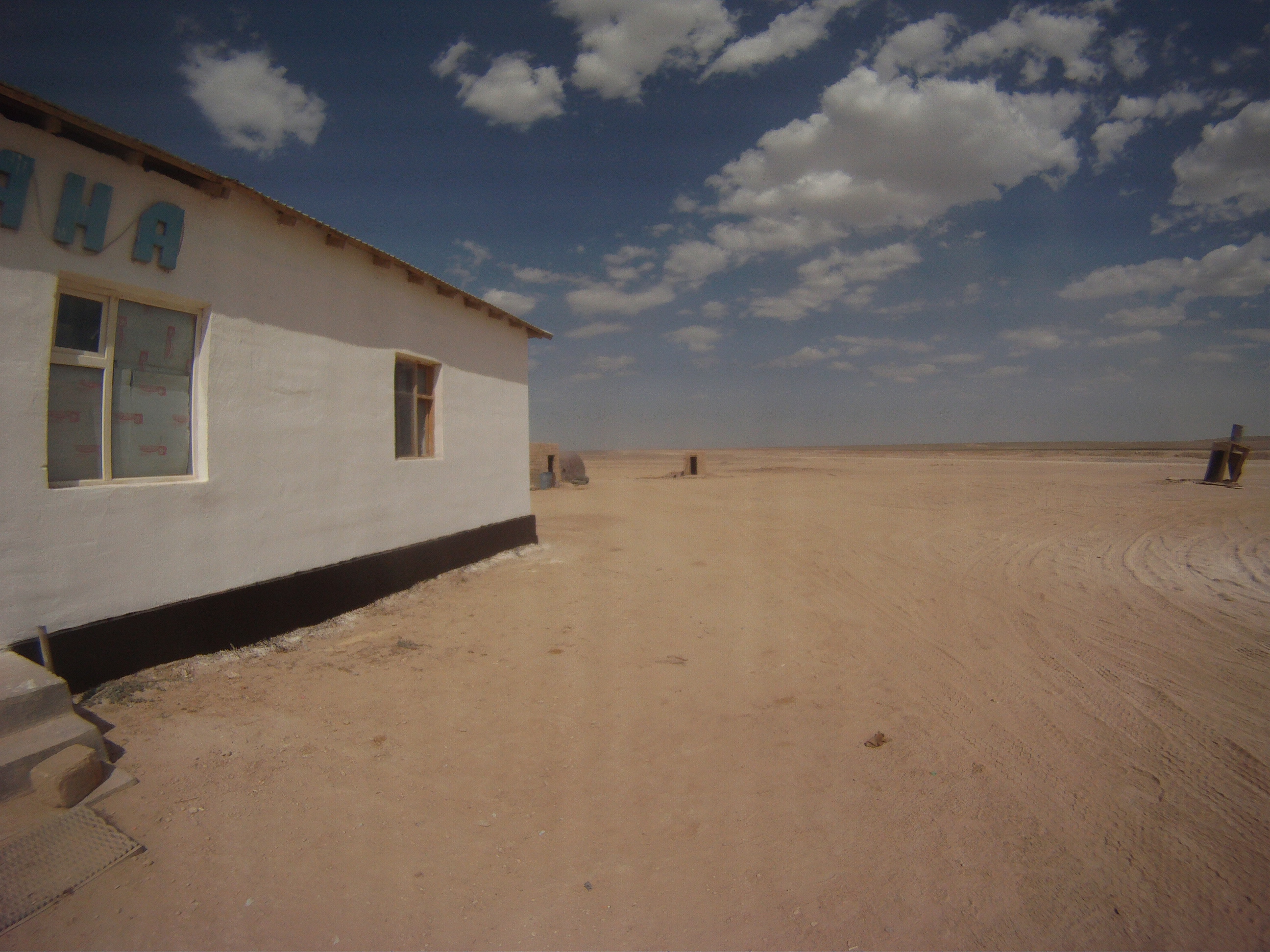
20 km later I passed a small “Chaixana”, Russian for tea house which serves food and sells a variety of items. I looked into my money pouch and feeling a bit like a secret agent, I asked accordingly: Do you accept “Euros”?..”No”!!…. “Manat”?(Azerbaijan currency) ..No…”Tenge” ?(Kazakhstani currency)…No…”Dollars”?…OK!! “Adeen dollar skolka som”? I asked. The lady grabbed her calculator and typed 3,000. I had no idea if this was getting a good rate, so I asked how much a bottle of water cost. 1,500 SOM, was the reply. A minute later I was handed a wad of cash, 60, 1,000 SOM bills that I stuffed into my pocket. It was over 100 miles to the next “Chaixana” so I filled up and pedaled on. In Uzbekistan I would get used to having pockets filled with bills.

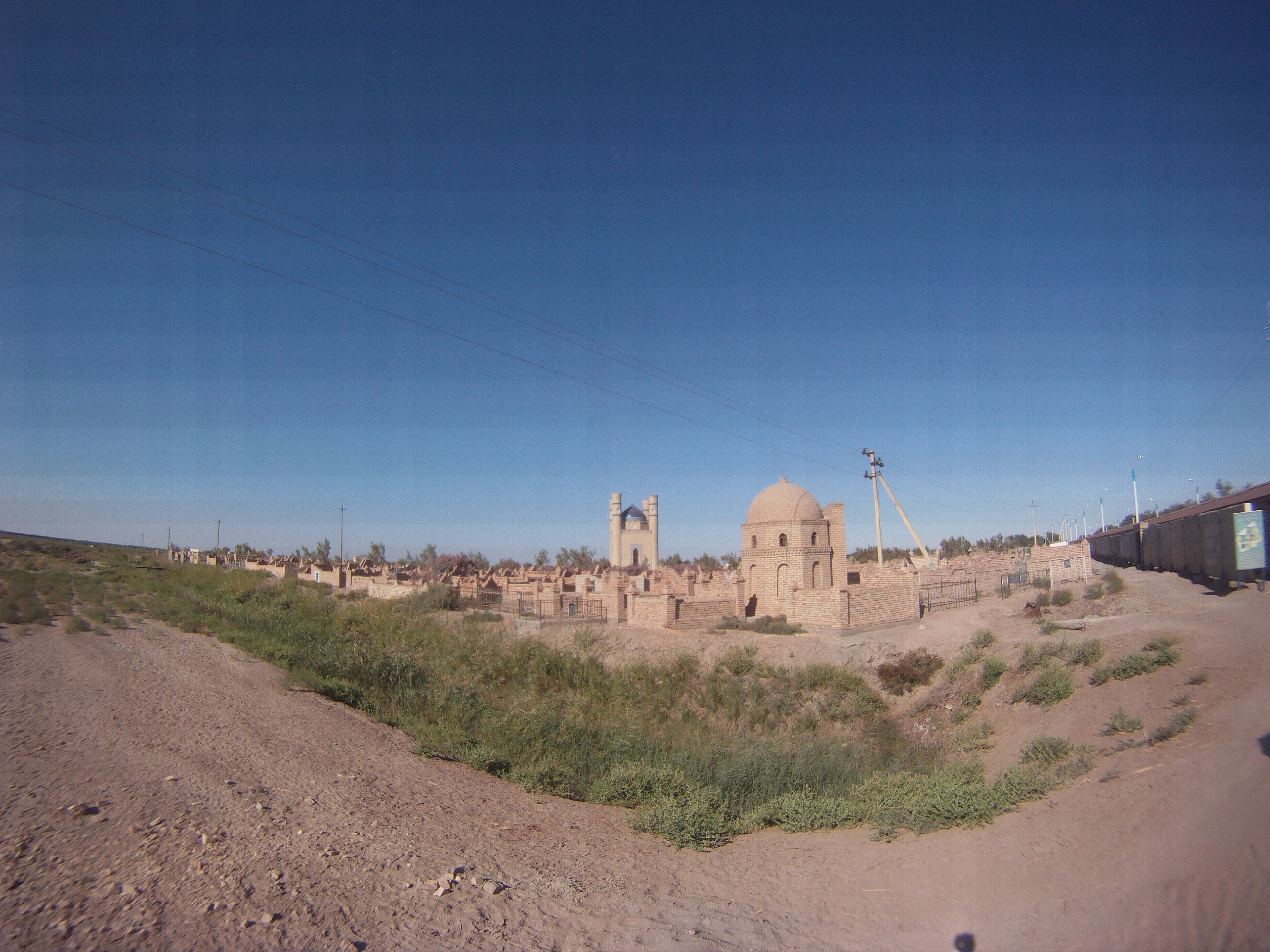
Distant city of the dead

Distant city of the dead

Other than the feeling that is accompanied by the knowledge that you are in Central Asia, there is nothing unique about the vast desert steppe. Hours of pedaling go by and the scenery does not change, here and there a strong gust of wind challenges your will or a cloud gives you a temporary respite from the intense heat. Often the road conditions get so bad that is better to take the sandy desert paths that to brave the large pot holes and reflected asphalt heat.
Another necropolis

Another necropolis

Within 50 km I passed my first City of the Dead. At first glance it looked like a small village or the remains of an old settlement, but as soon as I got closer I noticed that there were small houses built over and around bed shaped graves. Some of the structures were even two stories tall and seemed to have small yards around them. These large cemeteries were built-in the shape of a city, with narrow streets and alleys, even a large gate around the entire complex, kind of like a gated death community. Without a city or town nearby I wondered why the deceased had chosen to be buried so far from society? I continued to see these throughout my travels of Uzbekistan, and they always give me chills.
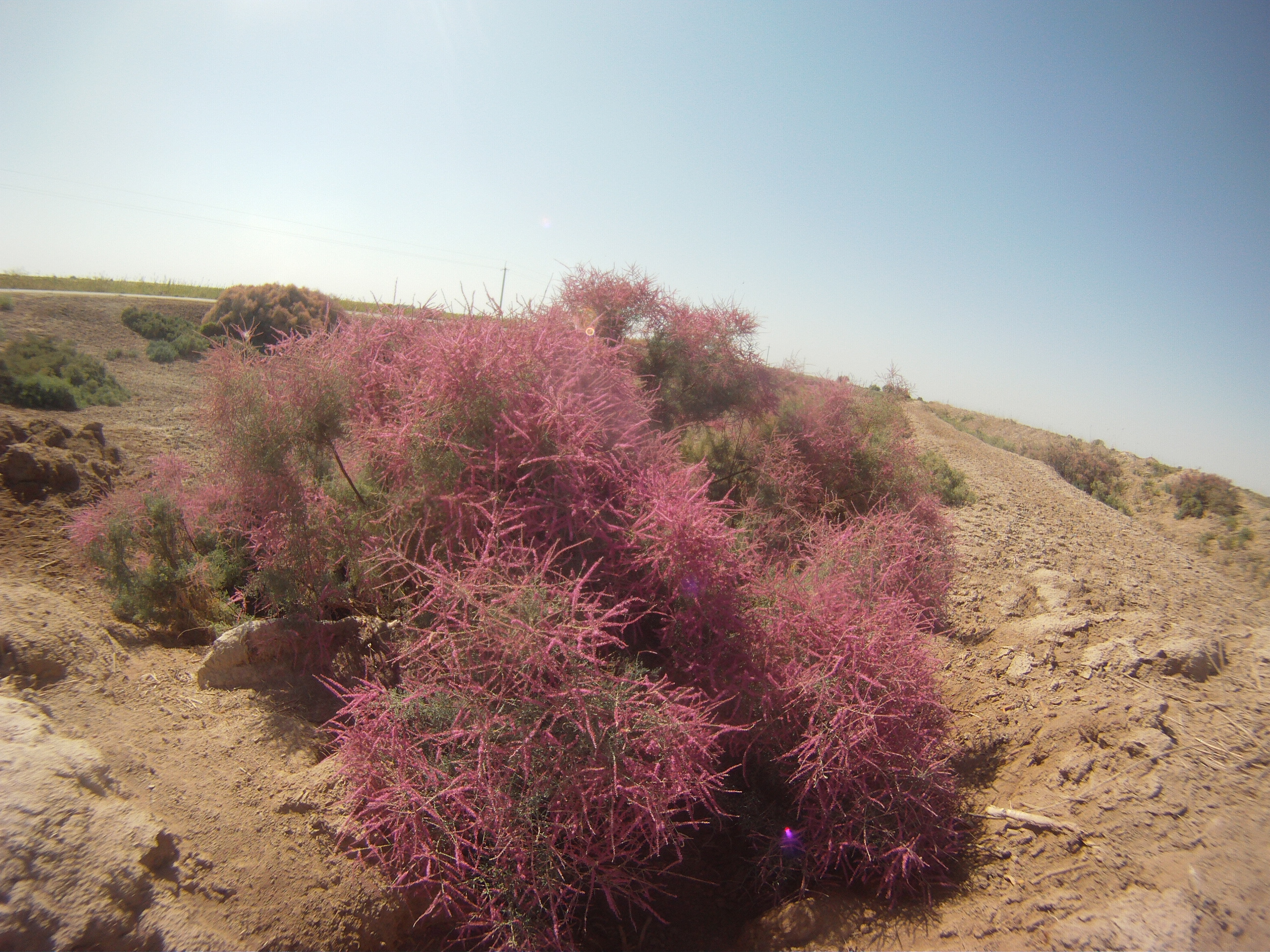
A flowering Tamarix, in Uzbekistan's fertile region

A flowering Tamarix, in Uzbekistan’s fertile region

The long distances between settlements and the intense heat continued on, but finally I pedaled through the fertile region of the country. It came as quite a shock, as all of a sudden I saw a large patch of green in the distance. As I got closer I discovered cotton plantations, cabbage patches, flooded rice fields and livestock throughout a large valley. The dry heat quickly turned humid, and I was ferociously attacked by mosquitos throughout the night. This was all too familiar to my experience pedaling through the fertile regions of Jordan, except that at that time my tent was in better condition and it did require a ¼ of a roll of scotch tape to keep the zipper shut!

Flooded rice fields, I have heard that even a bottle cap filled with water can breed close to 100 mosquitoes

Flooded rice fields, I have heard that even a bottle cap filled with water can breed close to 100 mosquitoes

After 5 days of continuous pedaling through the deserts and fertile valleys I came to my first Uzbekistani city, Nukus. A large industrial complex located on the banks of a wide shallow river. What a sight for dust eyes! I ventured to the local produce district and saw a huge conglomeration of goods; “Deen” large (American football) shaped melons, raisins in all colors, large circle shaped breads call “naan”, grapes, apples, and fresh lamb grilled with the pungent smell of cumin. I had been living off of bread, and onions and couldn’t be happier eating a large bowl of “Lagman” hand pulled noddle soup, with “Somsa” lamb stuffed pasties and “Shaslik” BBQ shish lamb. I pedaled away into the desert with a full stomach, but somehow managed to camp in a desert tick haven.

Local Uzbek cuisine: Lagman (Lamb noodle soup), Somsa (Lamb filled pastry) and naan

Local Uzbek cuisine: Lagman (Lamb noodle soup), Somsa (Lamb filled pastry) and naan

I have really gotten used to most insects, including the cuddling scorpions, spiders, ants, flies, mosquitos etc, but I remain sensitive to ticks, especially when you find them in your sleeping bag!

Locals coming to the roadside and offering watermelon in the intense heat

Locals coming to the roadside and offering watermelon in the intense heat

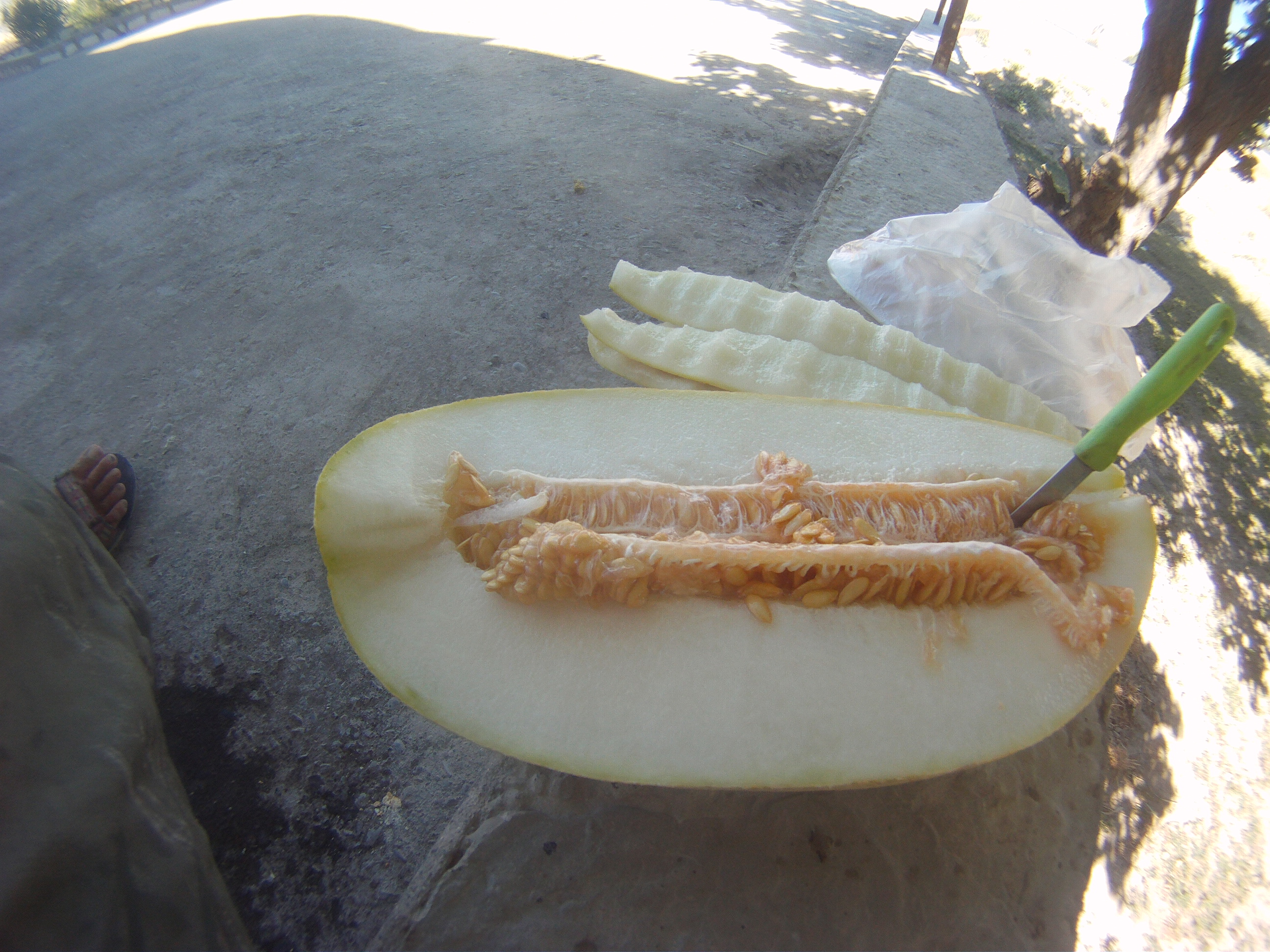
The locals have been extremely hospitable and on several occasions I have been offered places to sleep in farm houses, home cooked meals and roadside fresh melons! I met an extremely friendly group of locals selling melons and we sat down to lunch together under their rad side melon cabana. Sitting cross legged on the dirt we drank Chinese team with bread, crystalized rock sugar and candy. This was as close to my Bedouin experiences in Jordan and Egypt as I have gotten so far! Afterwards they offered me the local vice, “Noshbi” a finely ground green tobacco like substance that is placed under the tongue, then slowly expectorated. After a few minutes my head began to spin and I left in a confused state after a few km of pedaling I was forced to camp in yet another mosquito infested heaven.
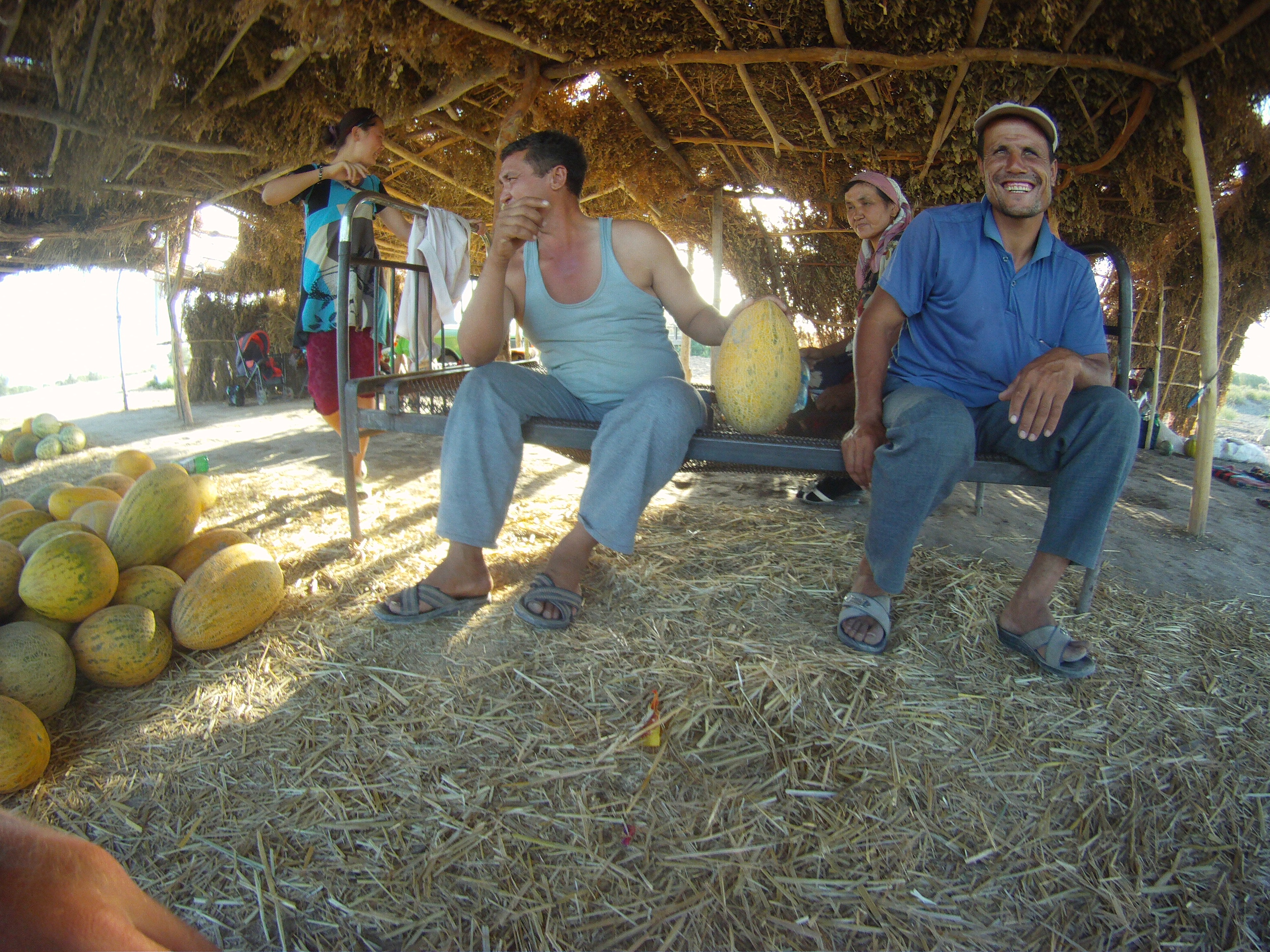
DCIM106GOPRO

Halfway through a 2 kilo sweet melon

Halfway through a 2 kilo sweet melon

I am now in the ancient Silk Road city of Bukhara, and will post again when I arrive in Samarkand three days from now. I am doing fine but I miss you all – Julian

Minaret in the silk road city of Bukhara
Minaret in the silk road city of Bukhara
Kazakhstani Desert Nomads

It is 45C. A dry hot dusty wind dries your mouth, nose and eyes. You try to swallow and clear your throat but your saliva has long since evaporated. Your teeth crack as there is sand and dust between then, and your body radiates the immense heat absorbed from the sun. It is over a hundred and fifty miles in each direction to the nearest source of water, food or shelter. Your bike is extremely heavy with several days of food and over 15 liters of water. These thoughts are at first comforting but after a few kilometers of pedaling know that in this environment the water will only last you at most 32 hours. You can not over exert yourself, because if you get too hot these is no shade to cool you off, but you must keep pedaling to survive. (An average day in Kazakhstan and Uzbekistan)

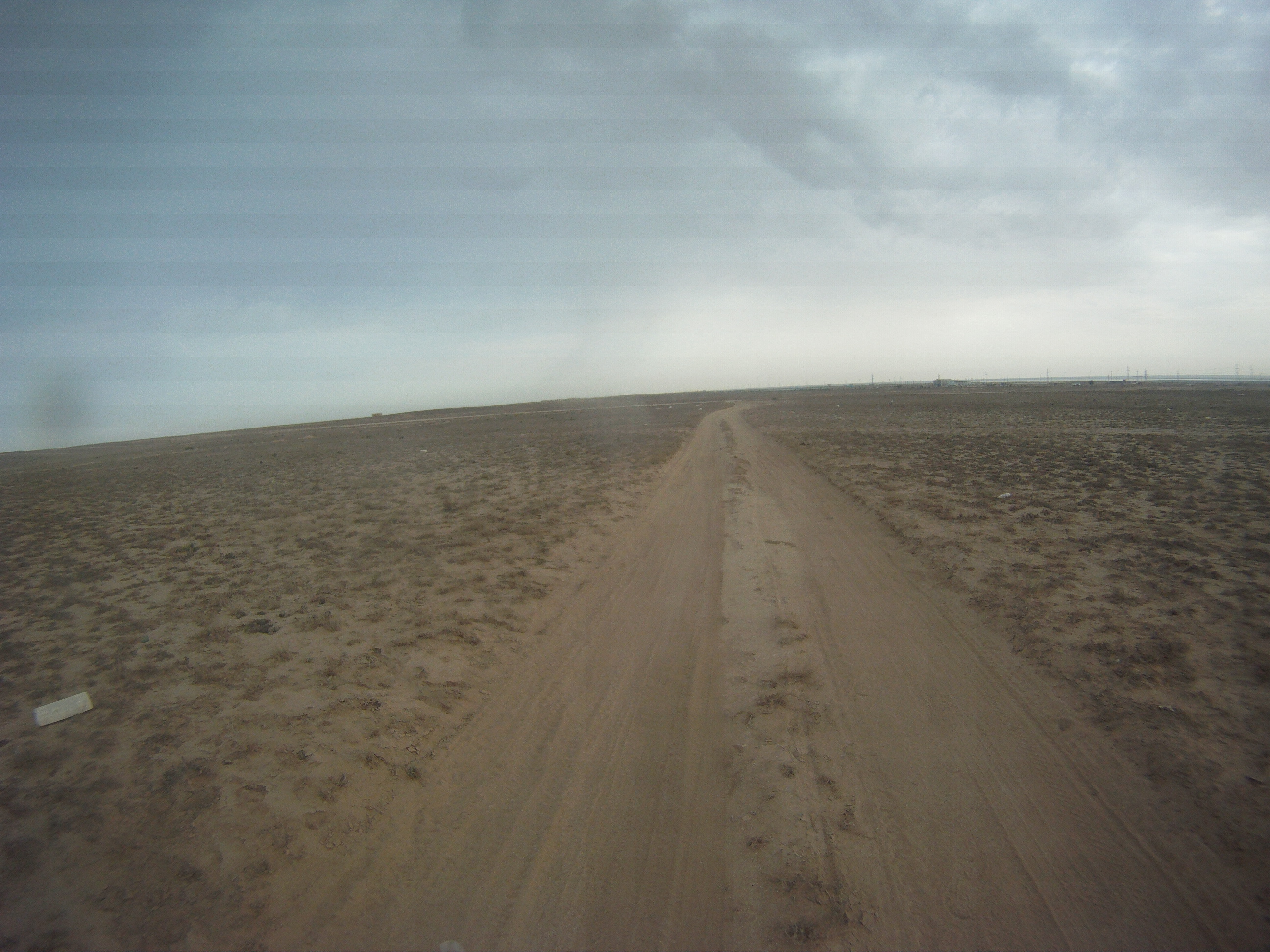
A long desert road

A long desert road

My journey through Kazakhstan was quite challenging. In the 5 days it took me to pedal to the Uzbekistan border I pedaled through the most difficult terrain I have ever encountered. Immediately upon waking on my first day, I was engulfed with dry hot desert winds, and a sun so strong you feel like you are an ant in a child’s sandbox, seconds away from being torched with a magnifying glass. I have never been so thirsty in all my life, and I have really come to respect water as by far our most precious natural resource. The distance between towns and villages is daunting and can be as much as 200 miles on a dusty potholed road covered in a foot of powdered sand. The average daily temperature is close to 45 C, and there is little more than a concrete pipe to give you respite from the sun. I carry between 15-20 litters of water daily, but I can’t seem to consume enough water, I haven’t pee’d in days. I am haunted by the memory of my brother and I’s pet frog Samson, who we left outside in a small cage with little water during a summer weekend. We returned to find nothing more than a dried carcass.

Yes...These is a lot of water strapped on to that bike! A hidden 10 liters under the white bag

Yes…These is a lot of water strapped on to that bike! A hidden 10 liters under the white bag

Chaihana, local tea house that sells water 3x the price of gasoline

Chaihana, local tea house that sells water 3x the price of gasoline

After arriving at Aktau, the port city in Kazakhstan, I suddenly started having diarrhea, at first I figured it was my body, too scared to attempt cycling through Central Asia, trying to get me to give up, but it continued for close to a week. After a few days I debated taking antibiotics, I have a whole arsenal of intestinal chemotherapy, but every time I consume them they make me so weak that I can barely cycle for several days after a normal dose. Between being weak and having diarrhea I chose the latter and frequented all sorts of absolutely disgusting outhouses! However as foul and disgusting as they are, it sure beats digging a hole squatting in the hot desert sun!

The cleanest toilet in Kazakhstan

The cleanest toilet in Kazakhstan

There is something very unique about the Central Asia environment, the land between the Caspian sea and Central Uzbekistan (my current location) is completely devoid of life. In the evening, when the sun finally goes away for a few hours, it is absolutely silent. Scorpions prowl the evening sands and eat the moths that are attracted to my cooking stove and headlamp. I have never know such affectionate creatures as they like to cuddle and sleep next to me under my tent. Each morning I pack my tent only to find several underneath. In the morning lizards and geckos come to eat the flies that have gathered to drink my toothpaste water, and ants carry away my littered bread crumbs. In 2008 I visited the Chinese Central Asian province of Xinjiang during August, and I clearly remember the difficultly in handling the dry heat even when traveling around in an air-conditioned automobile! It is easy to get in a bad mood, and keeping a positive attitude is the key to survival here. You can not freak out about the heat or not having enough water! Otherwise you might as well hitch hike or take a bus because you will never make it! You can’t change your surroundings but you can always can change the way you look and relate to them.

The best time of day!

The best time of day!

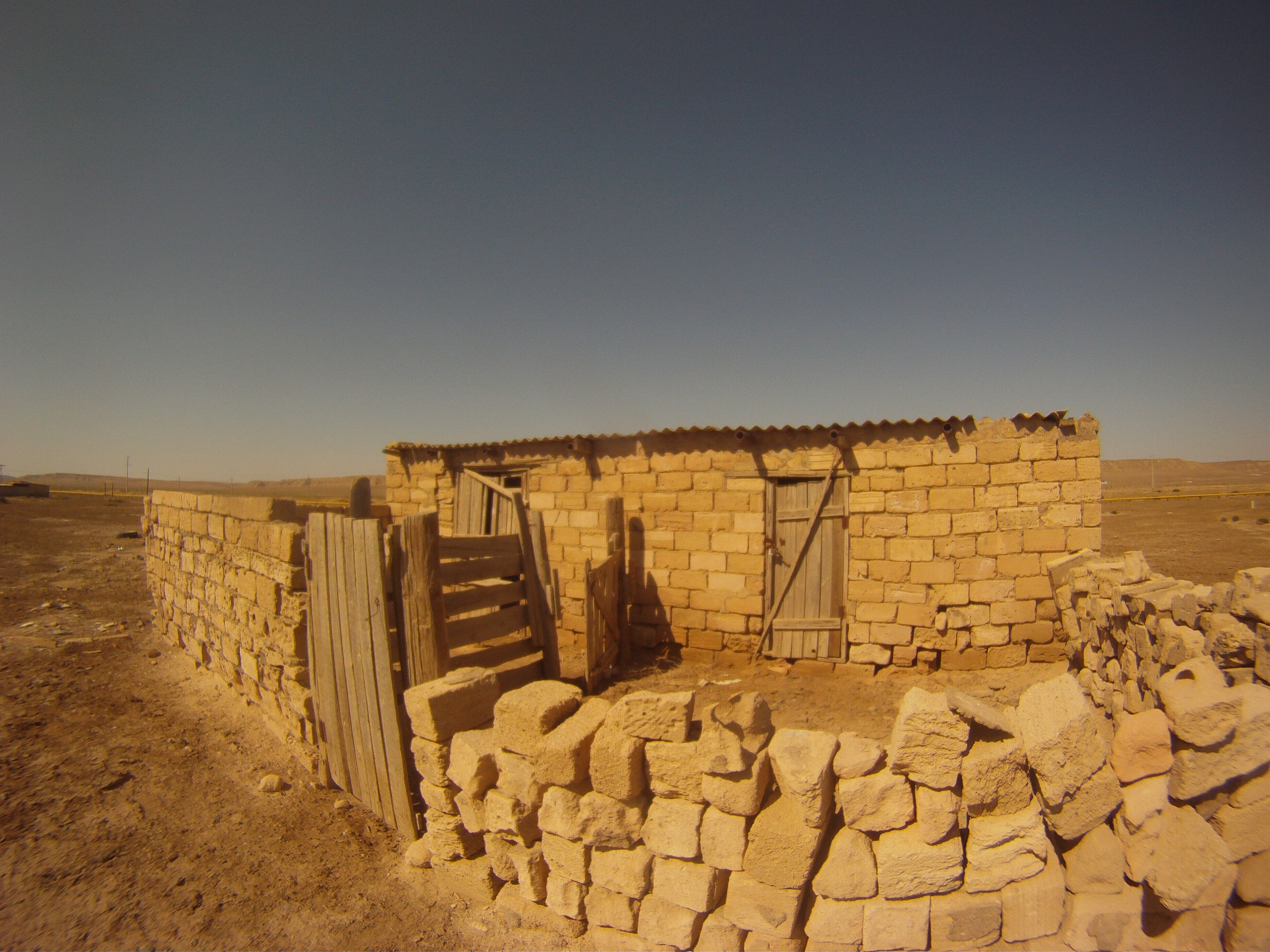
House in remote desert village

House in remote desert village

I have never been so happy to see fruits and vegetables! The only produce market in 500 miles. Beyneu

I have never been so happy to see fruits and vegetables! The only produce market in 500 miles. Beyneu

Occasionally I encounter wild camels (who can survive for a minimum of 15 days without water). They wander about the desert in the hot in sun, and often wake me at dawn trying to eat my tent or panniers. The word for tree in Russian “Derev’ya” is almost as useless in Kazakhstan as the word for snow in Arabic, “Thalj” they don’t exist! Shade can be found when you are passed on the dusty road by a large semi truck, or inside a cement drain pipe, other than that there is no choice but to handle the heat. Pedaling at night is always an option but the roads are very busy as soon as the sun goes down. It seems that most vehicles out here are not equipped with air conditioning making the day time too hot for a commute.

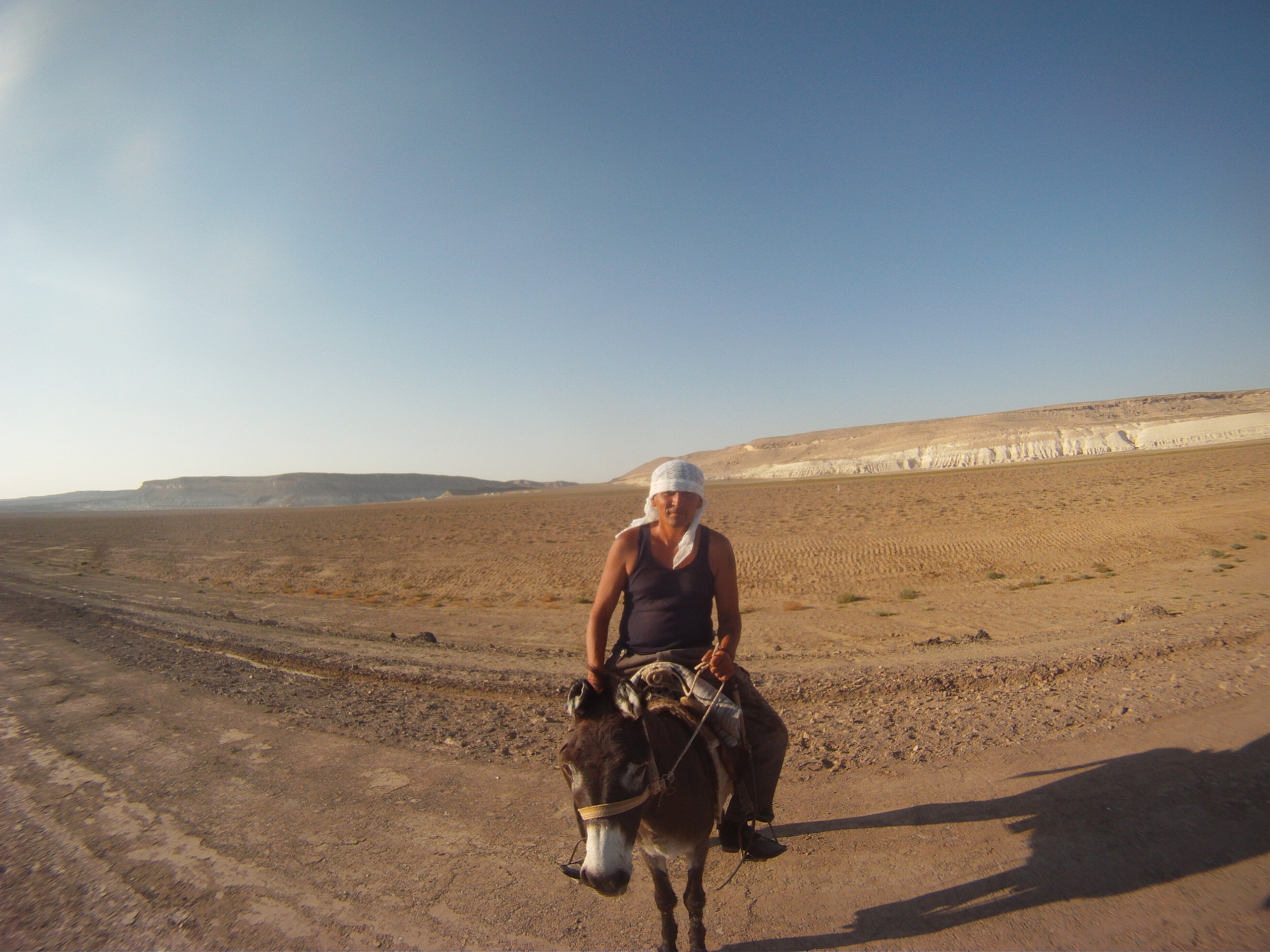
True desert nomad, I offered him a bottle of water but he told I would need it more than him! He had holsters on his saddle one for water one for vodka

True desert nomad, I offered him a bottle of water but he told I would need it more than him! He had holsters on his saddle one for water one for vodka

Kazakhstani’s are extremely friendly and seem to be very curious of my travels. There are few that venture out into the desert herding sheep with nothing more than a bottle of water and vodka. These are known as theKochevnik poustynyaDesert Nomads. These nomads make me feel like baby as I pedal past with a bike loaded with 15 liters water. Life is definitely possible out here, but very difficult. I talked with a domestic tourist in the city of Beyneu and he told me that the USSR used to send criminals to these parts of Kazakhstan as the temperatures can be as hot as 50C in the summer and -50 C in the winter. Locals don their own form of the Arab kefiye, and often make masks out of old tee shirts to protect their faces from the sun. At first it was a bit scary coming across these locals in masks because they also often wear sunglasses making them look a lot like the scarecrow in Batman, but they are usually yelling hello and jumping up and down trying to grab your attention.

Local with sunmask

Local with sun mask

Local Kazakhs these guys do not speak Chinese

Local Kazakhs these guys do not speak Chinese

I know that the heat will eventually die down, but right now life if really difficult on the road. On one occasion a trucker gave me a half-drunken bottle of Fanta, rather than discarding this precious sugary liquid I boiled it and cooked oatmeal in it. Pretty disgusting but it’s food. I entered Uzbekistan 2 days ago and have only passed 2 villages, a part of me wants to take it easy and rest all the time, the other part wants to haul ass and get out of this desert hell. Days are torn between the two. My mind is strong and I continue on….

DCIM106GOPRO

The Central Asian journey begins

The rattle of the anchor echoes through the hallway, and the rumble of engine comes to rest. I am resting in my unbearable hot bunk, and sweat travels from my neck to my back. Again I am overwhelmed with the excitement of a new country, new customs and new friends. The intercom blasts in Russia “Prepare to disembark the vessel, customs agents are coming aboard”. He we go again……………

Caspian Sea sunset

Caspian Sea sunset

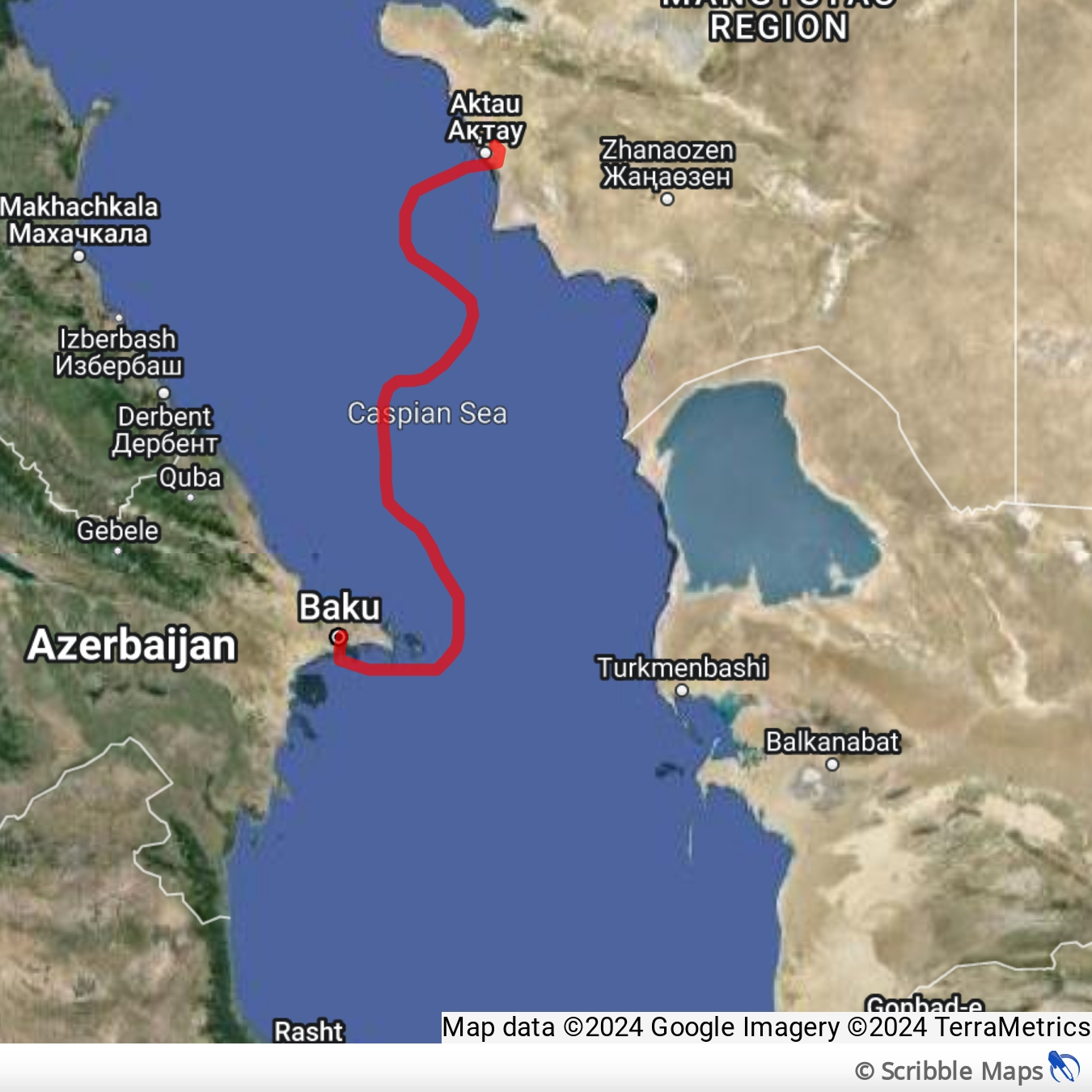
I have finally made it across the Caspian! The journey took 60 hours on a smelly extremely hot cargo ship filled with Azerbaijani mechanics and Kazakhstani machinists. I am now in Kazakhstan and am preparing for my first night camping in the desert. Kazakhstan is so much different from Azerbaijan and now I officially feel like I am in Asia. The locals look Asia, or maybe its Mongolian either way I am just as interested in them as they are in me. I have to stop myself from trying to speak Chinese!

Drinking vodka with some Polish hitch hikers and some locals on the ship

Drinking vodka with some Polish hitch hikers and some locals on the ship

I should be in Uzbekistan by early next week and will fill in more details soon!

My last night in Baku, camping in a dormant mud volcano

My last night in Baku, camping in a dormant mud volcano


Hopping a midnight cargo ship for Kazakhstan

What a crazy day! After hours of cycling around the busy city I have my official deportation letter as well as a fresh Uzbekistan visa! I was also lucky enough to find a cargo ship traveling across the Caspian sea bound for the Kazakhstani port city of Aktau. I should be there by tomorrow night, and will begin my travels through Central Asia. I have no idea what to expect after leaving Azerbaijan, this is where the journey gets really interesting. Please send some goodwill my way as the long road through Kazakhstan is going to be tough. I will touch base again as soon as I can.  -Julian

Hopping a midnight cargo ship bound for Kazakhstan

What a crazy day! After hours of cycling around the busy city I have my official deportation letter as well as a fresh Uzbekistan visa! I was also lucky enough to find a cargo ship traveling across the Caspian sea bound for the Kazakhstani port city of Aktau. I should be there by tomorrow night, and will begin my travels through Central Asia. I have no idea what to expect after leaving Azerbaijan, this is where the journey gets really interesting. Please send some goodwill my way as the long road through Kazakhstan is going to be tough. I will touch base again as soon as I can.  -Julian

Deportation and Uncertainty in the Azerbaijan capital

“Here sign this” the government official said, “It is an official writ of deportation”, “Once you sign you will be deported to Kazakhstan and will be banned from returning to Azerbaijan for 2 years”……

An predawn stroll through Baku's old city

An predawn stroll through Baku’s old city

I am officially being deported from Azerbaijan! Unfortunately, upon entering the country I wasn’t informed of the tourist registration law. (All tourist must register at hotels, guest houses or police stations within three days). Arriving in Baku I quickly learned the unwritten rule from some unlucky tourists who had been fined 300 euros each and had missed their departing ferry to Kazakhstan. According to their story there was no way to avoid a 300 euro fine and it seemed that I was pretty much fucked! The words of the 14th century Moroccan traveler Ibn Battuta echoed in my head, “It is better to negotiate your fate voluntarily, than to be coerced into service”. I decided to travel to the Regional Migration Department, and see if there was anything I could do to avoid the hefty fine.

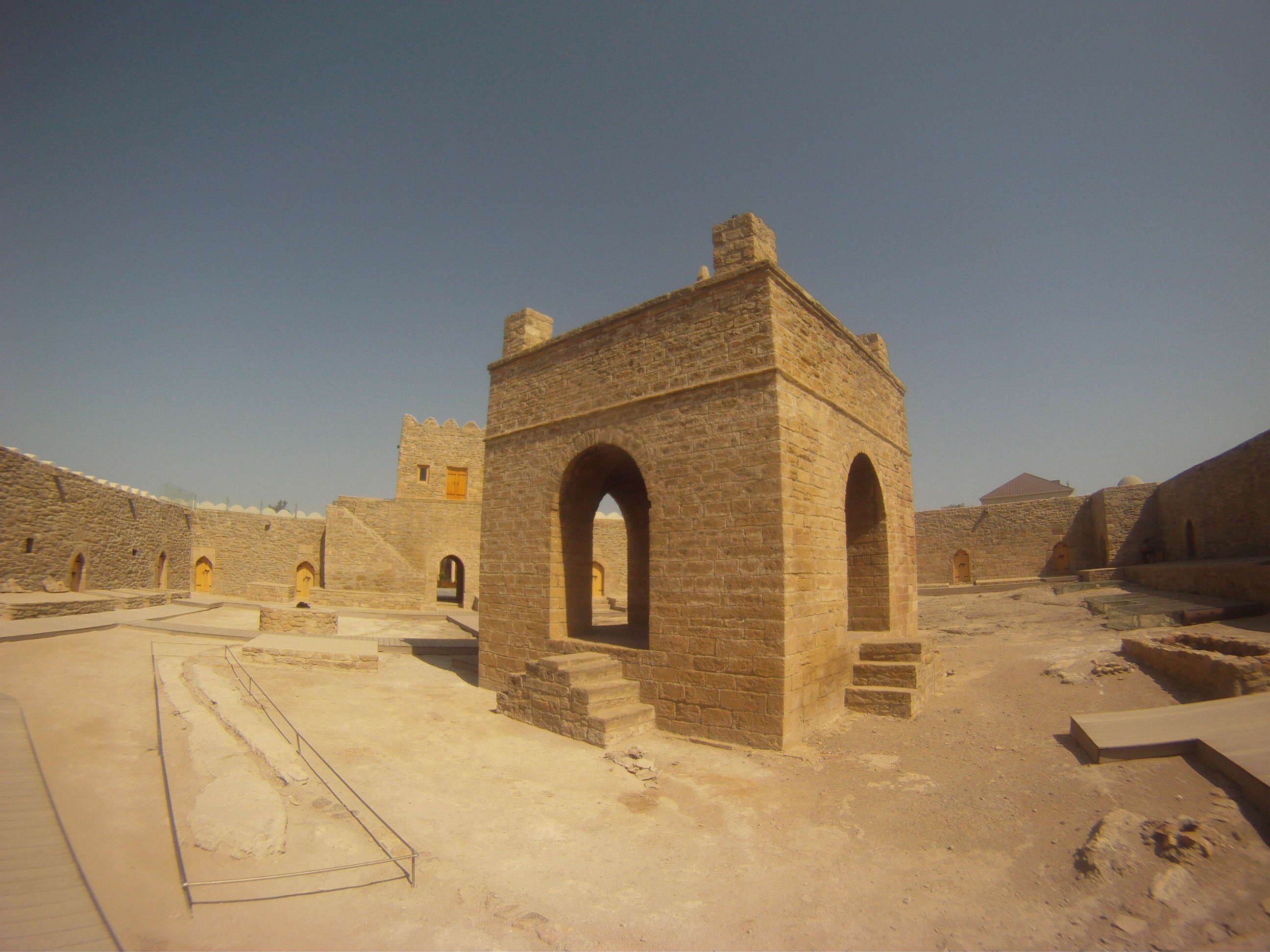
Ateshgah, Zoroastrian fire temple, Baku outskirts

Ateshgah, Zoroastrian fire temple, Baku outskirts

A tribute to the everlasting flames that were once worshiped here. In the early 1900's Azerbaijan learned that money could be made from their natural gas source, the true life and flames of the temple never returned

A tribute to the everlasting flames that were once worshiped here. In the early 1900’s Azerbaijan learned that money could be made from their natural gas source, the true spirit and flames of the temple never returned

After an hour of standing in random lines and trying to find an official that spoke English I was directed to a small interrogation room with several military personal. I explained my situation and pleaded that a 300 euro fine would completely ruin my pilgrimage. After talking amongst themselves in Azeri, the official who spoke the best English produced a contract written entirely in Azeri. “Sign this” he said, “It is an official writ of deportation”, “Once you sign you will be deported to Kazakhstan and will be banned for 2 years from returning to Azerbaijan”…..”But no 300 euro fine”.

Downtown mosque

Downtown bazaar hours before opening

Caucasus style mosque

Caucasus style mosque

Baku is a mix between Dubai and Paris, but lacks the fragrance of a historically epic metropolis. Flame shaped skyscrapers, visible from miles away pinpoint downtown. Towering J.W Marriot, Hilton and Ramada hotels provide afternoon shade near the Caspian Sea boardwalk. City water fountains provide evening entertainment by showering streams of water to the accompaniment of Tchaikovsky.

DCIM105GOPRO

Downtown is composed of designer clothing stores, McDonald’s, KFC and exotic automobile showrooms. It is impossible to find anything not overpriced as even bottles of water marked at 0.5 manat will cost 1. The city is undergoing a rapid change as it has recently been awarded the opportunity to host the Euro Games in 2015. Large landscaped medians adorn colored flower arrangements with EUROGAMES 2015 clearly written in the patriotic colors of the country flag; blue, red and green.

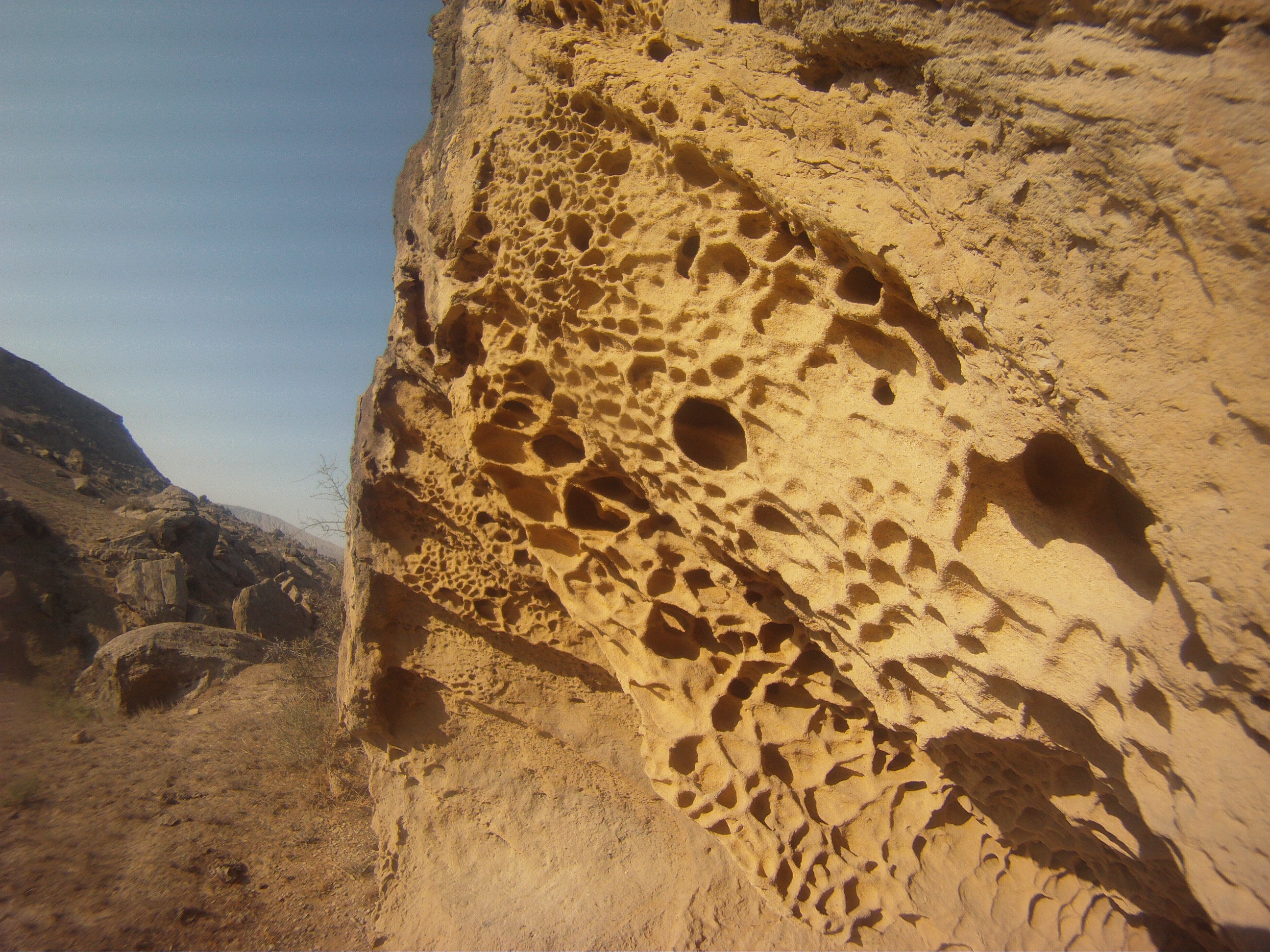
A once underwater coral reef, Qobustan was inhabited thousands of year ago.

A once underwater coral reef, Qobustan was inhabited thousands of year ago.

My first few days moved about and wandered through the daytime heat. It is at night that this city truly comes alive. Clubs, bar and restaurants open their doors as the streets quickly become crowded with a multicultural hodgepodge. Like a Christmas pine taken from the wild to a suburban living room, the old city becomes completely illuminated taking on an ephemeral beauty, broken only by the radiance of dawn.

DCIM105GOPRO

How difficult I have found Baku. If I could I would re-name the city Al Sa’Ab taken from the Arabic word MEN Al SA ‘AB meaning “troublesome”. I have found most of the residents in poor moods and the first few days I shuffled between residences looking for a mellow place to lay my head while waiting for my Uzbekistan visa. After my second attempt I gave up on Baku and cycled 60 km south to a primitive man site called “Qobustan”. There I found a secluded rock cave and carrying close to 20 liters of water camped inside for the duration of 3 days. A real retreat, I wandered about the desert, meditated, read and wrote tirelessly in my journal.

I then pedaled back to Baku only to find that my visa was still not processed, however my luck changed as I met a Pakistani man working in the city who invited me to stay at his apartment. We became good friends and he invited me out to dinner with his friends, bought me food for the road and gave me new clothes. Thanks Cay Jay!

Cay Jay Pakistani friend working in Baku

Cay Jay Pakistani friend working in Baku

I met a few British expats who waited in Baku for 13 days each day expecting a Uzbek visa only on the last day to give up and travel through Kazakhstan. Today marks a full week that I have been on the western edge of the Caspian sea and I am disappointed at my situation. Tomorrow I will go to the Kazakhstan embassy and apply for a 30 days visa, if the Uzbekistan visa does not come through by Wednesday I will pedal the length of Kazakhstan (2,700 km of desert) to the Kyrgyzstan capital of Bishkek. I will write again as soon as I know my plans.  -Julian

DCIM105GOPRO


Uncovering Azerbaijan

“Allahu Akbar” the Imam shouts. It is afternoon prayer and I am standing foot to foot in a long horizontal line at the local mosque in the old Azerbaijani capital of Gabalar. My sandal tan sticks out among pale feet and I bring my right arm over my left in the first standing position of prayer. “What are the Arabic words to the Fatiha again” I ask myself, for some reason all I can think of is the Pali Buddhist chants I had become so accustomed to as a child, “Namo Tassa Bhagavato, Arahato…” “No no no…wrong chant” “Wrong god” I could almost imagine the Imam calling out to me. Focus. I had come to the Mosque to meditate and to be away from the constant bombardment oflocals, but oddly enough had arrived minutes before prayer. Now at this time any place in the city would be more secluded than where I was. “OK” here we go……

Bismillahi-r Rahmanir-Rahim Al-hamdu lillahi Rabbilalamin Ar-Rahmanir Rahim Maliki yaumi din…..

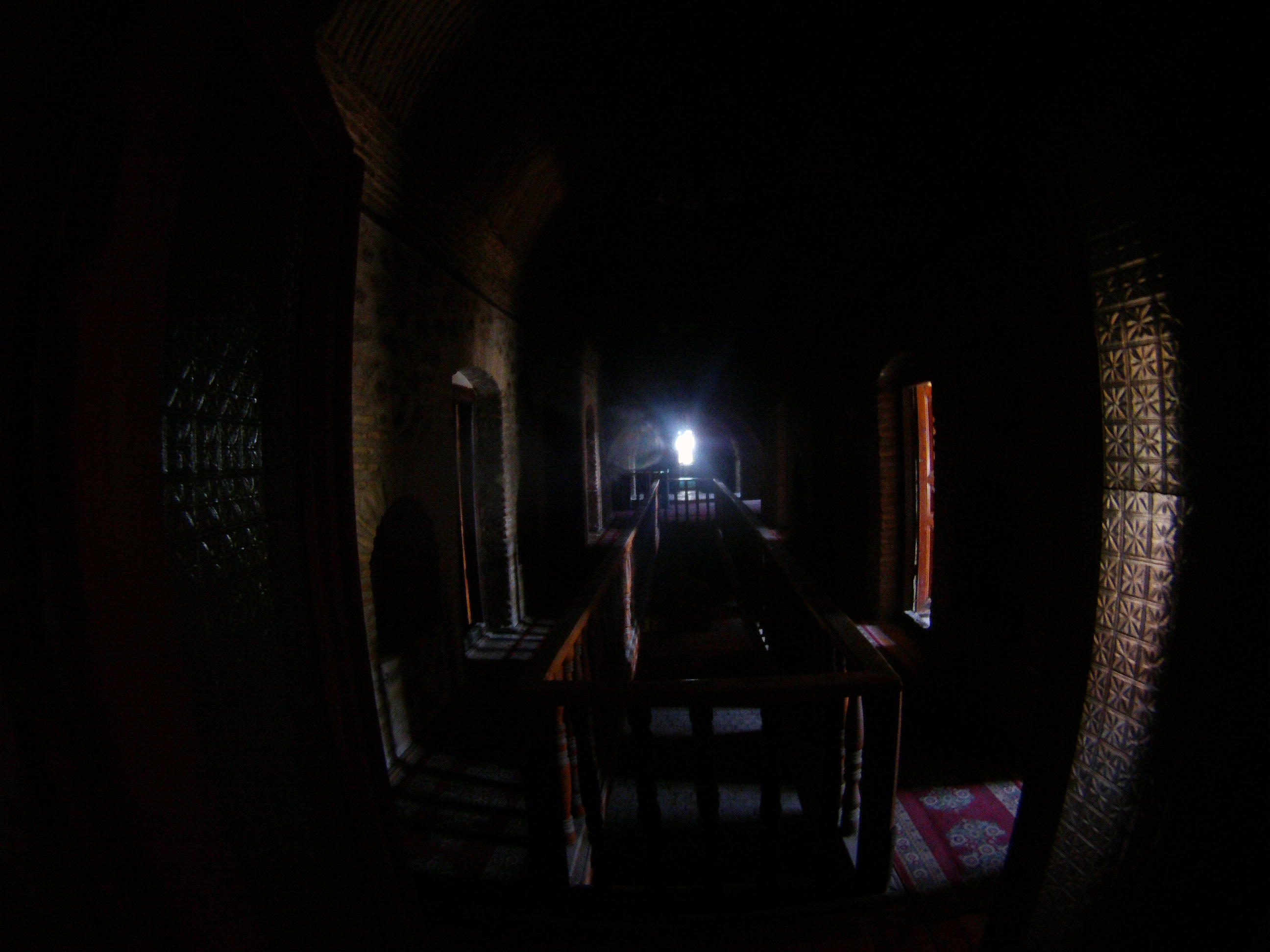
Oldest Caravansari in Azerbaijan located on the silk road

Oldest Caravansari in Azerbaijan located on the silk road

After pedaling underneath a large sign that read “Azerbaijan Border Good Luck”, I handed my passport to three or four officials before finally being allowed through. Other than the long line of cars with Azer license plates waiting to enter Georgia, there were no dramatic changes. I had chosen the northern border as the roads were said to be less traveled offering a better glimpse at a remote life style. The towering snow-capped peaks, so frequently found in Georgia had disappeared and now all mountains were barren and dry like those found near the deserts of California. Farmers harvesting crops waved and whistled as I passed, and I dodged groups of cows and sheep heading towards the tall grass of a nearby field. I stopped at a small village town and picked up supplies for dinner. My eating habits are best compared to that of an ant; when I find food I like to carry it back to my tent where I can enjoy it in my own space.

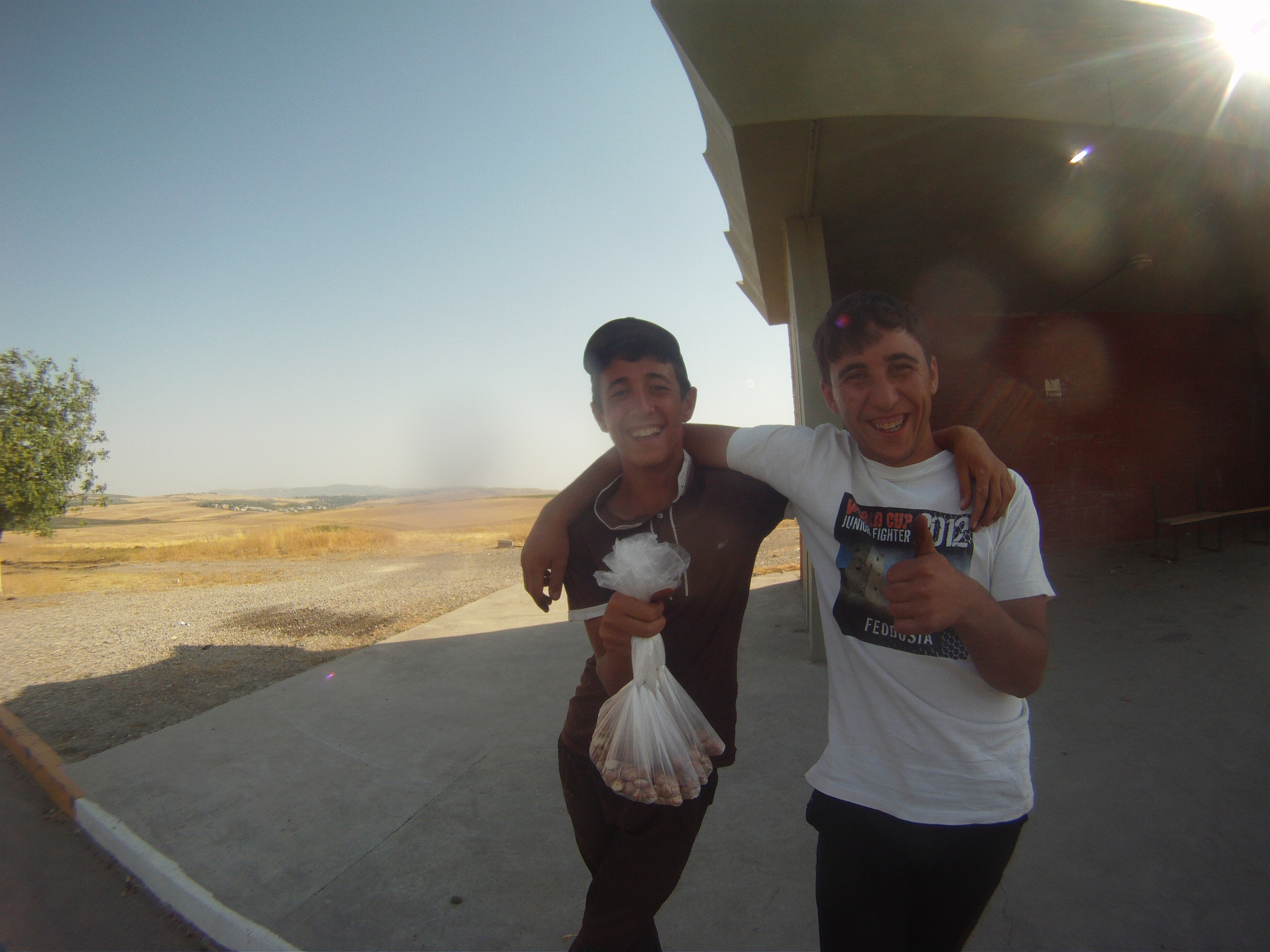
Local Azerbaijan boys selling hazel nuts on the road side

Local Azerbaijan boys selling hazel nuts on the road side

The first thing that I noticed was that everything in the grocery store is expired. The challenge therefore became finding the items that had only expired recently. Dairy products, which are mostly sold over the counter (meaning you cannot personally inspect the expiry dates), can be as much as two months expired, and you really have to be adamant about getting the grocer to dig deep within the refrigerator to find something that has only recently expired. Bottled water, also a strange thing to inspect expiry dates, but very few locals buy water in containers larger than 500ml, yesterday I bought a 5 liter bottle that had expired 6 months ago, at first this didn’t bother me until I found jelly fish like algae growing off of the bottom. As a general rule of thumb, if what you are looking for is kept in a refrigerator it is likely to be expired and its cold environment is keeping it from stinking up the store. Raisins, apricots and nuts will almost all contain worms or other strange like creatures, so like being in England during the middle ages, boiling everything!

Azerbaijanis are into their compote, here is a road side assortment

Azerbaijanis are into their compote, here is a road side assortment

The once quiet northern border road eventually joined with the southern road and all hell broke loose on the tarmac. The road remained the same a two lane highway (one lane in each direction) with very little shoulder, but with the increased number of vehicles, an invisible third lane for passing appeared. Regardless of direction autos would speed pasted slower vehicles into the center of the road pushing the oncoming traffic into the shoulder and sometimes off of the road. There doesn’t seem to be any concern of having a head on collision, and I am often pushed off of the shoulder by an oncoming car. It is an absolutely terrifying experience! I sometimes have to play chicken with the oncoming cars so that they will give me space in my lane. The nicer the vehicle, the faster and more careless the driving. It is almost as if all Azerbaijan drivers are teenagers who have just received their license, they are completely ignorant of the dangers associated with their driving. If that is not enough I often see vehicles that seem to be driverless, only as it gets closer do I see an adolescent, barely able to see over the dashboard, speeding down the road. Police vehicles are ever-present but don’t seem to do much except throw their trash out their windows, and flag passing vehicles with long red poles to cite seat belt violations.

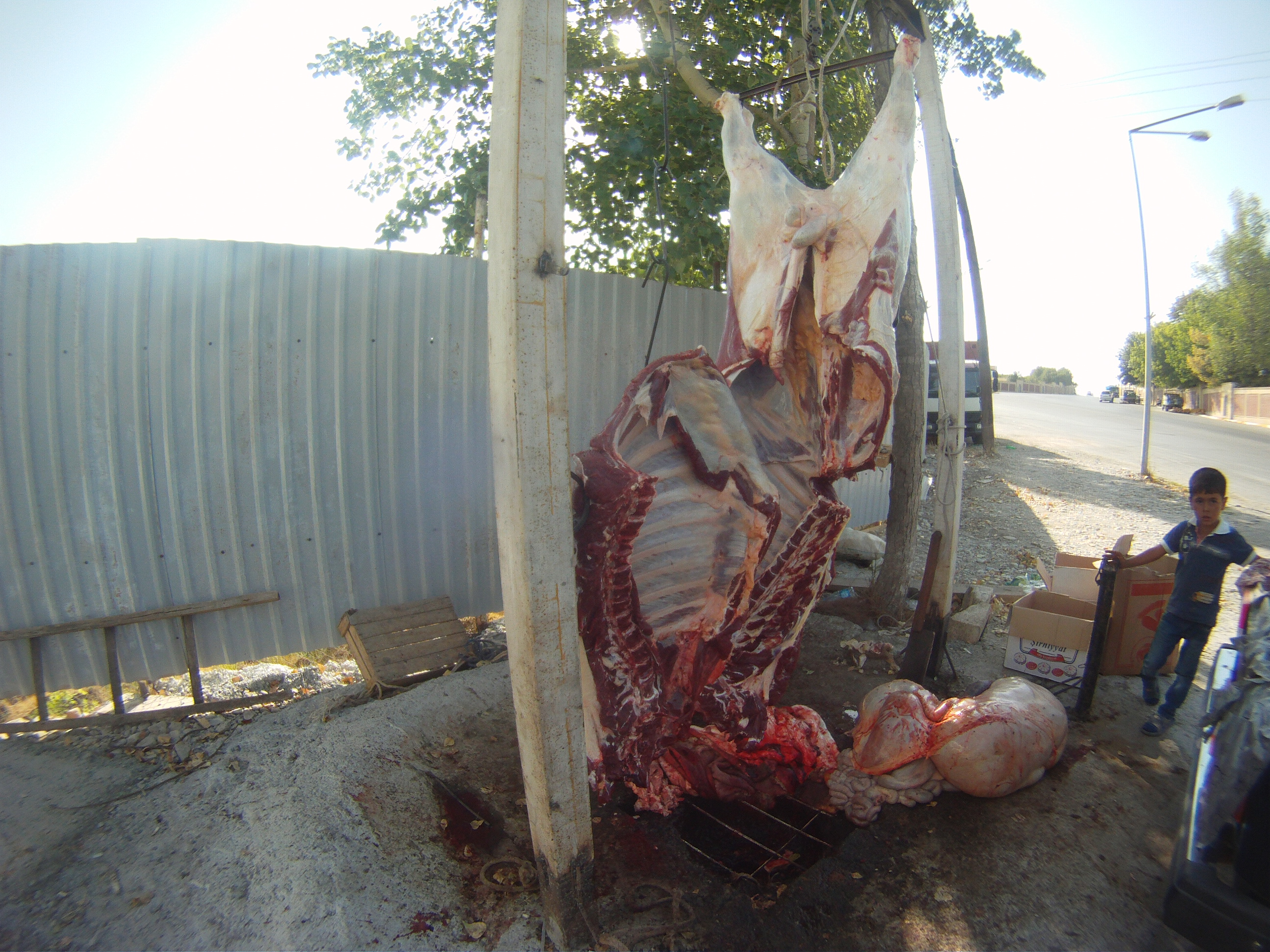
Roadside butcher, this guys sliced this bull up in minutes

Roadside butcher, this guys sliced this bull up in minutes

DCIM105GOPRO

Because of the cost and extreme difficulty in getting a tourist visa, locals rarely see foreigners, making their behavior quite annoying. The annoying whistle that I experienced so often in Albania is back, as well as the friendly honk. On a given day I am honked and whistled at least 50 times, almost to the point where I want to wear ear plugs. Just like in Albania if a local whistles at you and you don’t look in their direction they will continue for a while as if there is some sort of important message they are trying to convey. I often tell locals, that I am from Canada to see how the results will vary. If I say I am from Canada, the Azerbaijanis will tell me how much they like American movies, cowboys, Hollywood, “Have you ever seen a movie stars” etc. If I tell them that I am from the States they will tell me how much they dislike the politicians as well as American foreign policies. I guess it is best to say that I am from Canada and talk about how great American movies and movie stars are.

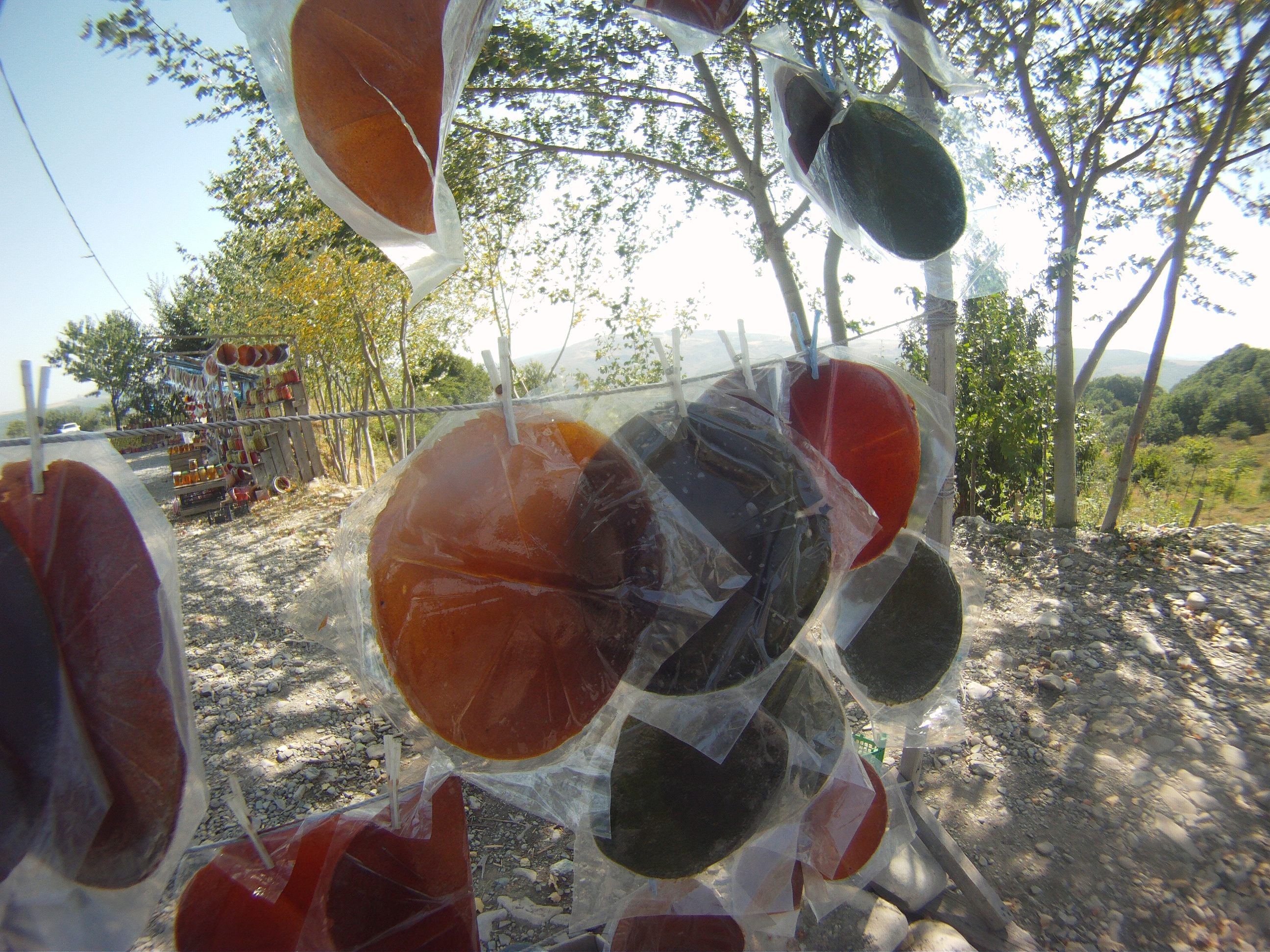
Azerbaijan fruit roll-ups

Azerbaijan fruit roll-ups

Overall the country is very expensive, and the local currency: the Manat has the same value as the Euro. Fruit, vegetables these staples are still rather cheap but bread, pasta, rice and other carbo rich sources are often several manat. A big change from the cheap and plentiful Georgia. A days ration of water can sometimes cost me close to $4, depending on what stores I pass. Some venders try to sell water at a price higher than gasoline! The heat and the road conditions make traveling difficult along with the long distances between cities.

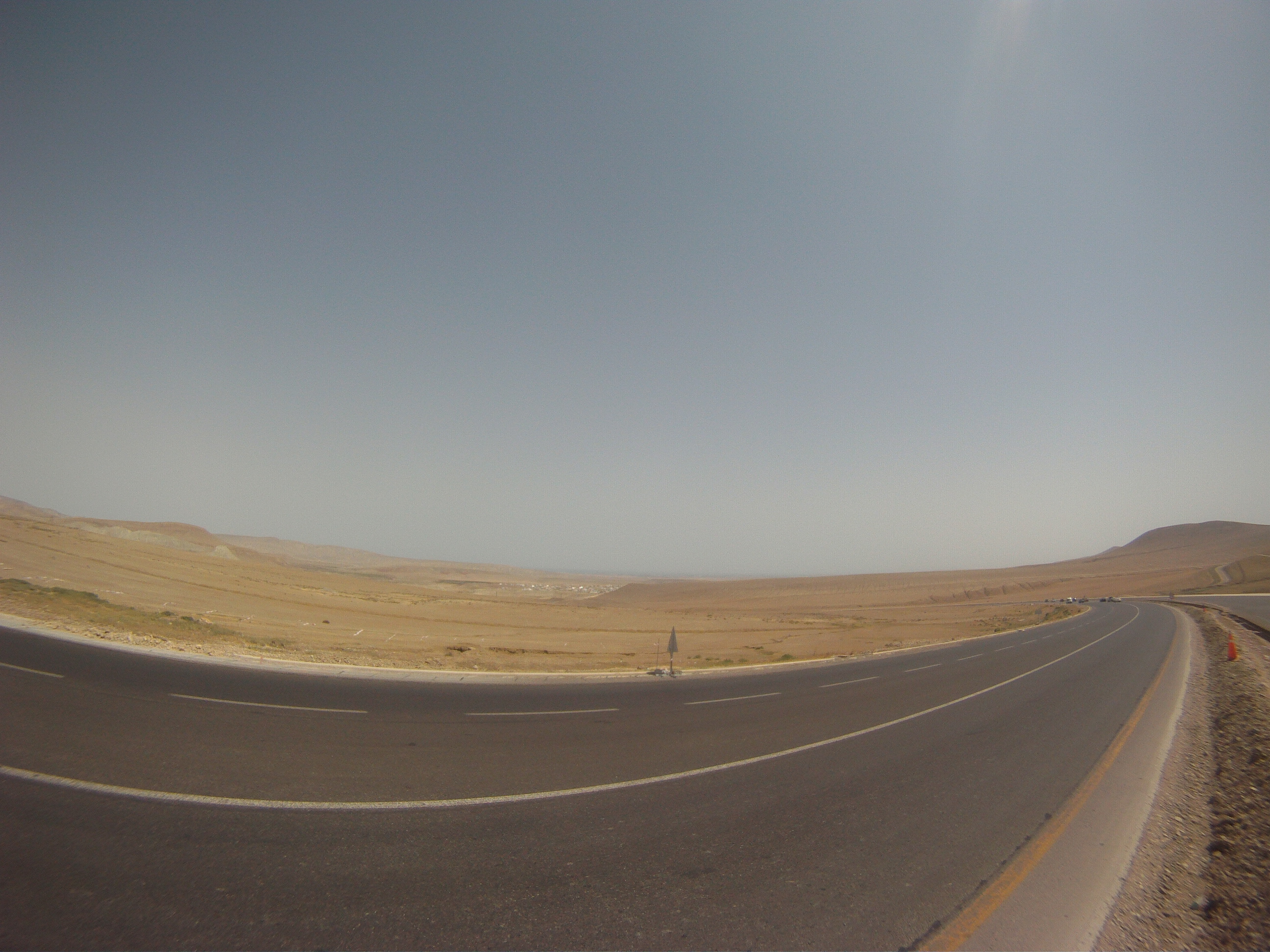
The last 150 km stretch before Baku

The last 150 km stretch before Baku

The real feeling of Azerbaijan, being in central Asia didn’t set in until about 150 km from Baku. All of the sudden the farm country and oak tree forests gave way to a vast and almost inhabitable desert. A dry dusty head wind deterred my path and the minarets looked like large ice cream cones stuck out in the horizon. There is no hidden place to park ones tent out here and I must climb the steppe before being out of view.

Fresh from a water bottle shower, camping under a canopy of invasive species

Fresh from a water bottle shower, camping under a canopy of invasive species

60 km from Baku I pedaled through an unexpected oasis, by oasis I mean a large group of tamarix trees. I was too hot and dry to continue but had little more than 2 manat in my pocket, my dirty and sweaty appearance won me over some tomatoes, bread and a half price deal on a 5 liter bottle of water. I then pushed Gaby through a tumble weed ravine to find a spot of shade to sleep in. Alone and cool at last, I spent the rest of the day resting to the sound of the desert winds rattle the trees.

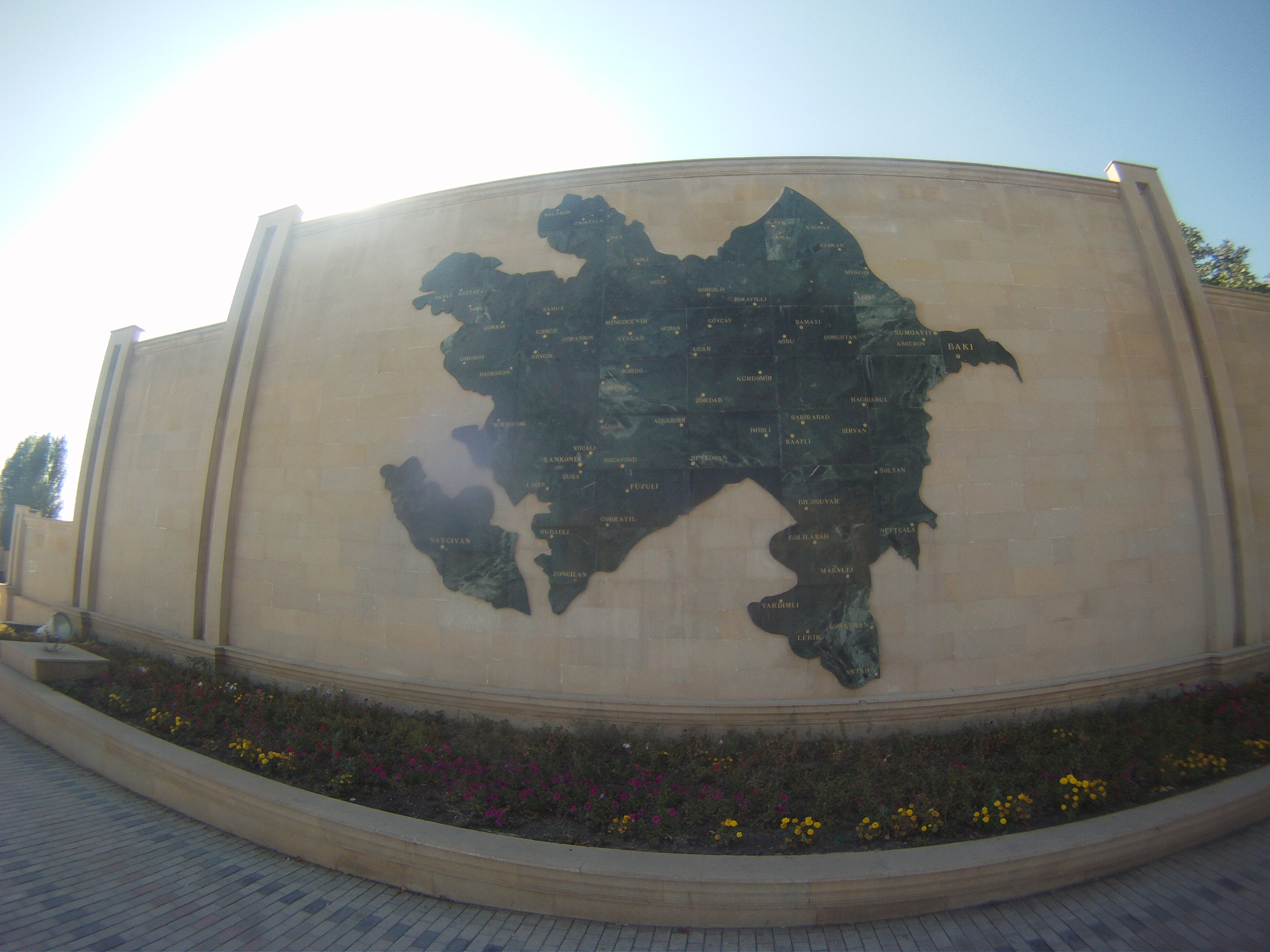
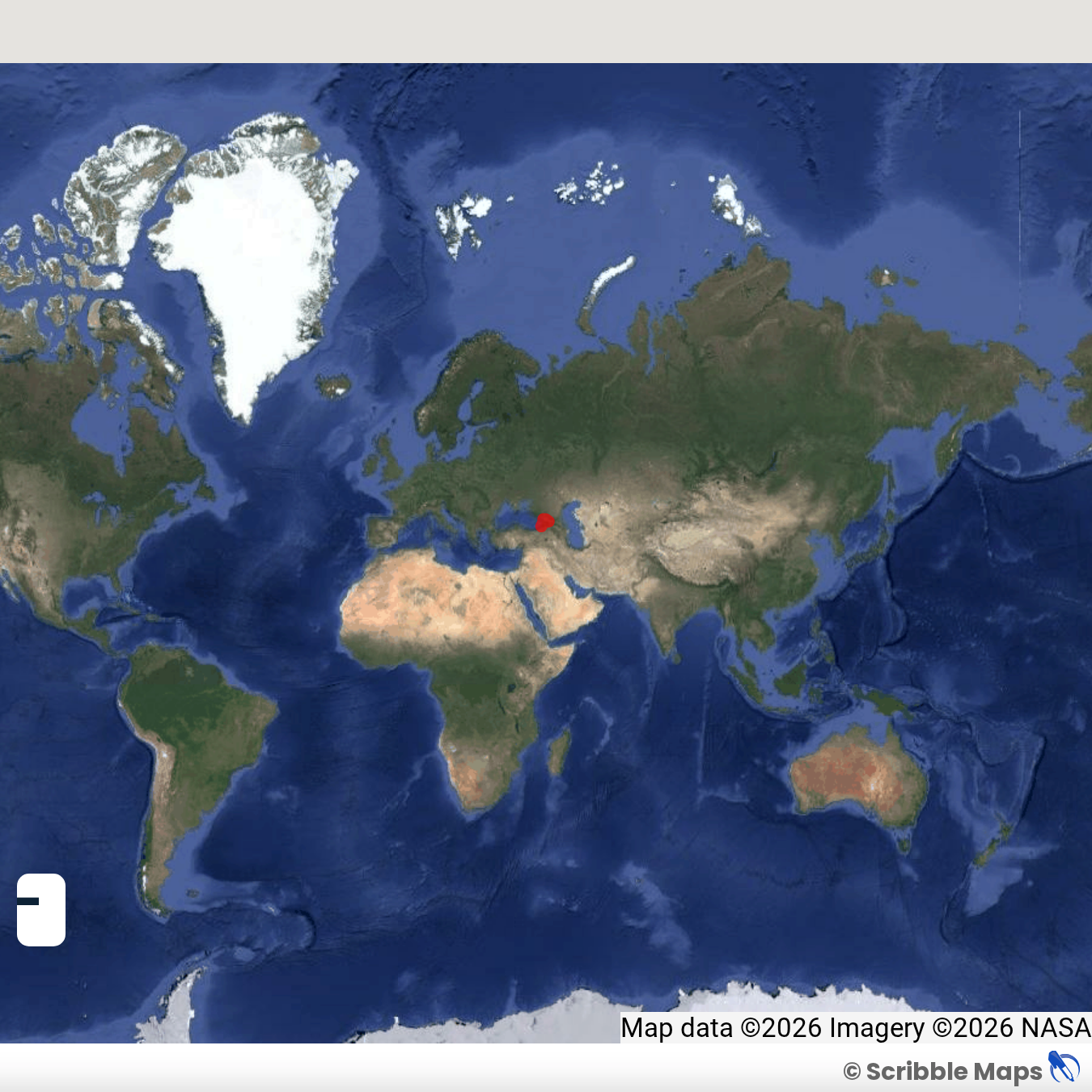
Azerbaijan, the small bit on land on the left is the infamous Nagorno karabakh region, claimed by both Armenia and Azerbaijan

Azerbaijan, the small bit on land on the left is the infamous Nagorno karabakh region, claimed by both Armenia and Azerbaijan

I have just arrived in Baku, and not sure if the allure of the city is due to it being at the end of a 100 mile desert road. I will be in the city for several days awaiting my Uzbekistan visa, and will post again before I depart for Kazakhstan.

An unexpected Azerbaijan visa

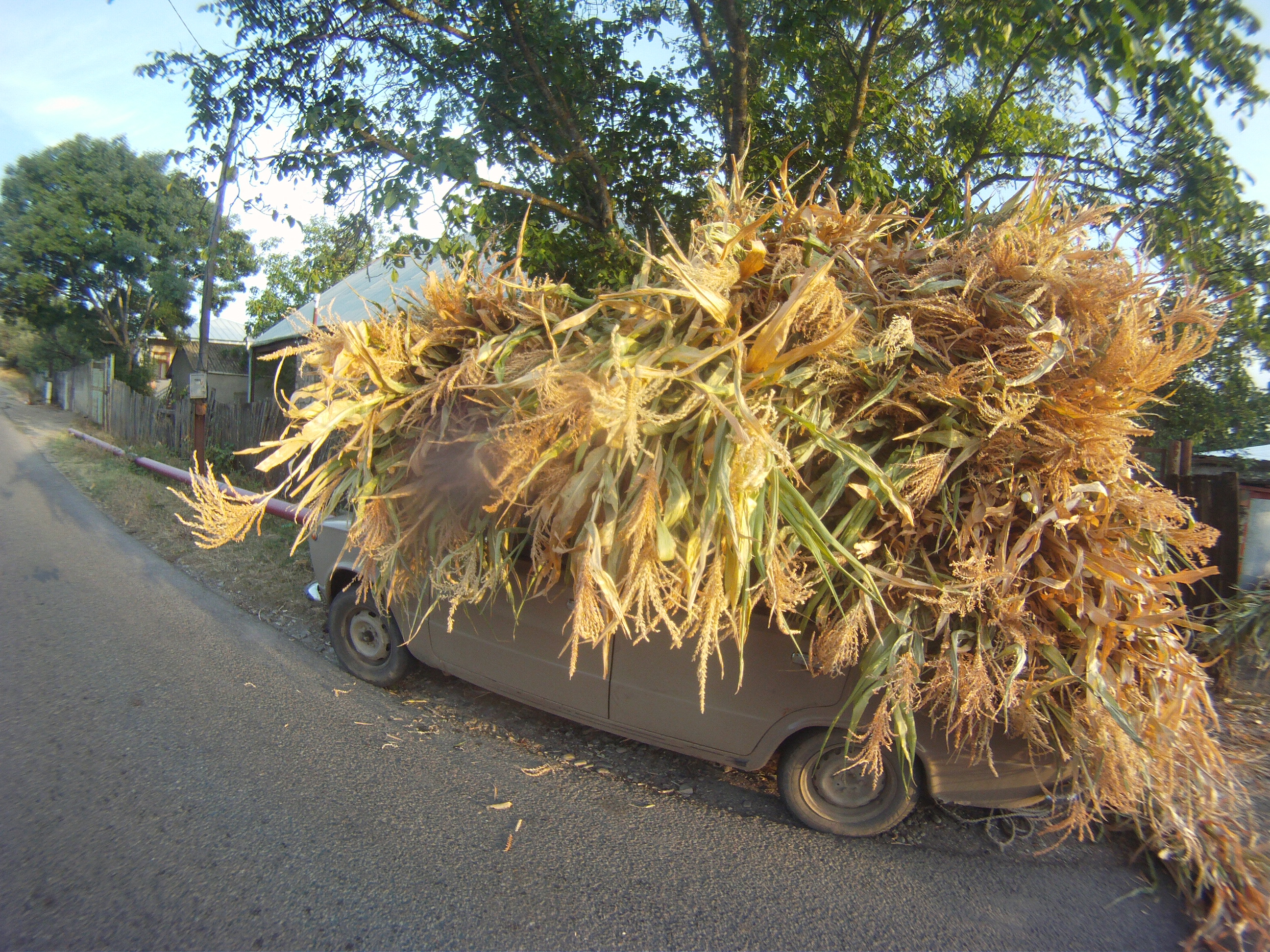
Georgian country car overloaded with fresh harvested corn

Georgian country car overloaded with fresh harvested corn

A few hours after my last post, I was contacted by the Azerbaijan embassy and was given my 22 day tourist visa. This has changed my itinerary yet again! I am now 10 km from the Azerbaijan border in the Georgian city of Ladodekhi, spending my last few Georgian Lari before cycling into Azerbaijan. With the right weather and visas in order I am now planning on shooting the shoots and making it to Kashgar, China before winter sets in! I still plan on going to Japan and all the other countries but from what I have heard the best weather for cycling Kyrgyzstan and Tajikistan is in September, so the only plan now is to make that window.

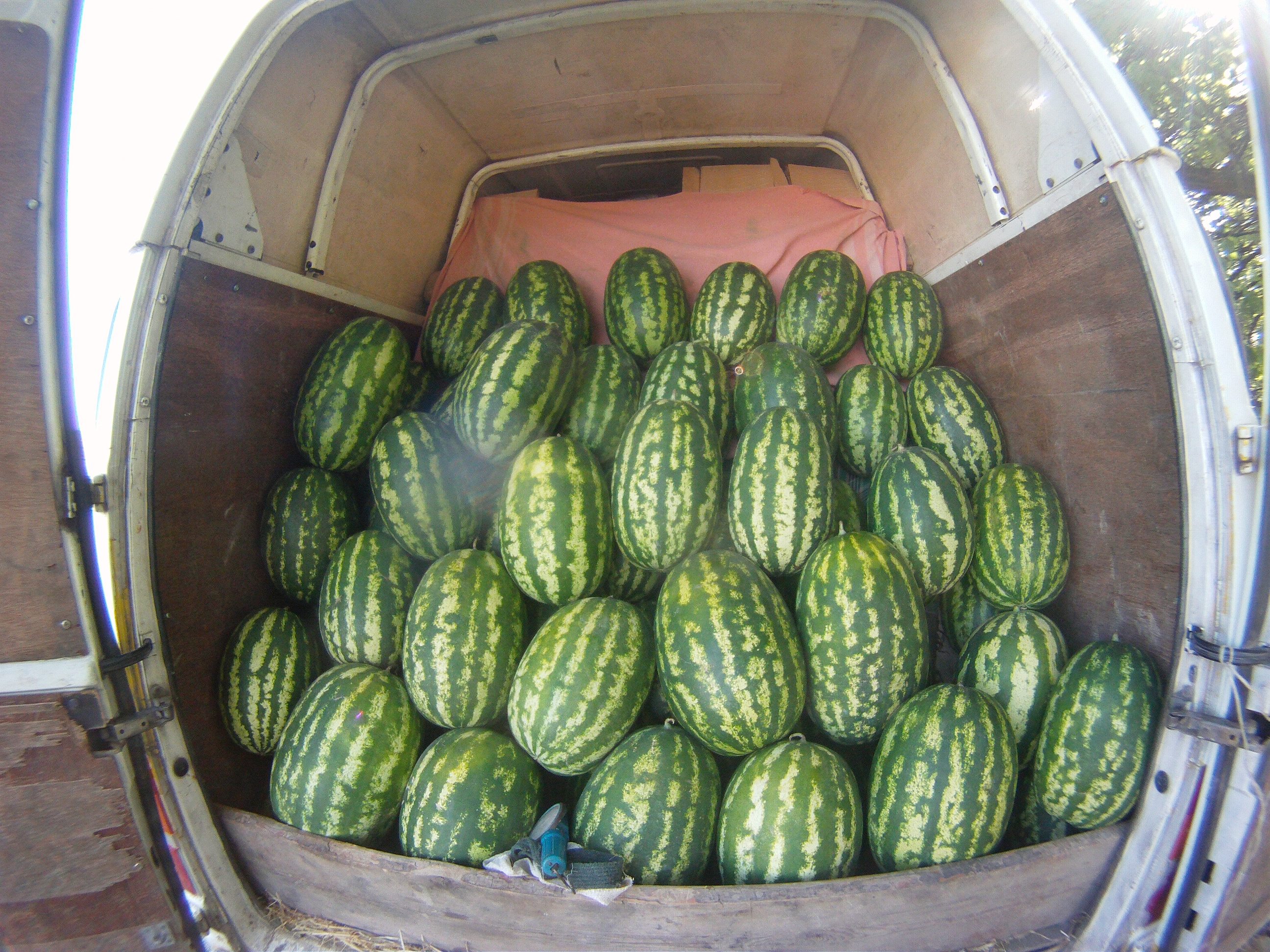
Let the quantity and size of the watermelons  reflect the heat of the central Georgian valleys

Let the quantity and size of the watermelons reflect the heat of the central Georgian valleys

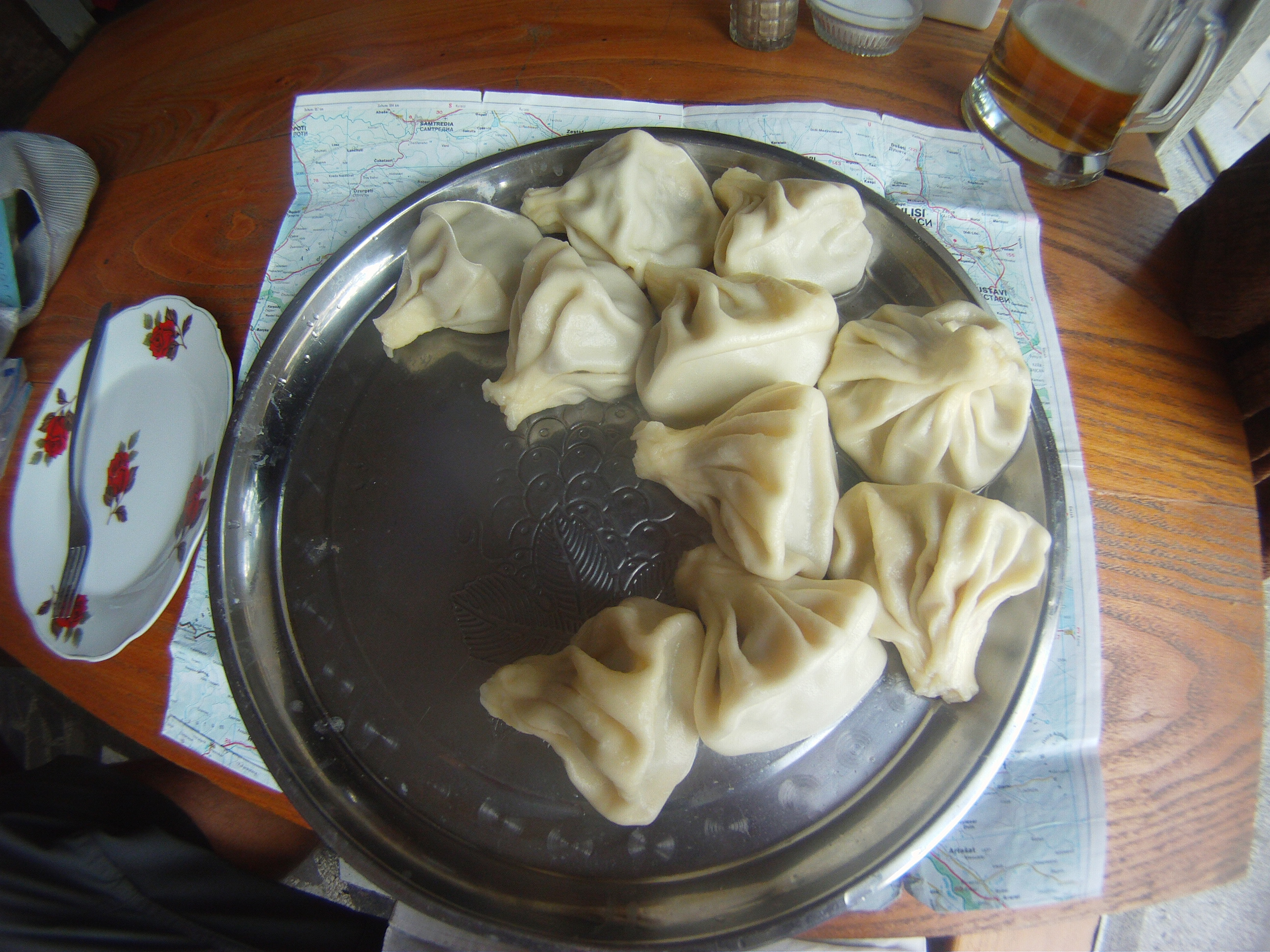
I just finished an epic farewell feast of 12 Khinkali’s and a full liter of Georgian tap beer for less than $4. The weather in central Georgia has been really hot, and the last few days I have been pedaling through a strong, dry head wind. Camping has once again been fantastic but the early sunrise makes sleep a short-lived process. The friendliness and hospitable Georgians have really brightened my spirits on hard days, and I am sad to leave such a wonderful country. I open my arms and heart to Azerbaijan and am ready to become accustomed yet again to the Muslim culture. Will write again soon! From Azerbaijan it is off to the Kazakhstan!

Georgian farewell meal! Khinkali, the Georgian equivalent to Chinese Shao long Bao

Georgian farewell meal!
Khinkali, the Georgian equivalent to Chinese Shao long Bao

A sudden route change

Taking some time off near a local stream

Taking some time off near a local stream

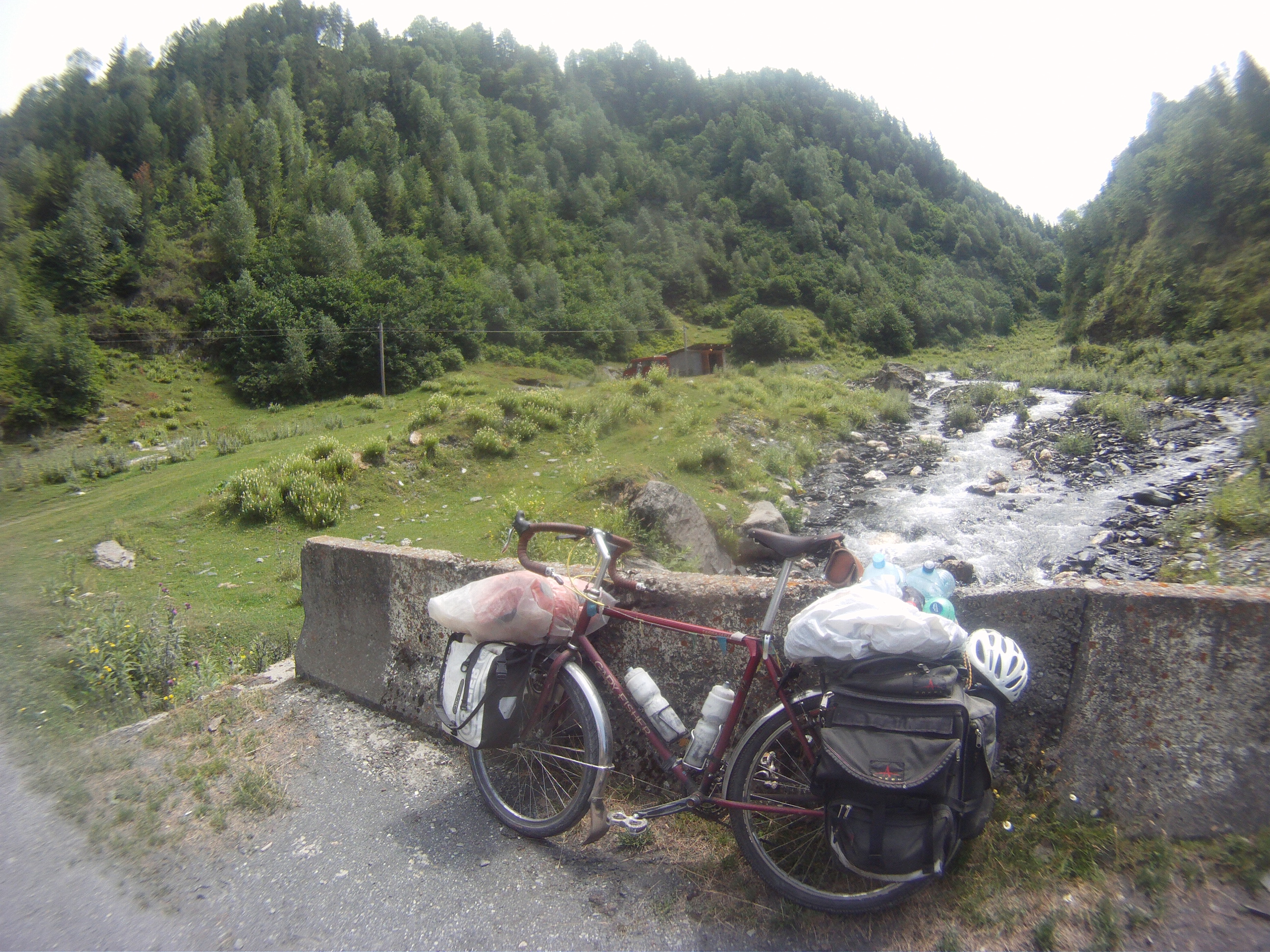
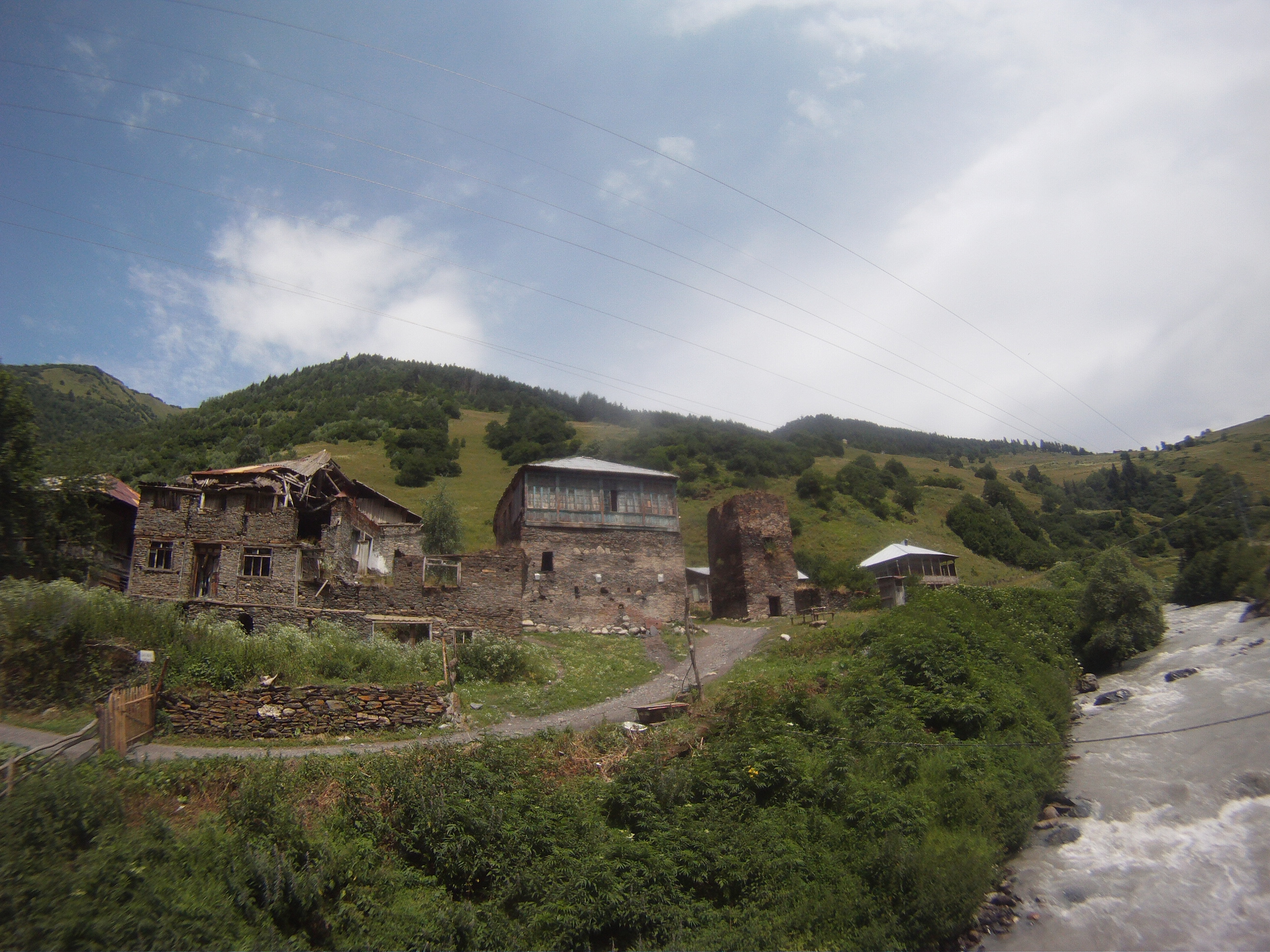
Mestia was a rather large tourist trap, with none of the perks that go with it, no internet! I would describe the city as something similar to the touristic villages in Yosemite. Prices have soared, but produce and bread remains cheap so I loaded up on pasta, a full tank of petrol for my stove and as much fruits and vegetables as I could carry and head out. The once paved road quickly turned into a rough, muddy trail. In some areas the puddles were so deep that the water level was over my bottom bracket almost submerging my full three-piece crank set! If I hadn’t climbed enough already, the road had few flat sections and I climbed endlessly for the another 45 km. I passed several small villages and on few occasions a group of funny faced tourists gazing out their windows at me in a high clearance vehicles. The once faint snowy mountains drew nearer as I made my way towards Ushguli. Definitely a difficult 45 km, but nothing as tough as riding the top of the world high way from Alaska to Yukon! Arriving soaked in mud, dirt and sweat I was ready to call it a day. But by chance I met a backpacking Latvian couple who revived my spirits by giving me a box of chocolates. We talked for a while about the Baltic night’s festival in Riga and they recommended I pedal to a nearby glacier they were returning from.

Small cobblestone built villages in Svaneti

Small cobblestone built villages in Svaneti

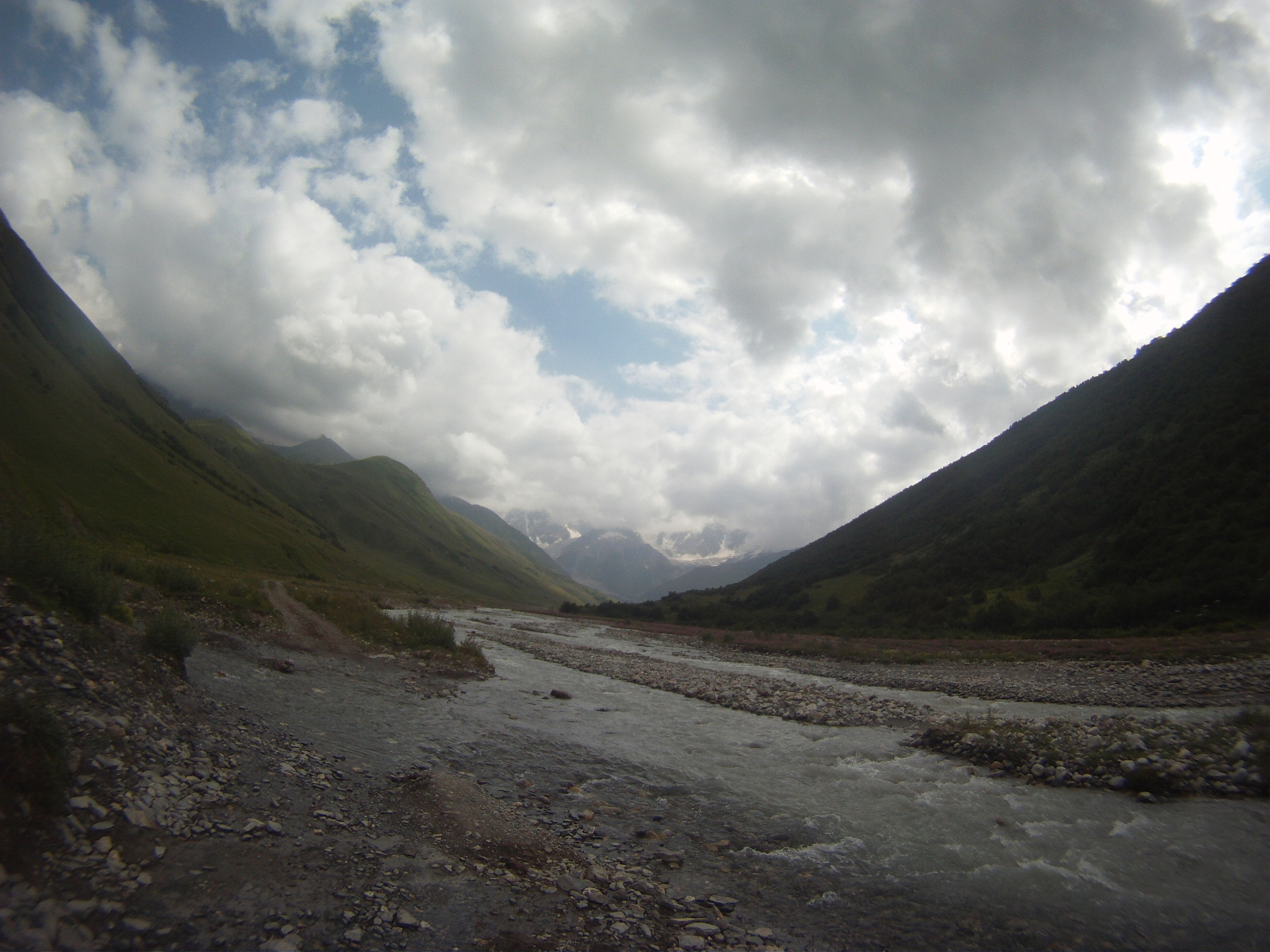
Stream bed trail leading to Glacier

Stream bed trail leading to  Shkara mountain and glacier
“The road passes through several streams and there is a rather large deep crossing, but if you pedaled here from Mestia you can do it”.
“OK, why not” I thought, Ushguri was a beautiful village but rather touristy (again!) with boats loads of Europeans walking around taking pictures of everything with their huge camera lenses. In the 45 minutes that I was there I met; Italians, Poles, Checks, Spaniards, Lats, Russians, Brits and Germans. Definitely your European outdoor getaway!! A general rule of thumb is that if there is a road it will be touristy! As quickly as I arrived I departed and followed another rough road along a glacial stream. It felt good to be out in the wilderness again, and I passed several groups of backpackers camping in the outskirts of Ushgurli. The road hugged the stream through a narrow valley and led straight towards Geogria’s tallest mountain Shkara (5068 m), the land border between Russia.
The road to Shkara continues

The road to Shkara continues

Steep climb to upper glacial road

Steep climb to upper glacial road

After about 10 km of rough riding the road split; going straight would lead me down an extremely narrow trail through thick brush and large rocks, and to the left was a wider trail but had an extremely steep grade that looked too steep even to push! I chose the left route; pushing with all my might as my feet slipped on muddy rocks. I was halfway up the hill when suddenly a high clearance police land rover comes racing up! Honking at me to get out-of-the-way, I quickly push Gaby into a thorn-bush and dodge the speeding police vehicle. A few seconds later and about 5 meters in front of me the land rover stalls and the tires spin, no traction! “Please don’t kill me” I thought! All it would take would be one false move or a brake failure and the range rover would come towering down the hill taking me with it. “Stop, let me pass” I yelled. By this time the 3 police passengers had vacated the car and were yelling at me in Georgian, saying “What the fuck are you doing pushing your bike here”. “Hold the car still while I pass” I yelled. I gathered all my strength, and prayed that I would get past the before tragedy, I pushed Gabriella up, my feet sliding in sandals, just a bit more… I passed the car my lungs burned and my calves felt like they were going to explode but I made, and continued on to the top of the hill and out of harms way.

Rocky glacial trail

Rocky glacial trail

Glacial camp site

Glacial camp site

From the top I could see what all the commotion was about. 100 meters from me was a group of people standing next to a vehicle with its hood up in distress. Ohhh I see, the police were obviously here to rescue them and I had somehow been caught in the middle of it. I continued to push Gabriella toward the vehicle, and stopped to ask if everyone was ok. The stranded group turned out to be an Israeli family, that got stuck with a dead battery. Before I could ask how long they had been there, the Georgian police land rover flies over the hill and races towards us. “Who has dead battery”? the policeman shouts, like it could be me with a dead battery! (“Ahh yeah my iPod is dead can you charge it so I can listen to Black Sabbath while climbing the glacier”). “Looks like it’s all under control, see you later” I said and pushed on. 5 minutes later the same Georgian police officer comes running along after me “Do you have any tools”, he asked? I laughed, “you came all the way down here and forgot to bring tools”? I turned around and pushed Gaby back toward the stalled car. I pulled out all of my tools and soon after a new battery was placed in the stalled car and both the police car and the Israeli family departed. I must say that the park cone wrench DCW-4 is the correct size for removing automobile batteries!

Late afternoon sun

Late afternoon sun

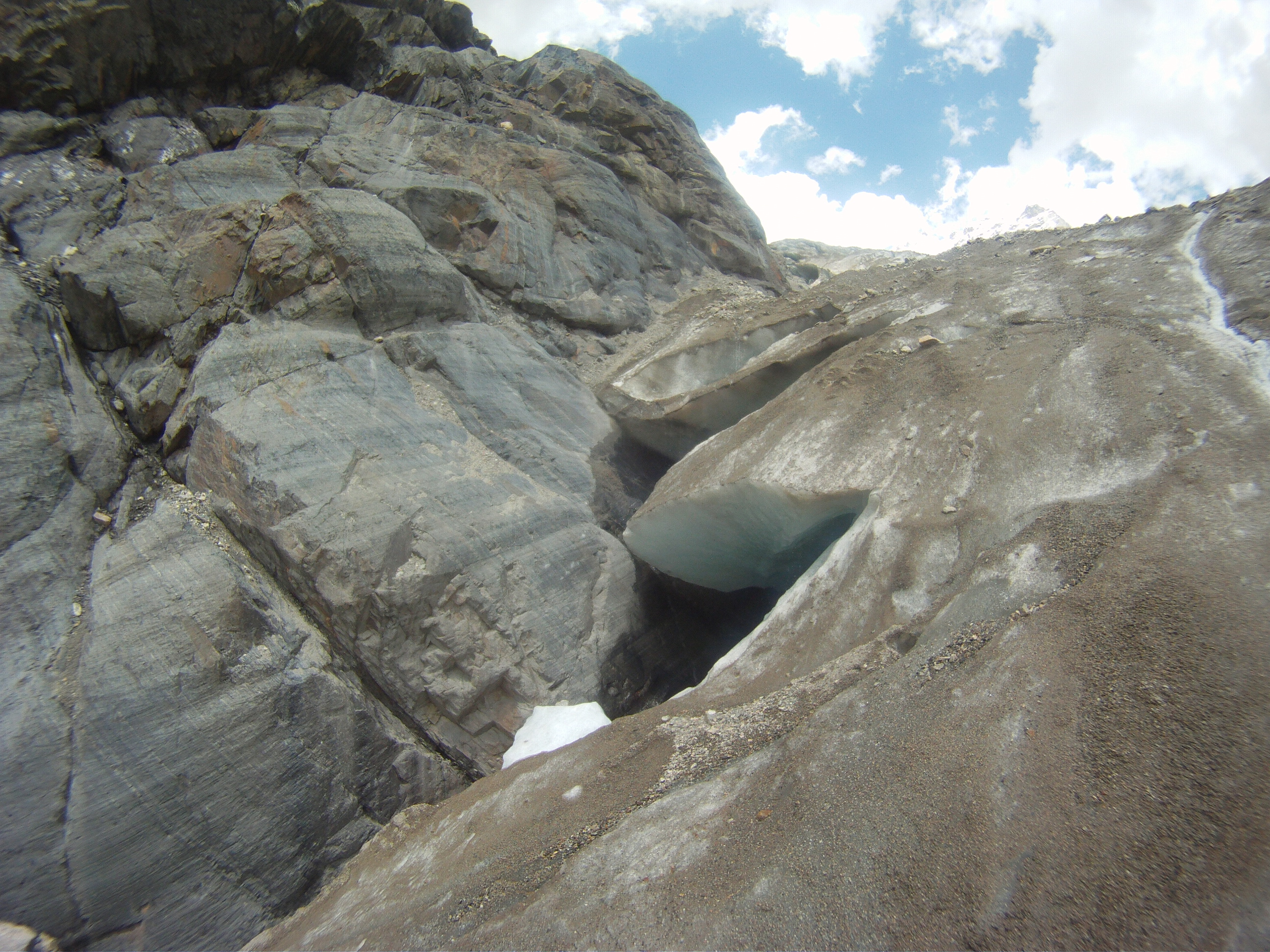
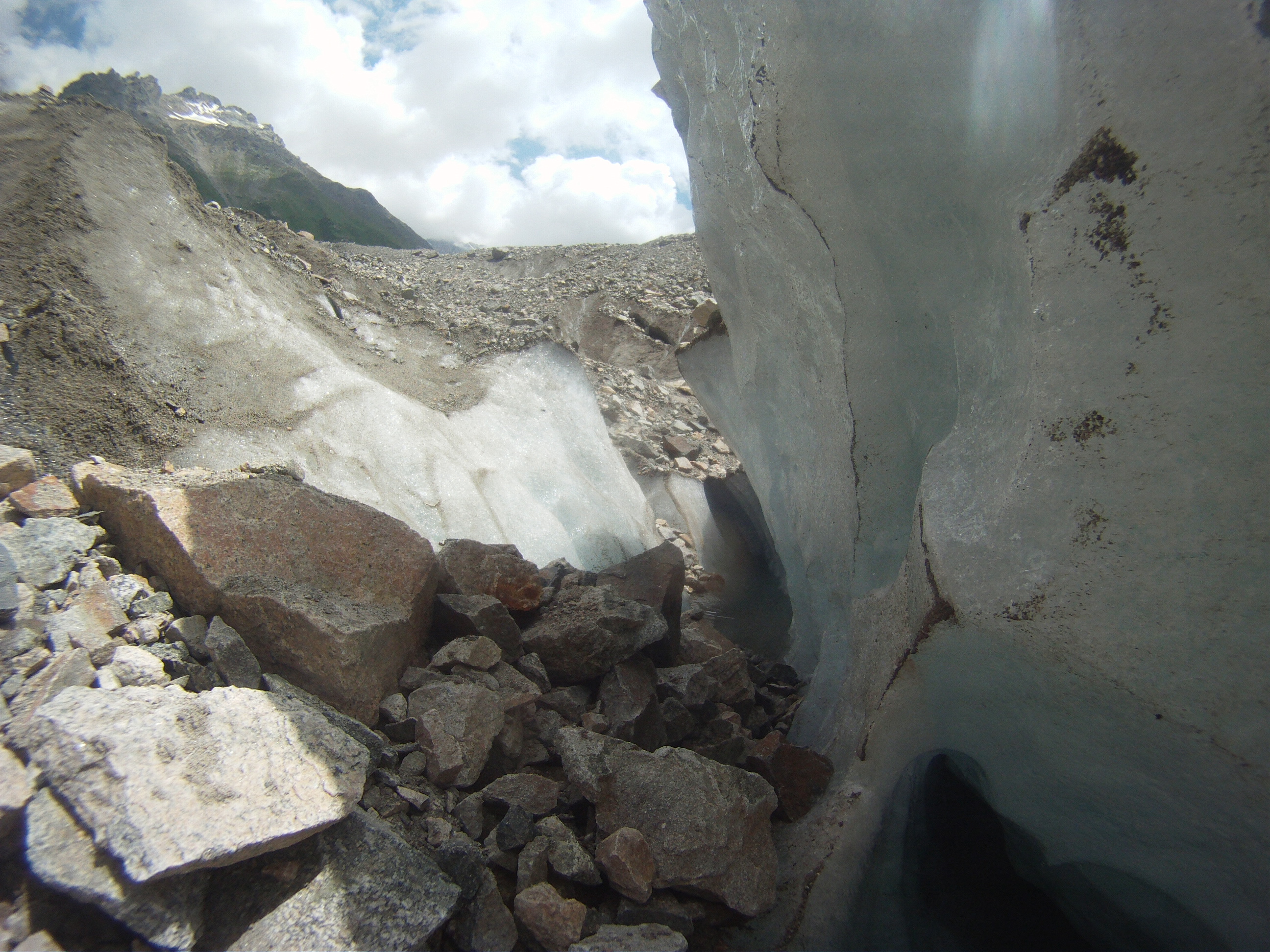
Hiking the glacier

Hiking the glacier

I spent the next two days camping along the stream and hiking around and up on the glacier. The water was too cold to swim, and even too cold to drink! The fast current picked up lots of sand and rocks giving the water a haze and leaving a residue in my water bottles. I was so close to the source however that I decided to neglect using the Purel hand sanitizer and drink straight from the current. From the tent I had a northern view of 5 snowy peaks and a large glacier, a large valley in the south and mountains east and west. This was one of the most beautiful places I had ever camped in, but I soon realized why so few people venture to camp out here. Not only is the journey to the glacier on a rough rocky trail that passes in and out of stream beds but during the 15 hours of day light there was very little protection from the sun. Within a few hours after sunrise the sun became to strong to sleep, and continued in this manner until an hour or two before sunset. The whole valley was completely treeless leaving me with little option but to retreat near the steam to keep cool during the day. Not only was the sun a problem but there were killer biting flies! These guys would feast without rest or mercy on any open flesh during the intense daylight hours, and followed me everywhere I went even all the way up to the glacier. A bite from these guys would draw blood, and I spent hours keeping them at bay.

Inside Ushguli church

Inside Ushguli church

Leaving my camp I headed back to Ushgurli, and visited a “historic relic” church. Georgia is one of the oldest Christian countries and it is reflected in their churches, old stone towers filled with beautiful frescoes. Having paid my respects to one of Georgia’s oldest churches I then hit the road and climbed to an elevation of 8,000 ft. I looked around for the snow-capped mountains but they were all hidden beneath a blanket of clouds, and the sky had become a dark grey. Lightning flashed and seconds later I heard the report. “Fuck, I had better get out of here” I thought. The smell of ozone permeated my nostrils as I descended down into a valley. The rain was small at first but quickly turned into large blocks of ice, I was soon pedaling through the worst weather I had encountered on the entire pilgrimage! The temperature, like the hail, dropped significantly and soon I was shaking with little feeling in my fingers as I pulled harder and harder on the wet brakes during the steep descent.  With little protection from the storm and after watching the narrow mountain trail give way from a newly formed river I moved as quickly as possible to get to safety. I was scared! I was almost at the point where my rational thinking stopped and all I wanted to do was stop pedaling a freak-out. I continued on and barely made it passed a washed out section of the road, at one low point in the road I pushed Gaby through water close to waist-high. I still wanted to freak-out, caught up in some sore of obsessive compulsive dilemma, but I knew that I had to keep going or risk being stranded. I hadn’t seen any cars since departing Ushgurli and I knew that I was on my own out here. It continued to pour all day but I kept on the trail and made it to an asphalt road by evening. Everything was soaked so I picked up a small bottle of vodka and crept into the protection of my sleeping bag, soon passing out.

Highest pass on Svaneti road 8,000 ft

Highest pass on Svaneti road 8,000 ft

The storm begins

The storm begins

The next day I continued east, hoping to make it to Tbilisi, the capital, in a few days. After about 100 km of hard riding I suddenly camp to a patrolled border. Military personnel, fully armed in camouflage, stranding in front of tanks. “What the Fuck?” Did I somehow pedal into Ukraine? Who gave me this map? After a few broken Russian sentences I was told to retrace my path or suffer the consequences, as I had somehow pedaled into Russian occupied Georgia, Osseti. I didn’t have to question the order, and abruptly turned around. It was getting dark so I stopped at the nearest town of Oni and asked the Policia if I could camp the town park. Not only was I not allowed to camp in the park but I was also forced to leave the town, at night and was escorted to the city limits by a fat police chief driving a jeep. I climbed two steep hills with highlights guiding the way, and finally the tailing jeep turned around and left.

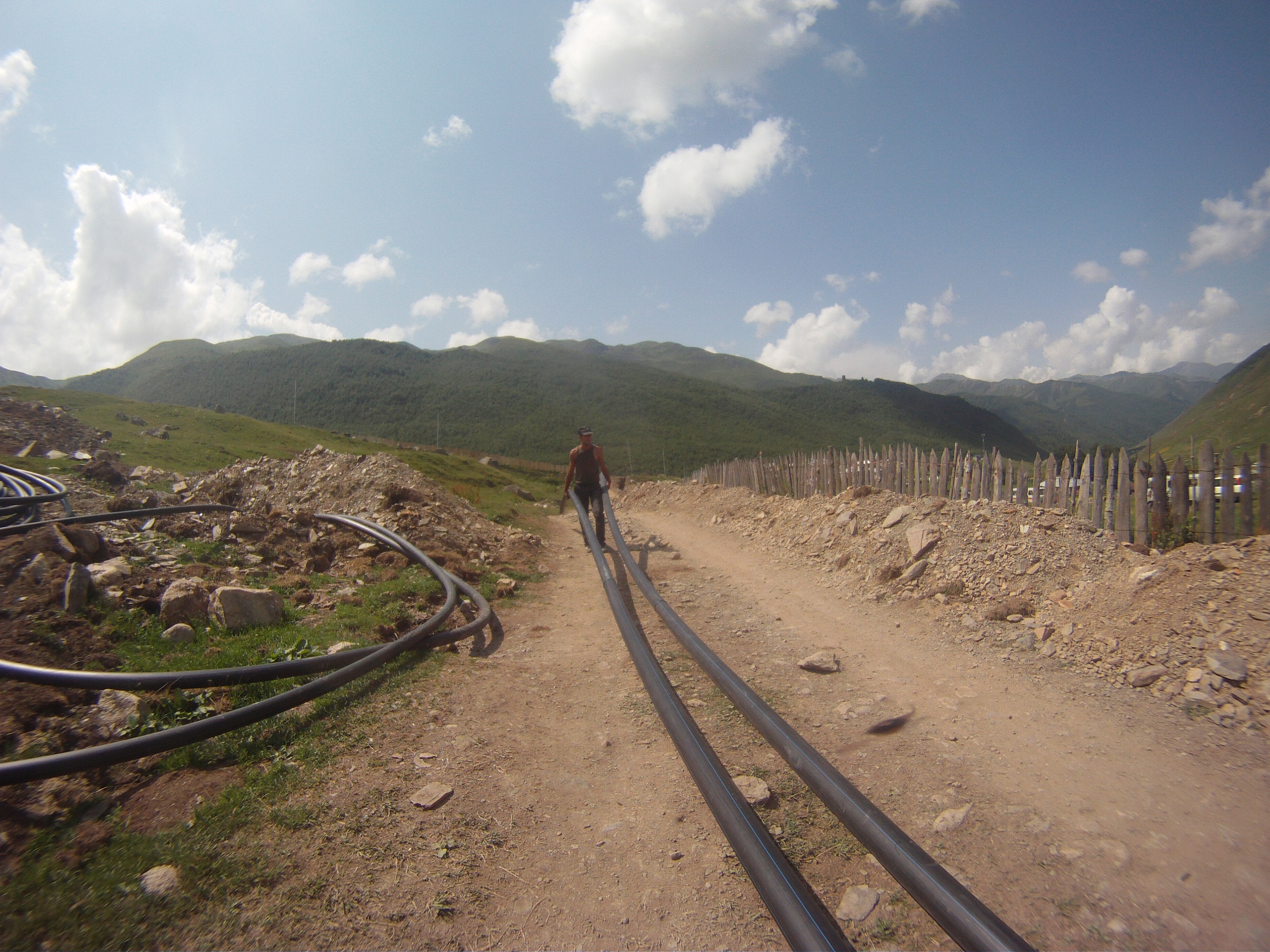
Russians laying pipes near the occupied territory of Osseti

Russians laying pipes near the occupied territory of Osseti

I pulled off the road and camped near the river, what a fucking hard last two days!! The next morning I pedaled a long steep 120 km to Georgia’s second largest city Kutaisi. I am here now planning my fall and winter cycling schedule. Due to the extremely slow Azerbaijan visa processing time I will have little chance of crossing the Pamir mountains into China before the onset of winter. Of course I could do what many other cyclist I have encountered are doing, ride as fast as you can all the way through, but that doesn’t work for me, especially in such an exotic location as central Asia. So not being able to completely traverse into China I have decided to fly from the Uzbekistan capital of Tashkent to Japan in October, and cycle south crossing into Korea and slowly making my way down to the Philippines, Malaysia and Indonesia, returning to Uzbekistan by early Spring. Once again another adventurous trip underway, but everyday since hitting the road has something to offer.

DCIM105GOPRO

I am now headed south to visit some of Georgia’s famous caves and on to Armenia for a few weeks. I hope to write again soon I apologize for the delay in posts but internet is somewhat rare out here. Strangely enough everyone knows the song “American Boy” and as soon I they find out where I am from they can’t help themselves from singing the tune!

Pedaling through Georgia

Water fountain in town square of Batumi

Water fountain in town square of Batumi

While crossing the Turkish/Georgian I looked to the locals and tried to get an idea as to what to expect of the new country I would soon by cycling. The local Georgians pushed and rushed to cut in the immigration line, but in Georgia, regardless of nationality all citizens wait in the same line. With a stamp on my passport good for a full year of visa free travel I pedaled on excited to see what the next few weeks of traveling would be like. Georgia marks the first country traveled to that I have zero background knowledge. I have never known a Georgian, heard their language and other than the fact that an US state shares the same name, I really had no idea what to expect. The border patrol guards smiled as I pushed Gaby through the crowds waiting to get their passport stamped and the first thing that caught my attention, after crossing the border was a huge Orthodox Church. Islam is now a minority religion so the days of dealing with grumpy, fasting Muslims are over. I pedaled along a rainy coast. What a different feeling the coast in Georgia has compared to Turkey. Beach shacks, huts and even small guest houses tastefully built out of bamboo and other native products. Georgians seem to adapt better to their coastal environment rather than the classic huge concrete monstrosities so often found in Turkey.

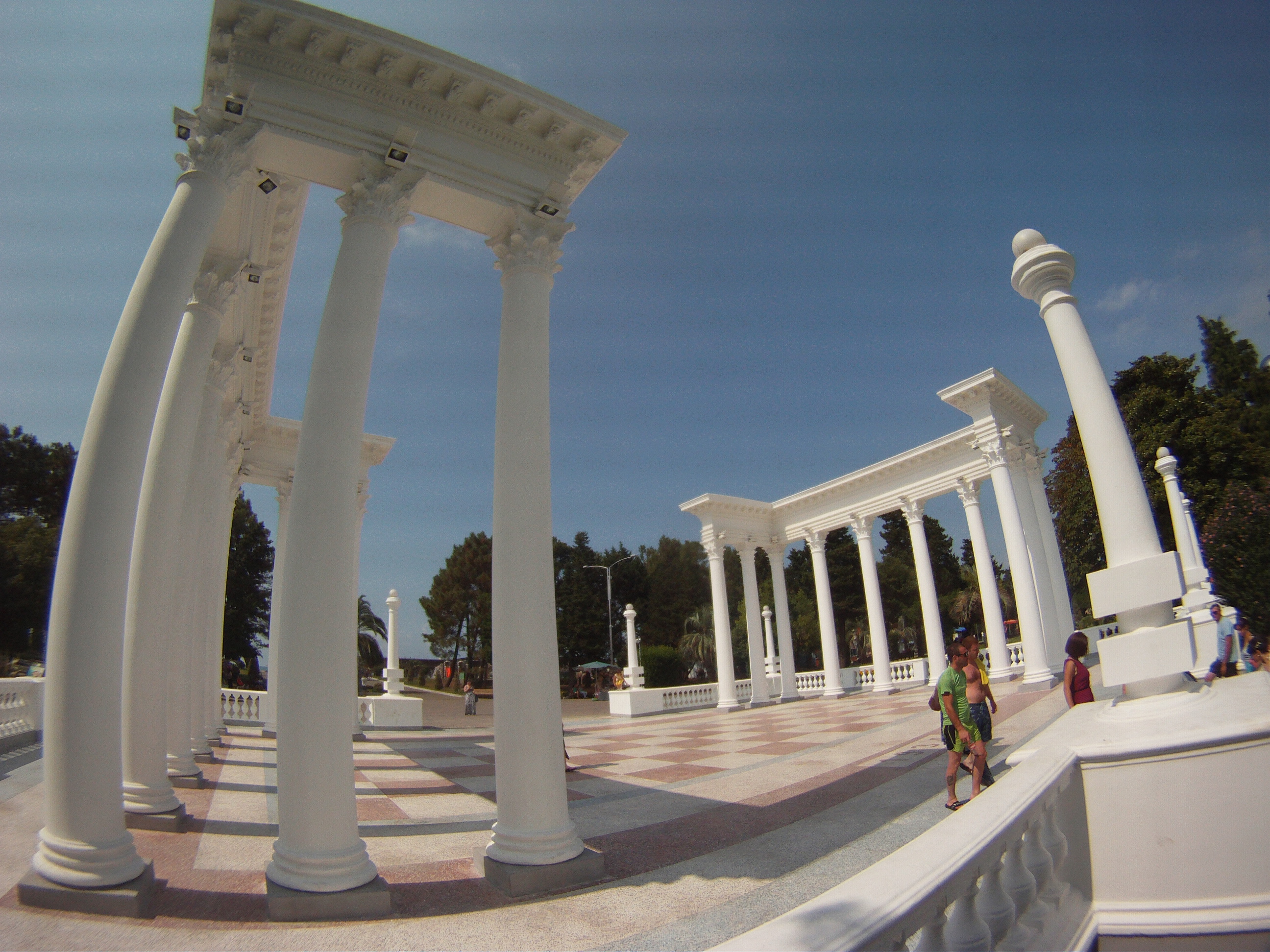
Greek columns decorate the town promenade

Greek columns decorate the town promenade

I spent two days drying clothes and bonding with locals in the coastal city of Batumi. English once again is rarely found, and with little secondary options I conversed in Turkish. I found the city quite odd, large miss shaped buildings from the days of the Soviet Union and an endless boardwalk of 18 km. The city is split into two districts, urban and industrial, with churches marking the barrier between the two. A few facts learned from several of the overly zealous locals; Georgia is the homeland of the legendary “Golden Fleece” sought after by many as Georgia was one of the earliest countries to possess the secrets of gold production. Georgia is also one of the oldest Christian countries, adopted in the first century AD, and home to Joseph Stalin.
At first my sights were set on learning the Georgian language, but quickly I found that most if not all Georgians, (as in all ex-USSR countries). Meaning that with a little practice I should be able to get around in Azerbaijan, Kazakhstan, Kyrgyzstan, Uzbekistan, etc. To my surprise, after learning a few of the basics, Russian is very similar to Serbo-Croatian. Back in my days at Santa Monica I remember listening to friends converse in Russian and being completely lost the language, but now with some background in other Slavic languages the learning process is much easier.

Some friendly Georgians showing off a freshly made acharuli

Some friendly Georgians showing off a freshly made acharuli

My Azerbaijan visa application finally went through two weeks later than expected, leaving me with three weeks of down time before I can legitimately enter the country. My plan is to explore the depths of Georgia and if there is still time cycle into Armenia.

close-up

close-up salty cheese, a fried egg, butter all tucked into a homemade loaf of bread. The Georgian equivalent to the Hawaiian loco moko.

Handmade Pilmeni (these are a Russian dish though)

Handmade Pilmeni (these are a Russian dish though)

While in Batumi stopped at the local bike shop and met a Georgian tour guide, (he  was trying to patch a flat tire). He spoke English well and we talked about cycle touring. He had never traveled by bicycle before but knew many of the beautiful routes in the country. After twenty minutes I had a map outlined with 4 different remote routes throughout the country. (I told him I preferred desolate dirt roads in the wilderness and he seemed to know many).

Getting the scoop from the locals!! Juseph hooks up and hand drawn map at one of the largest bicycle shops in Georgia

Getting the scoop from the locals!! Juseph hooks up and hand drawn map at one of the largest bicycle shops in Georgia

Local Georgian bicycle shop

Local Georgian bicycle shop

With dry clothes and a rather large Russian vocabulary I set off for the northern Georgian Alps, where the pavement official ends near the Russian border. I heard that even in the summer months one can still find glaciers and snow-capped mountains. These are the perfect ingredients for a great cycle tour! Pedaling through the remote suburb villages I got a great taste of local Georgian culture. During the hot afternoon hours men relax in the shade and drink vodka and beer. (Local beers have a minimum a minimum alc of 12% and the vodka is usually close to 120 proof). Bakeries exist everywhere and Georgians even have a pastry similar to Burek, called Haja Puri. Prices are close half of those in Turkey, with a liter of beer costing about a $1 and fruit/vegetables so cheap that they are almost free. Also being so close to Russia frozen dumplings can be found in every supermarket!! Yum!!

Cheery locals sipping strong drinks in the shade of the afternoon sun

Cheery locals sipping strong drinks in the shade of the afternoon sun

The countryside is so green, and shoulders sometimes are covered by the overflowing  jungles. Cows, pigs and goats wander the busy roads, eating tall grass from the cracks in the pavement and sleeping the shade. Pigs can often be found bathing in muddy puddles and it is not uncommon to see cows wandering around in any city or town in Georgia! Seriously I was in front of city hall in Batumi and was a cow cross the street on to the sidewalk, none of the locals seemed to notice!

Cows raid my camping spot, nothing like waking up to a cow peeing a few feet from your tent

Cows raid my camping spot, nothing like waking up to a cow peeing a few feet from your tent

Cooking dinner in the early evening

Cooking dinner in the early evening

With all the wilderness I am often accosted by wild animals while camping at night. The screeching of a lynx is nothing new to me and barely makes me stir in my tent, but the foxes here are unruly! One morning I awoke to a fox pawing its way through the zipper of my tent trying get at my bread. Three days after leaving Batumi the climbing began as I slowly made my way north to the village of Mestia bordering Russia. Drinking water became scarce and to avoid gastrointestinal issues I sanitized stream water with Purel hand sanitizer. (The water tasted terrible but I am still going strong).

Glacial lake view after super steep climb, Georgian interior

Glacial lake view after super steep climb, Georgian interior

The only local supermarket, closed for the afternoon festivities

The only local supermarket, closed for the afternoon festivities

The route through the northern Svaneti mountains will lead me to a remote churches in Ushgurli, and has some of the best scenery in Georgia. So far I have cycled passed waterfalls, huge green meadows, snow-capped mountains and endless streams, there are even glaciers high up in the mountains and their turquoise water fills the local streams and lakes. I occasionally check in with other cyclists I have met along the road and several of them pedaled straight through Georgia and are now waiting in a hotel in Tbilisi (the capital) for their Azerbaijan visas. To me this is an absolute waste and makes cycle touring similar to that of urban travel (going from city to city), the a cycling journey is far from being about the destination. Today I met some hikers who asked me if I wanted to crash in their guest house, I told them I would love to use their shower but I would rather sleep in the wild. Check in again soon!

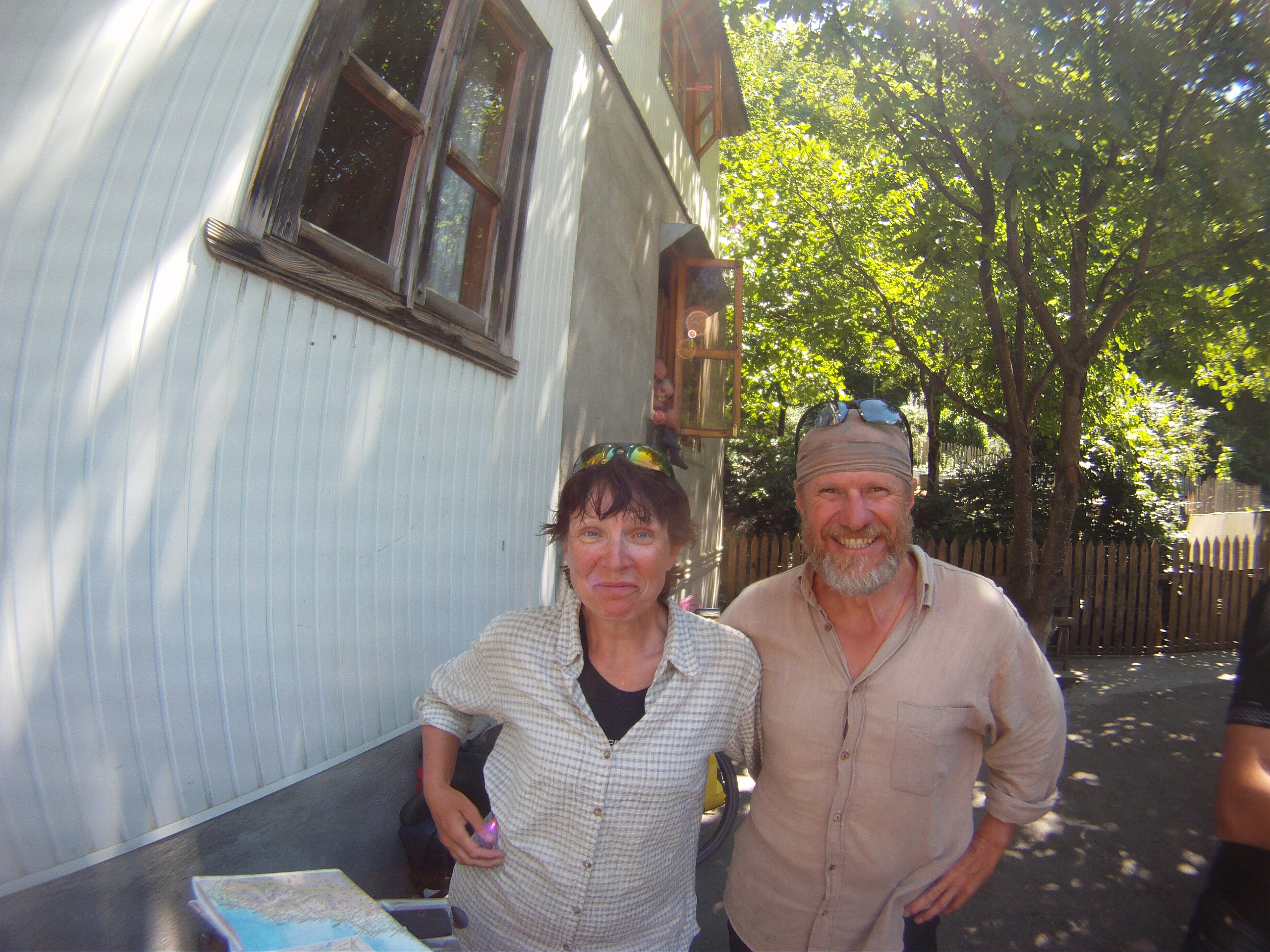
A Czech couple on a Black sea cycle tour! These guys had pedaled over 6,000 km and were in their early 60's! Grand parents, they were slow on the hills though

A Czech couple on a Black sea cycle tour! These guys had pedaled over 6,000 km and were in their early 60’s! Grand parents, they were slow on the hills though


A super chill local water fall,  but super treacherous, slick rocks and no guard rails

A super chill local water fall, but super treacherous, slick rocks and no guard rails