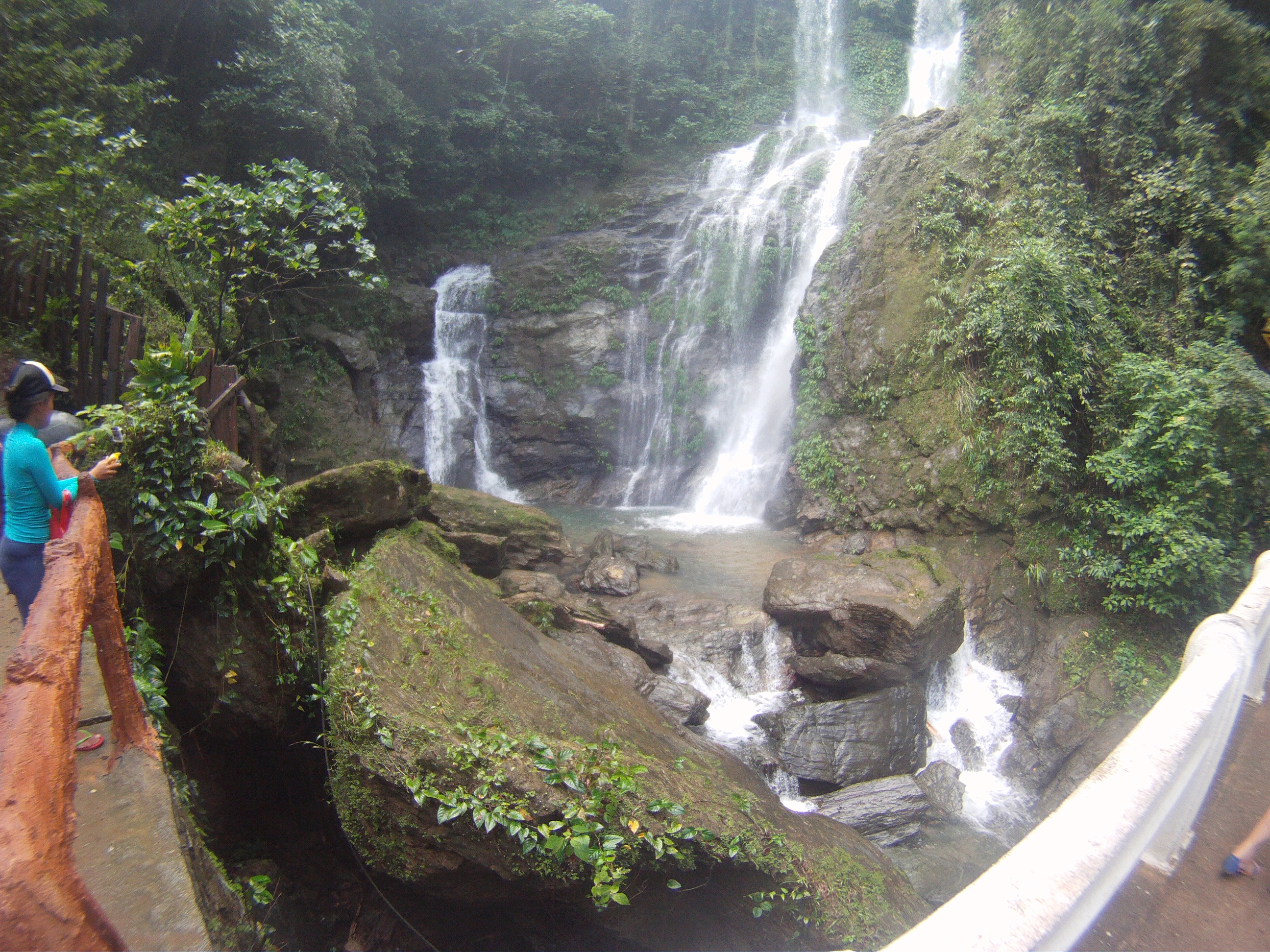
Tamaru falls
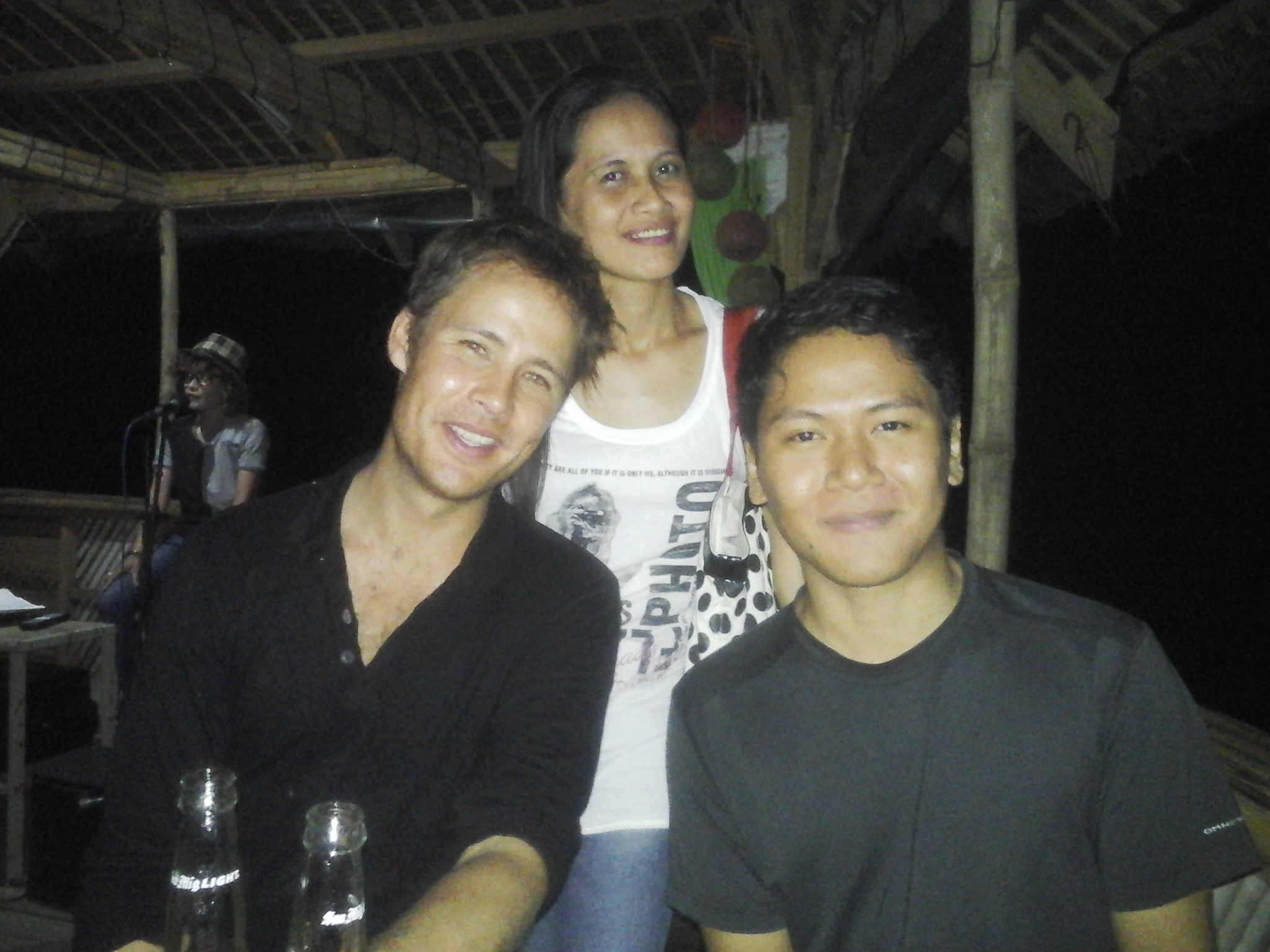
Charlot, and Bob Calipan Videoke bar
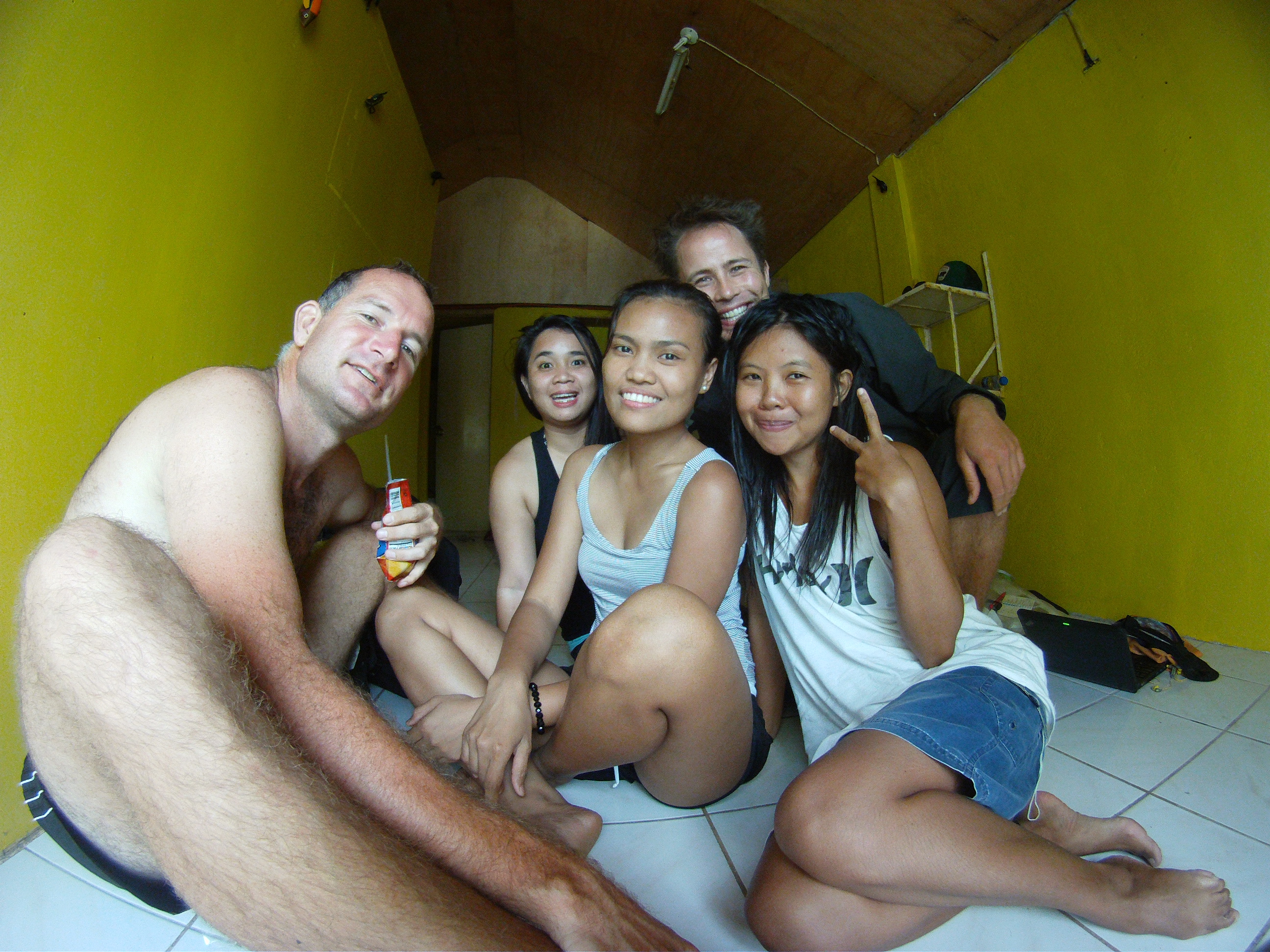
Jeroen, Joyce, Helene, and Ciaro
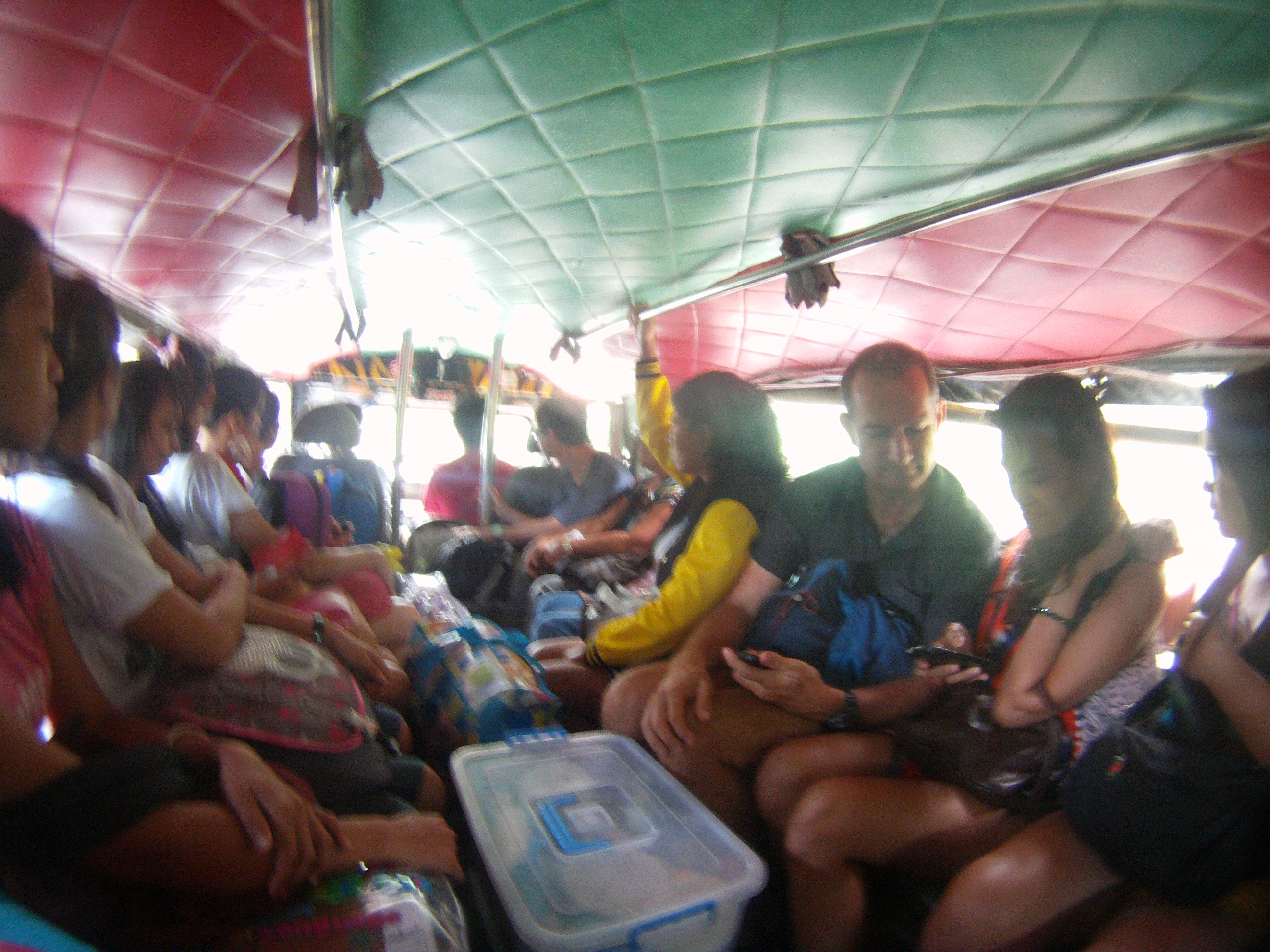
Taking the local jeepney to Tamaru falls

A crew of 6 divers on a tricycle

Jeroen and Joyce

Tamaru falls
Charlot, and Bob Calipan Videoke bar
Jeroen, Joyce, Helene, and Ciaro
Taking the local jeepney to Tamaru falls
A crew of 6 divers on a tricycle
Jeroen and Joyce
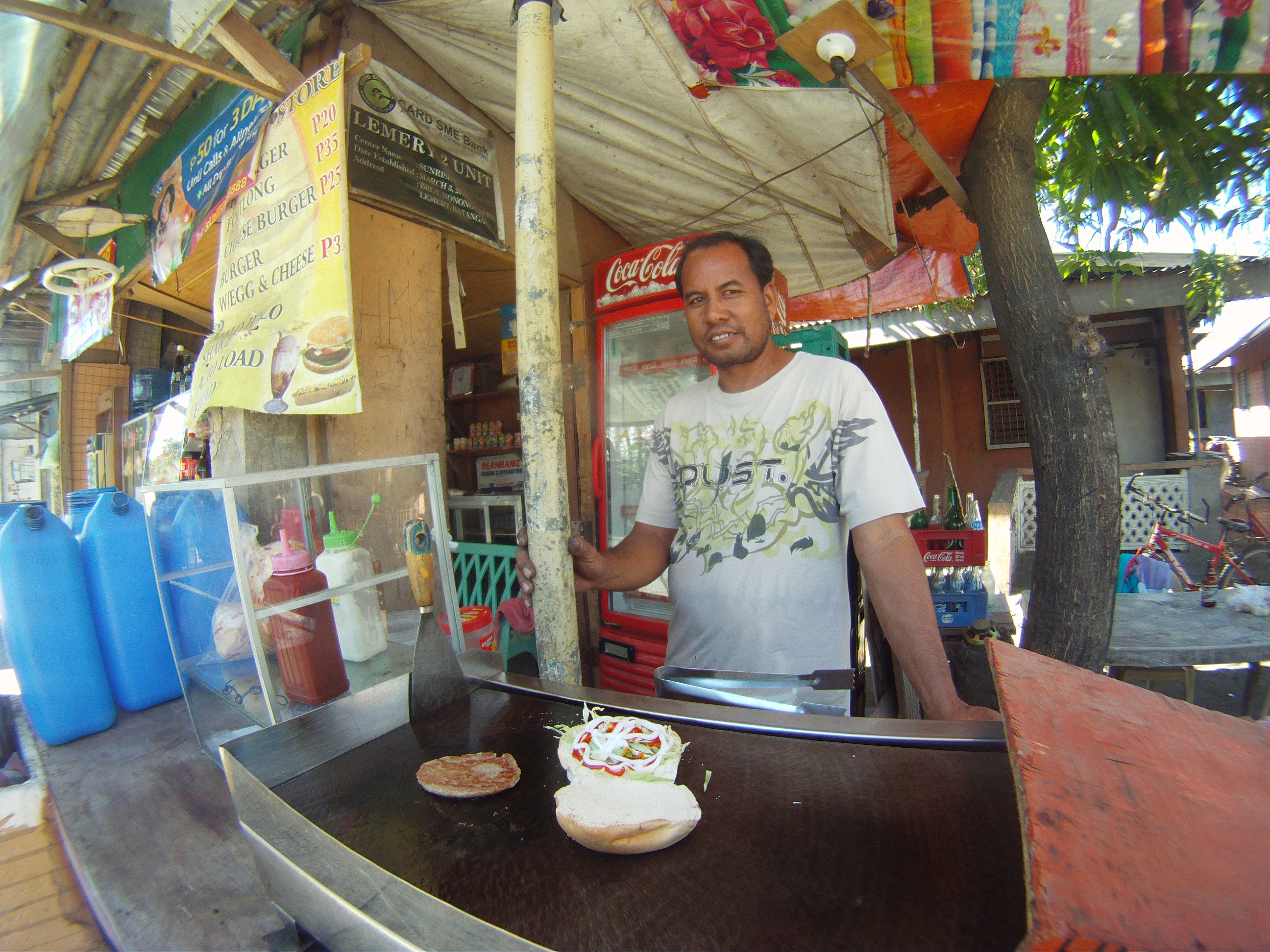
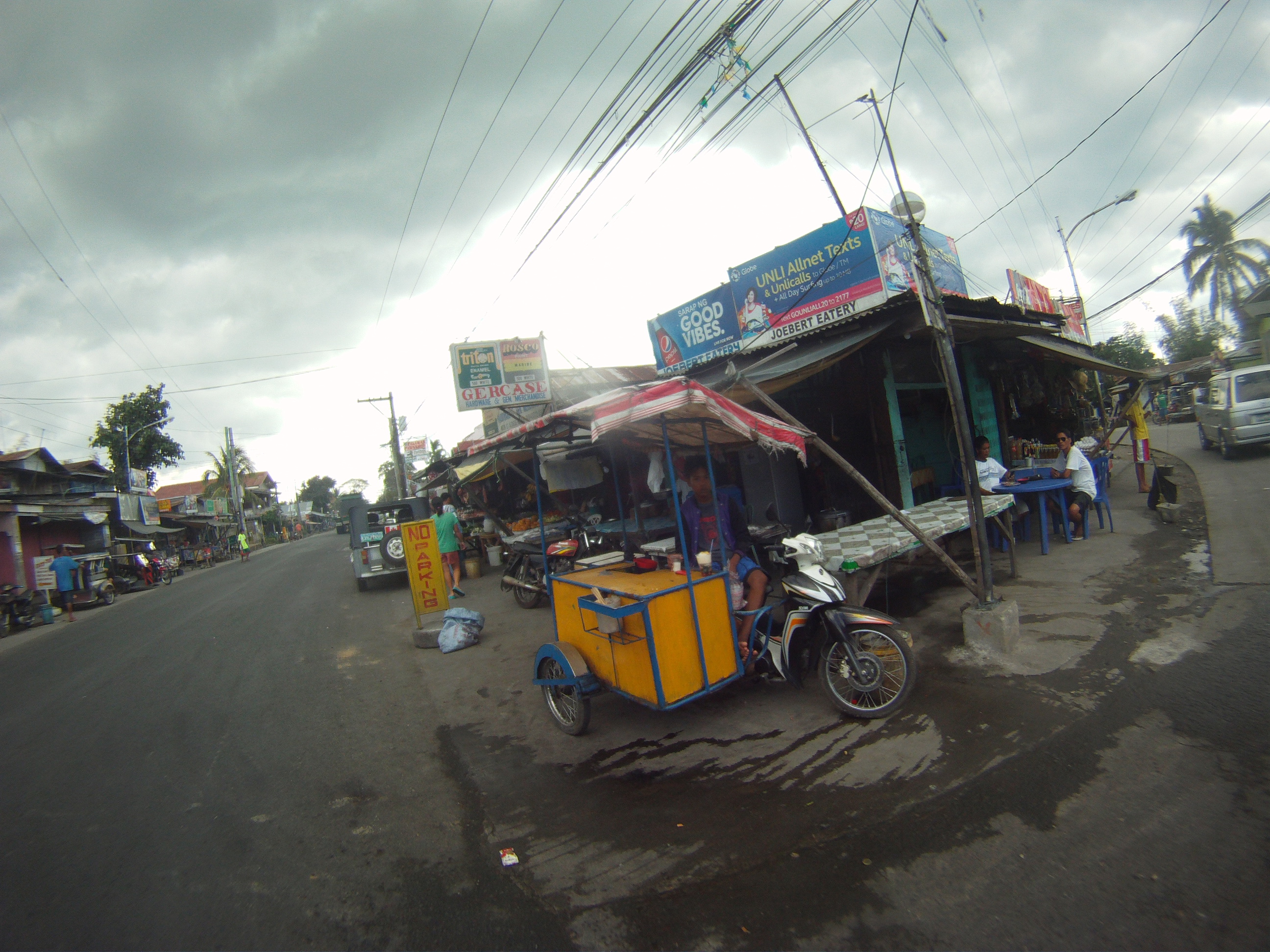
Filipino roadside

Local lounging at the bakery
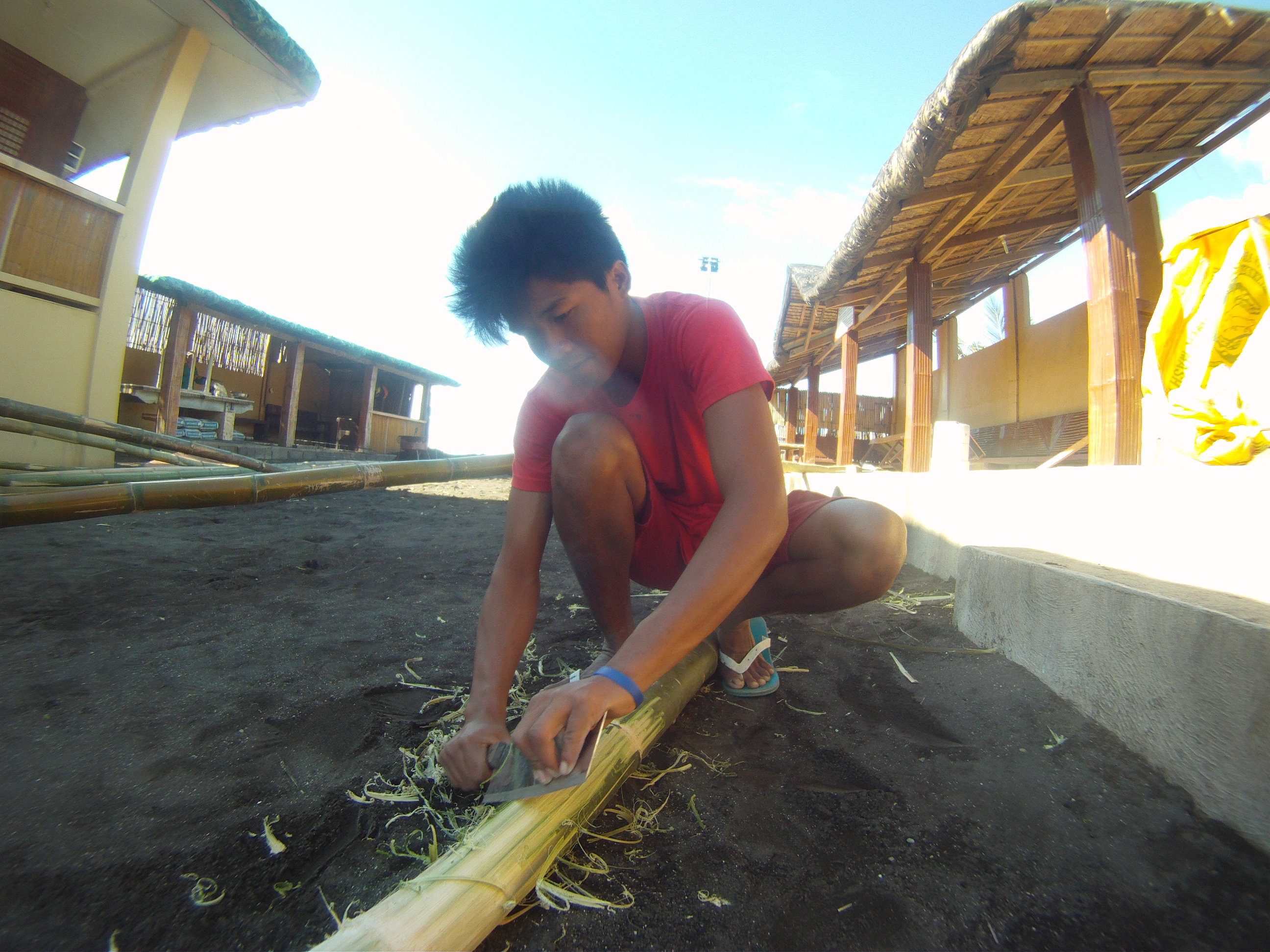
Sanding the bamboo clean for a kubo, bamboo house. This boy spent hours sanding with a butcher knife

village alleys
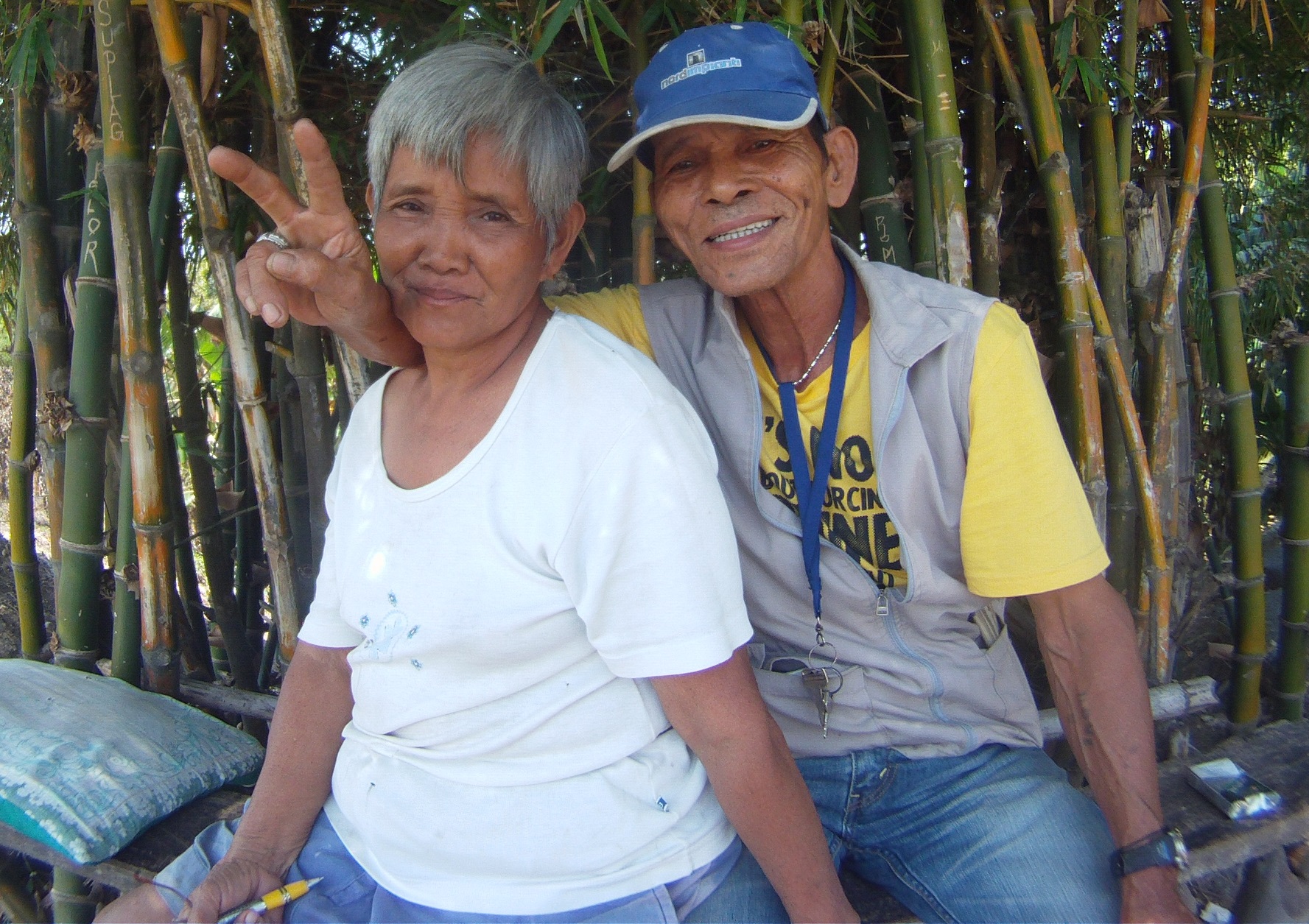
Cristos and Elle

Cristo’s Bamboo retirement home

Inside the Kubo

Local girls seeking their future

Cristos’ tricycle

Fried fish dinner and lunch
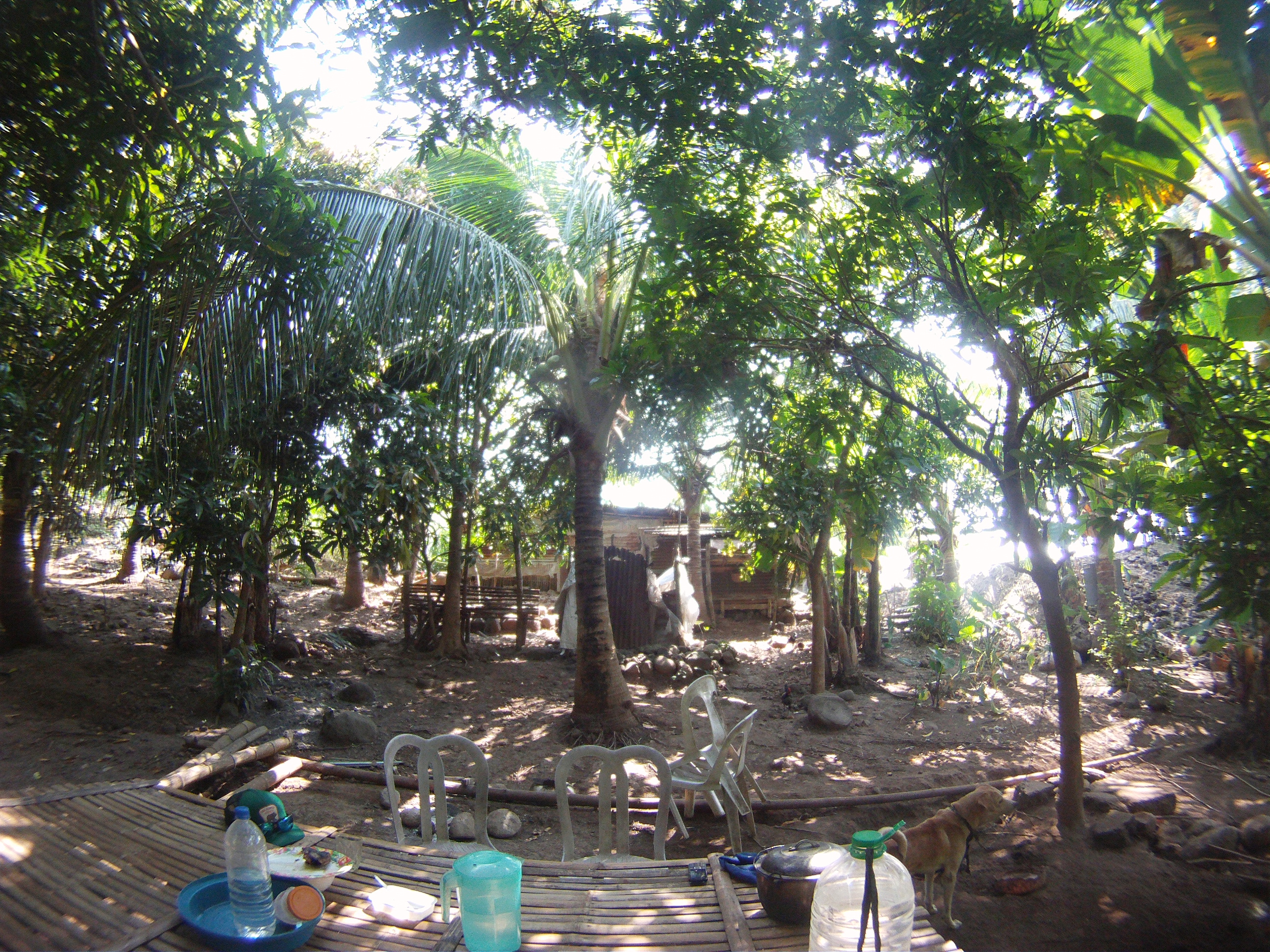
Jungle abode
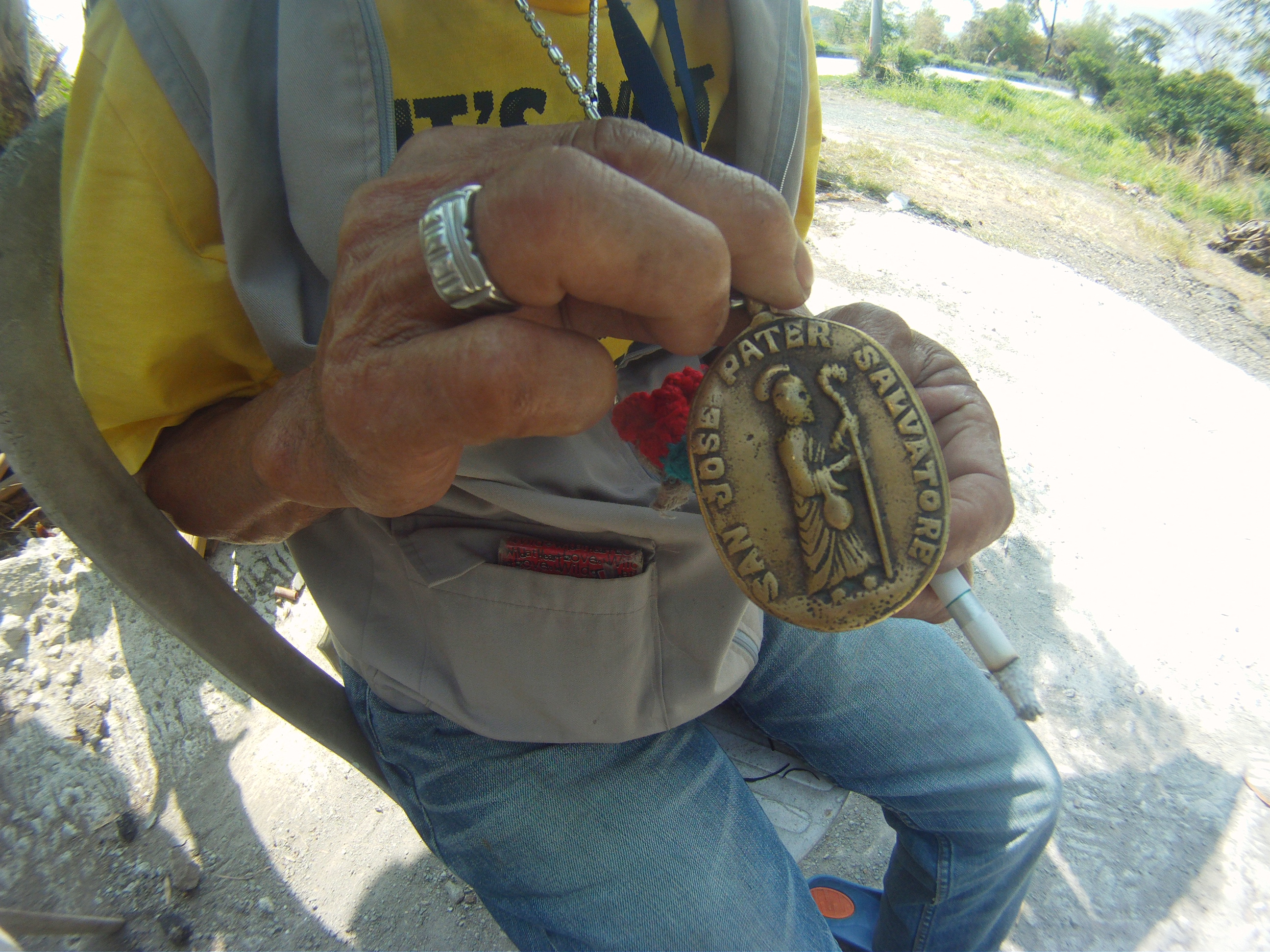
Sacred medallion

Sabang beach
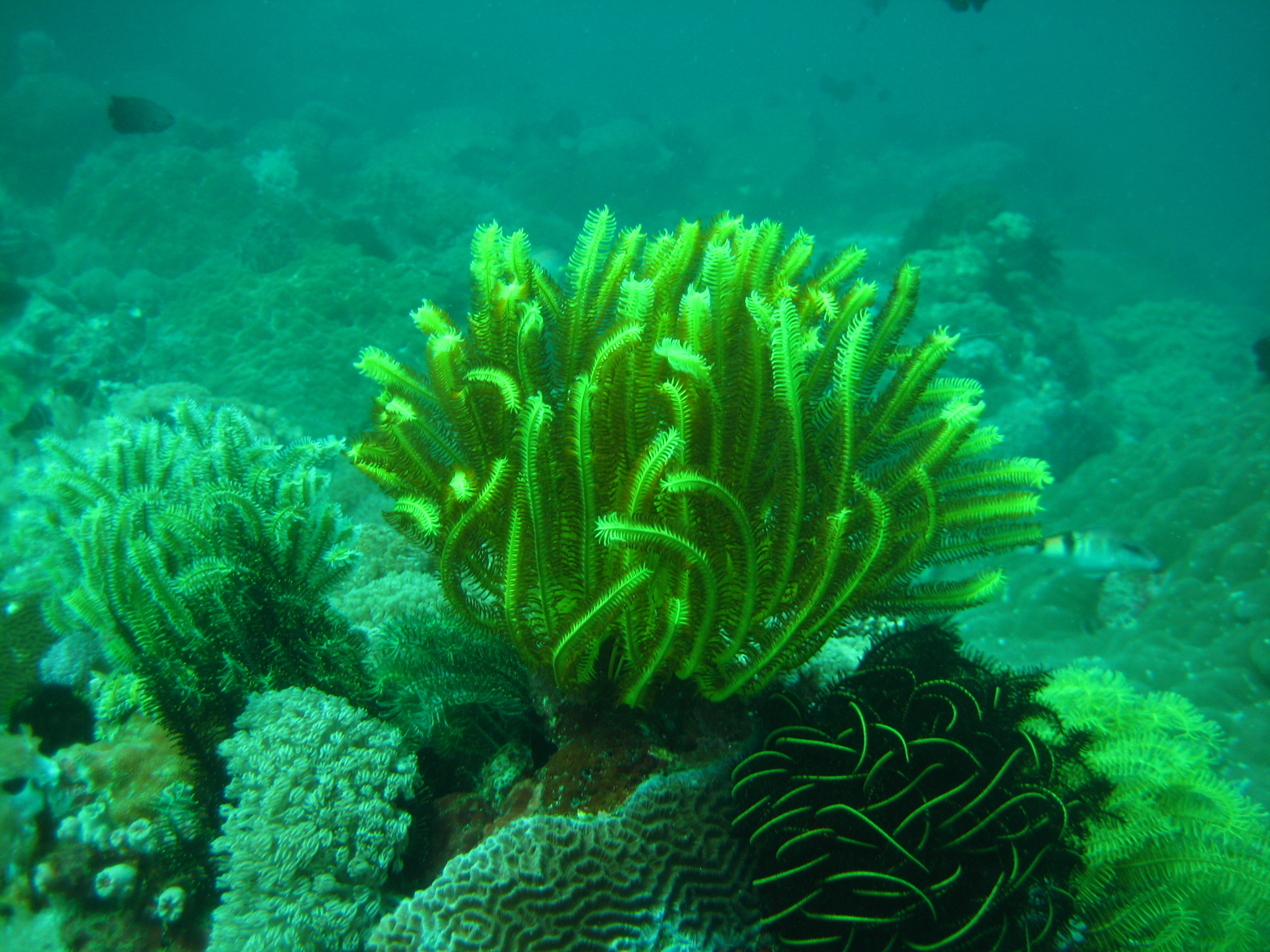
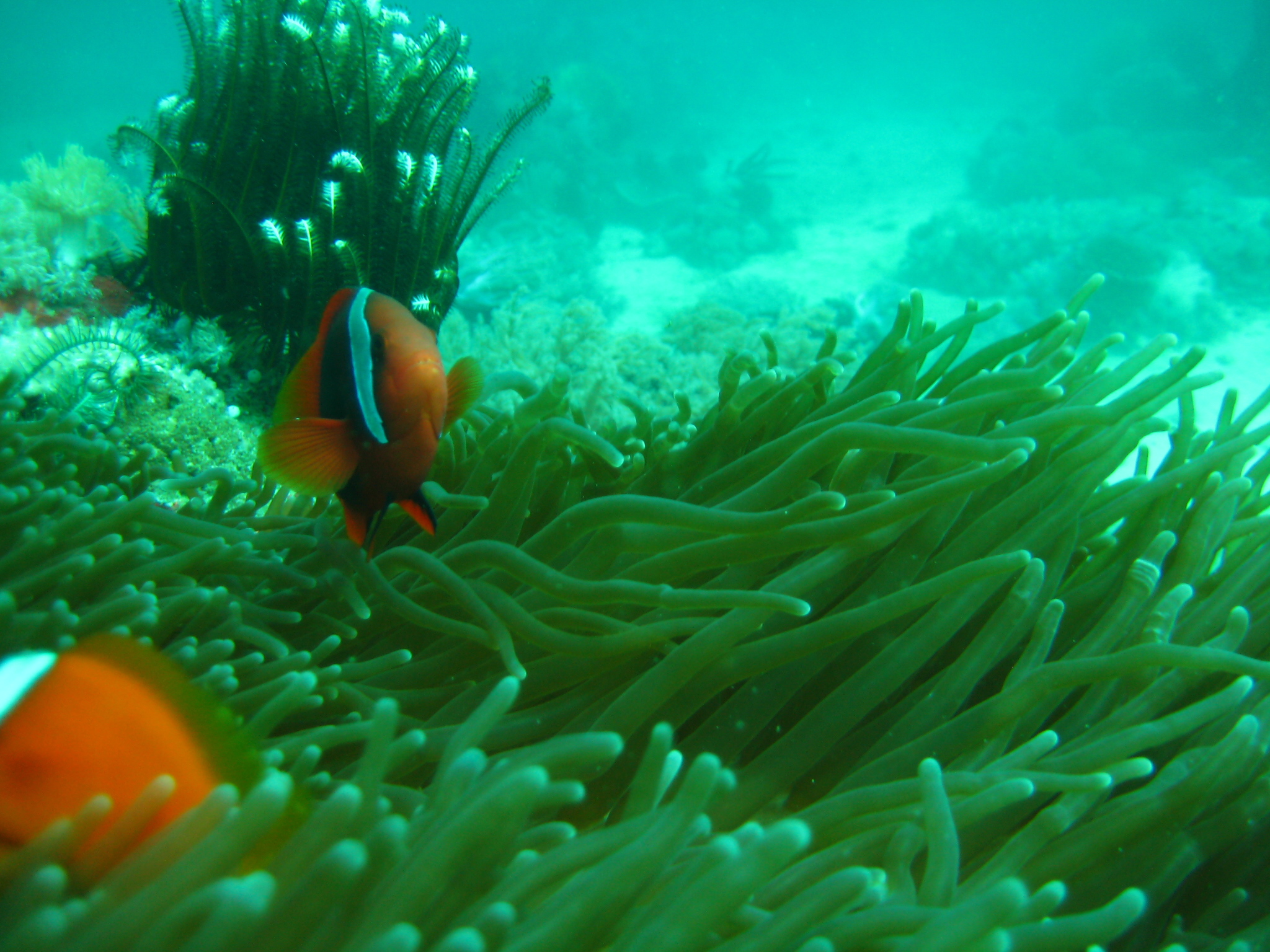
Scenes from the coral reef dive
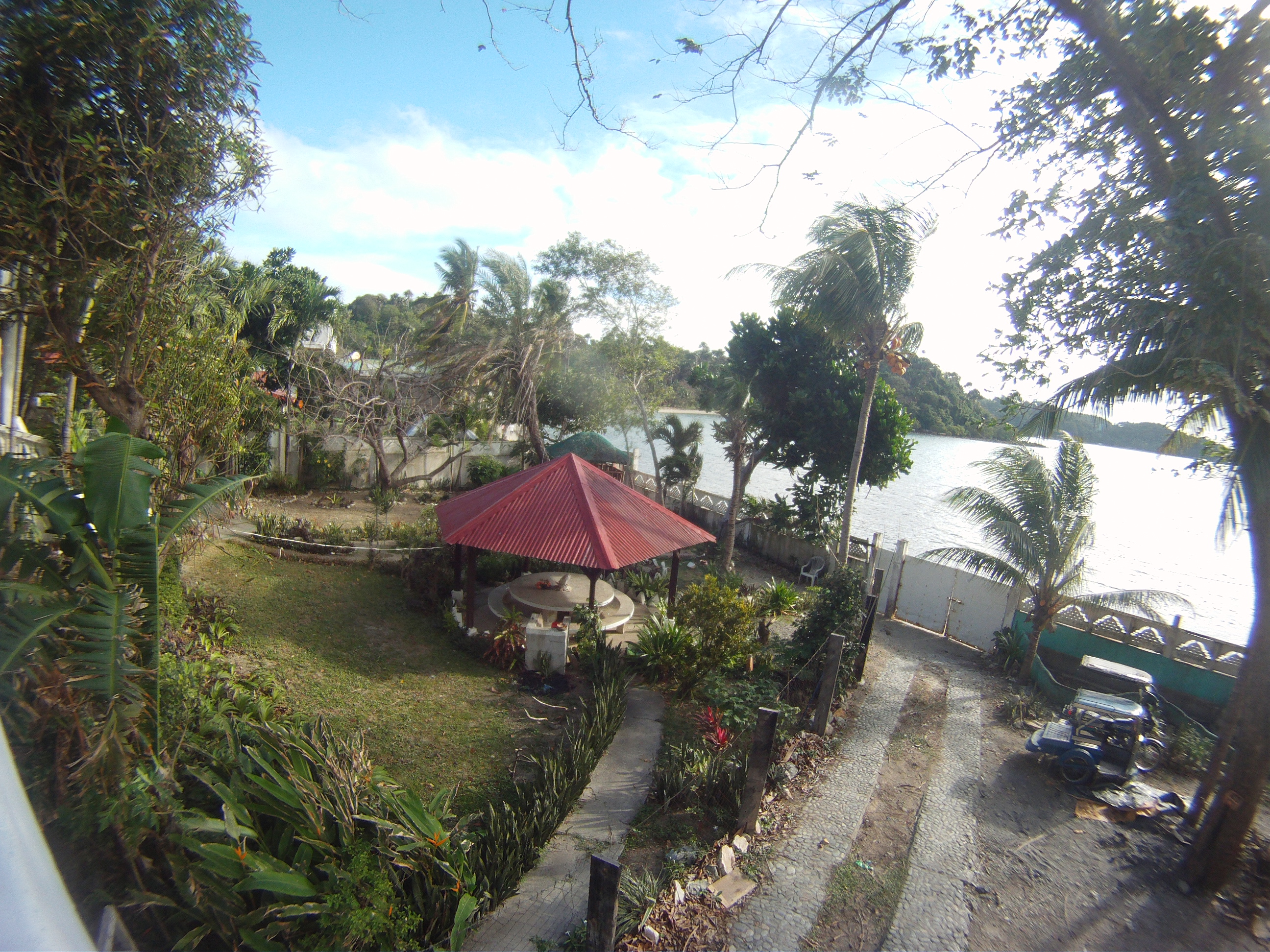
View from my porch camping spot


Local living quarters
Leaving home has never been easy. I said goodbye and watched my family slowly fade. I was completely overwhelmed with emotion and it was good to have a 26 hour flight to work things out before heading into the madness of Manila. Exiting the airplane I was quickly engulfed with the heat and humidity of what is known as Asia’s biggest sauna the Manila international airport. The air conditioner had broken down years ago and still hadn’t been fixed, I am sure by now most the employees are used to it. I watched the luggage conveyor belt spit out all sorts of odd luggage the most common being large card board boxes covered with inches of tape and rolls of string. Each box was not complete without the words Mania Philippines written in bold black ink with a Sharpe.

One of the many local bakeries
Putting together Gaby created quite a sensation and I was quickly surrounded by a group of Filippino security guards. They were extremely curious and felt right at home inspecting my bike and gear. Gaby has definitely gained a few pounds since leaving Japan, and now In addition to carrying a Traveler Guitar she also has a beautiful but large saddle bag.

Downtown
I didn’t quite feel the shock of being in the Philippines until the airport road merged with main street (Roxas Blvd). The road was so suddenly packed with trucks, motor bikes and jeepneys (the independent bus), that I wondered how I would be able to make it across the country. It didn’t take me long to realize that I was a lone cyclist in a jungle of motorized transportation. Pedaling into downtown I passed a hospital and went inside to see if I could get a J. Encephalitis vaccine. The hospital was full of pregnant women waiting for the operators of the ultrasound to return from lunch. I was in luck the doctor who gave vaccines was working that day I just needed to wait till she also returned from lunch. I then took the opportunity to visit the hospital canteen and experience some local food.

Jeepney
In my two days of being here I have not found the food too interesting or especially tasty. Most meals consist of vegetable or meat stews with lots of white rice and deep-fried pork hinds to add a bit of spice. If you are lucky the food vendor will have a cooked papaya and coconut dish to go with the rice but this is usually a rarity.

A rooster selling his services
The streets are packed all day and only seem to quiet down a few hours before dawn. Prostitutes, street vendors, rickshaws, kids and wild dogs seem to be waiting around every corner. Where are you from I am constantly asked ” USA” I respond…”Me too” (often the response) “I am from the United Squatters Association, we all live in this abandoned building down the road”.

My friend Willy Gutierrez
This is definitely going to be an adventure getting Gaby and all my excess luggage to Bali. Tomorrow I head south planning on making my way across the islands before hoping a ferry to Malaysia. Touch base again as soon as I can.

Rickshaws waiting passengers

It was about an hour passed midnight, when I finally decided to leave the busy shopping district of Shibuya. I had spent close to 2 hours on the 4th floor of skyscraper drinking sake and watching the crowds of shoppers walk across one of the busiest intersections in the world. It was my last day in Japan and I had thoroughly enjoyed climbing to the top of Tokyo tower and marveling at the view, walking the gardens at Meiji Jingu shrine and meeting fishermen at the Tsukiji fish market.

Tsukiji fish market
I hopped on Gaby for what I thought would be a quick 15 km ride to the nearest hostel and immediately upon turning the pedals the bottom bracket, the component that holds the crankset together snapped. Gaby is too large to put in a taxi and without a box I had little choice other than to push through the busy crowds on the sidewalk. I stopped into several hotels but soon found that my cheapest option would be something between $150-200! I had little option other than pushing Gaby to the nearest park and pitching my tent for the night.
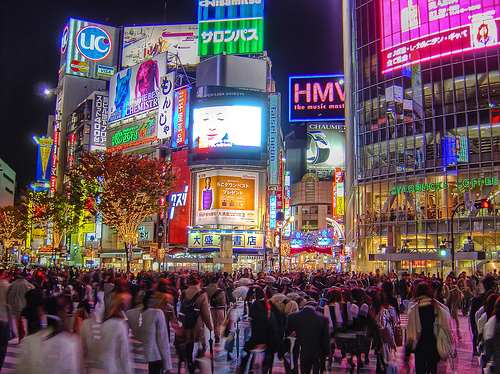
Shibuya crossing
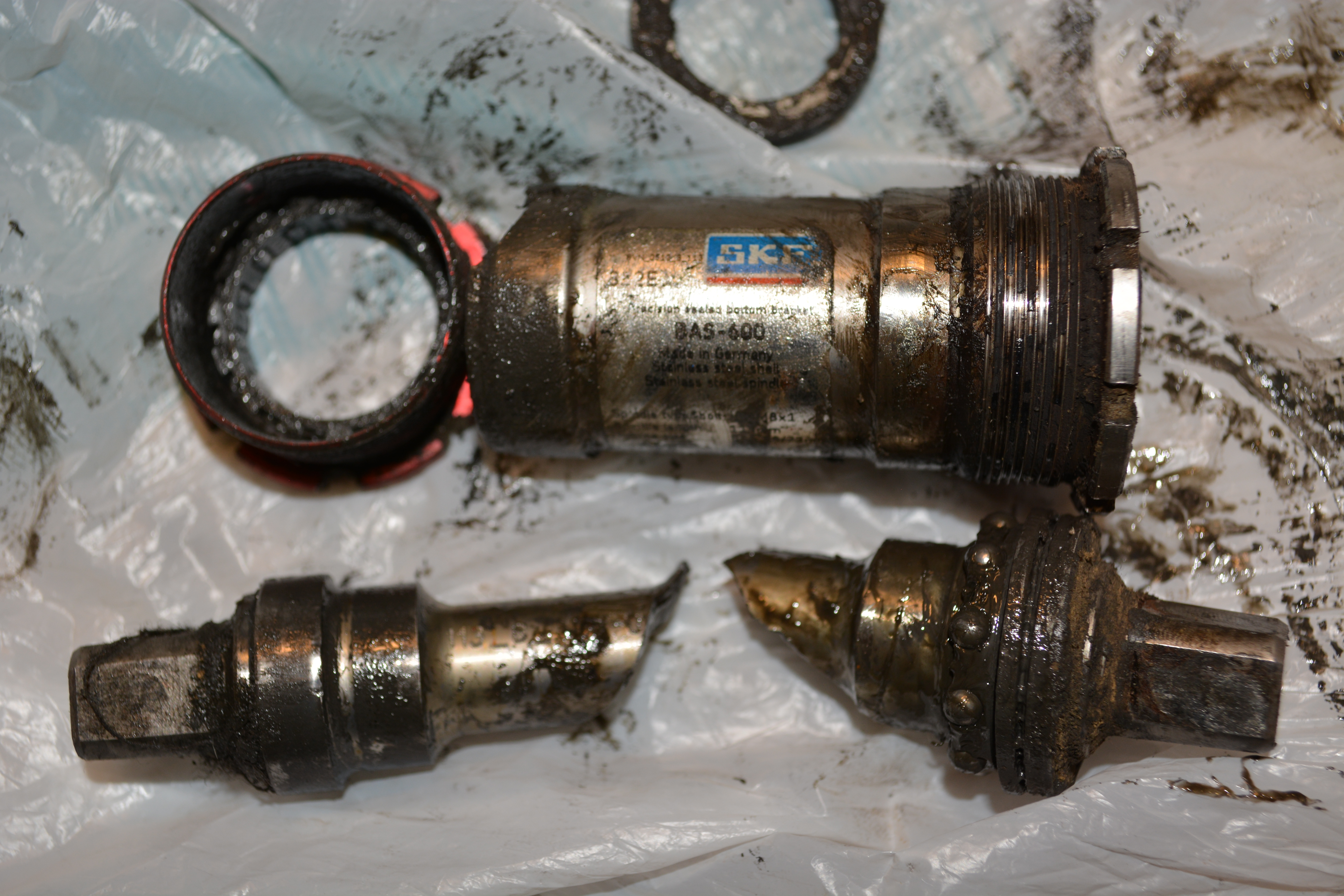
Broken bottom bracket
After a few hours of pushing through the busy streets I arrived at Shinjuku park, where I looked for the small community of tarp shelters I had seen during the day. An easy sight, even in the early hours of the morning, I pushed Gaby near and looked for a place to pitch my tent. I put my ground tarp down, and before I could get my tent out a homeless man, rolled out of his tarp and told me that if I wanted to camp in here I would have to pay him 1,000 yen ($10). Exhausted and very cold, I packed up my supplies and looked around for another place to sleep. I found a small space between two trees, and slept in my bag on the ground a few hours before waking up to the sunrise.
It was a big rush getting to the airport as I had to find a new bottom bracket, bicycle box and pedal 50 miles to make my flight at 2 pm. All in all it went ok and I was able to escape a hefty over weight fee on the bicycle box. I am back in So Cal and wish you all happy holidays.
I am in Taipei now the capital of Taiwan waiting out my return flight to LAX. I pulled a “classic” last minute blunder and realized that I was departing from the Narita airport in Tokyo which is over 60 miles from the city! Luckily I realized with enough time to strap the cardboard box to the back of Gaby and pedal there, but just as I was leaving the city CRACK!! A loud noise came from my crankset and I looked down to realized that my bottom bracket, one of the strongest in the world had broken in half!
It was late so carried Gaby like a wounded soldier to the nearest park and slept with a group of homeless. The next morning I……….Will continue this story in America the flight attendants are getting really annoying. See you guys soon!

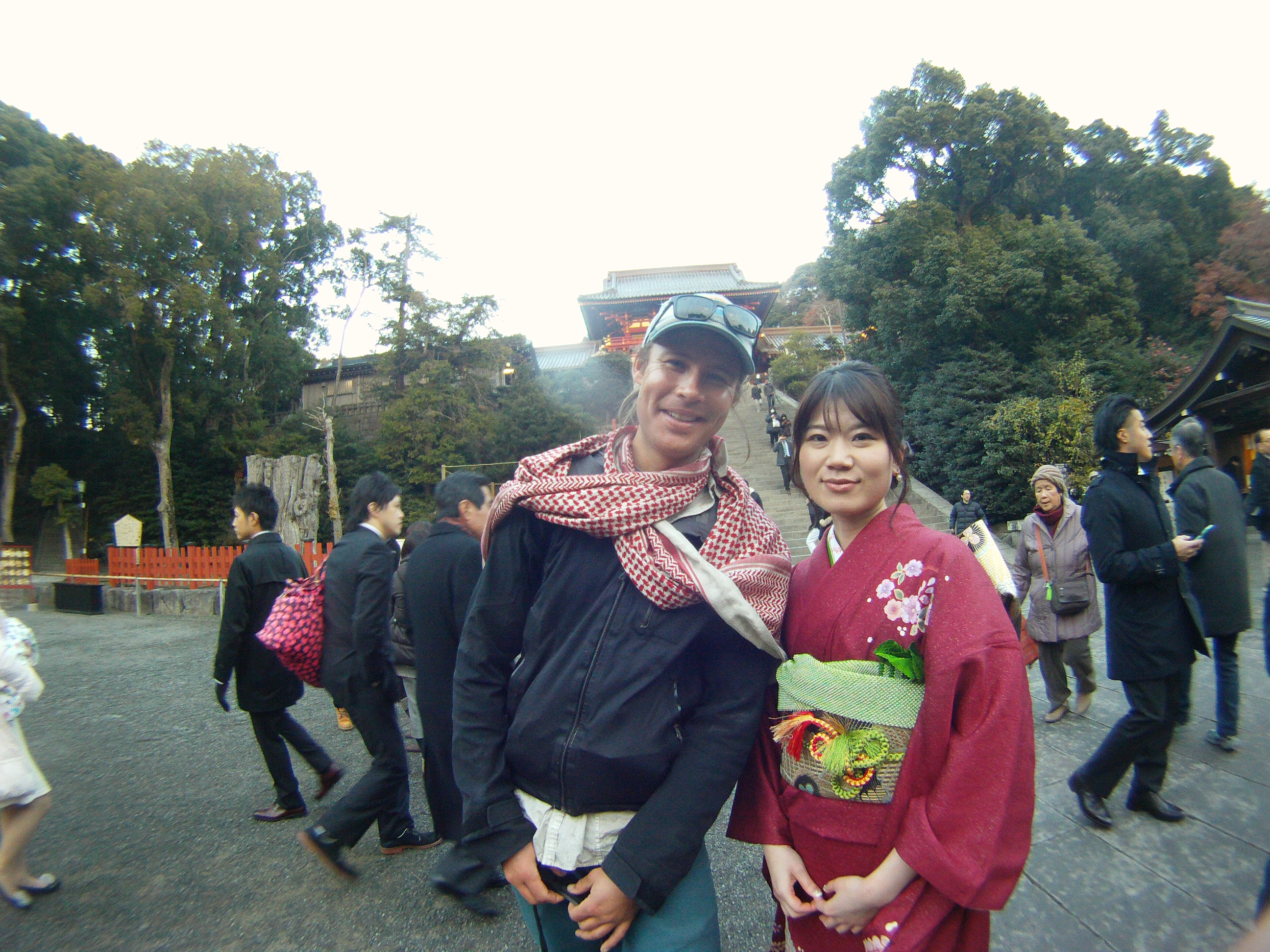
Making friends in Kamakura

I found the large crowds and constant click of cameras overwhelming in the city of Kyoto. I wandered from historic Buddhist temples to ancient Shinto shrines only to be engulfed by the mass of tourists desperate for a picture of Japans preserved culture. Kyoto is the only city that has 17 UNESCO world heritage sites and I found many of them to be more like a theme park than a cultural heritage. Many of the historic temples are painted in Gold or lacquered in Silver and I often found myself wondering how a Zen Buddhist monk would practice in a temple so ostentatiously decorated surrounded by tourists waiting with cameras posed. It didn’t really matter though because there were very few practicing monks within the Kyoto’s city limits.

Golden Pavilion temple Kyoto
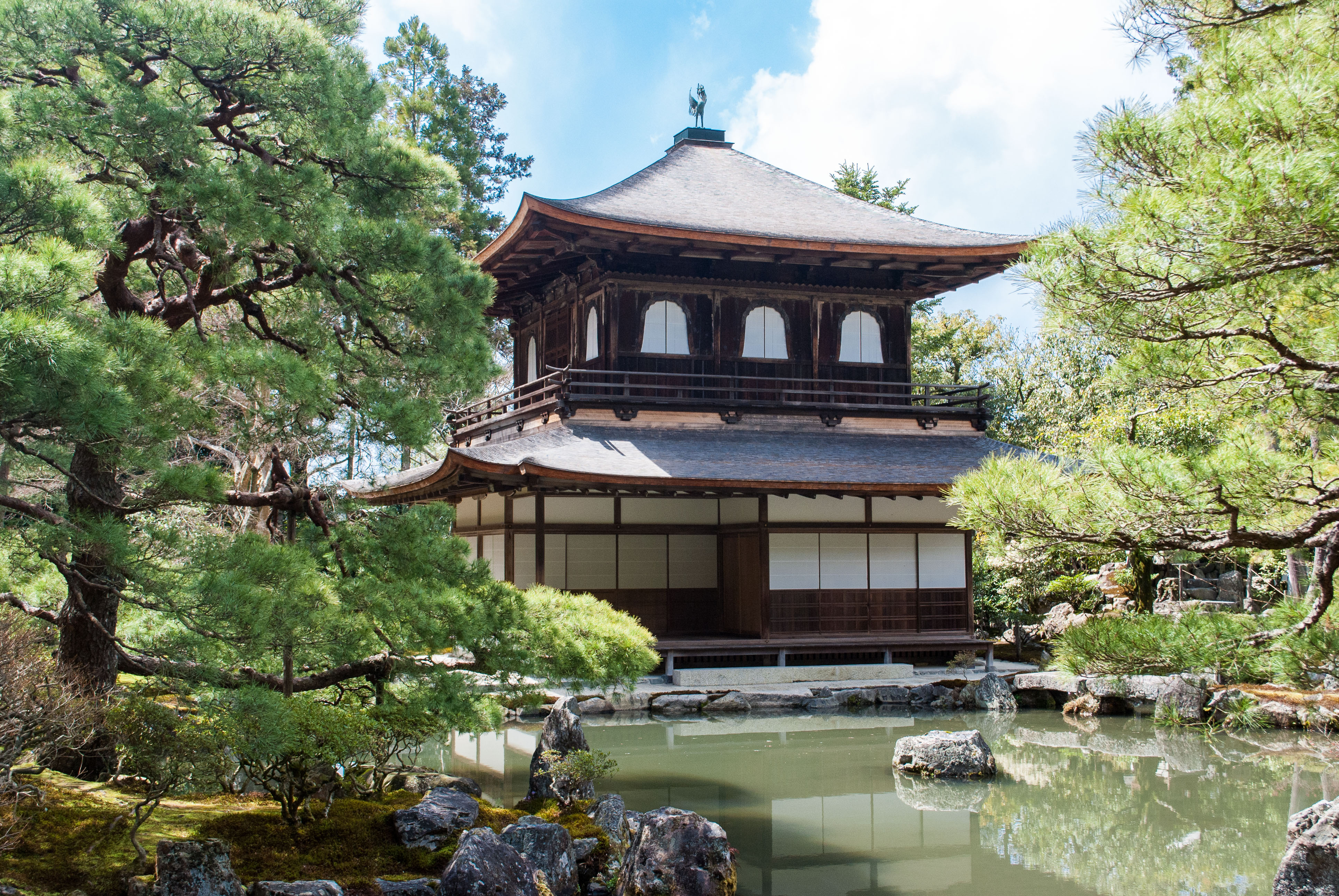
Ginkaku-ji Kyoto
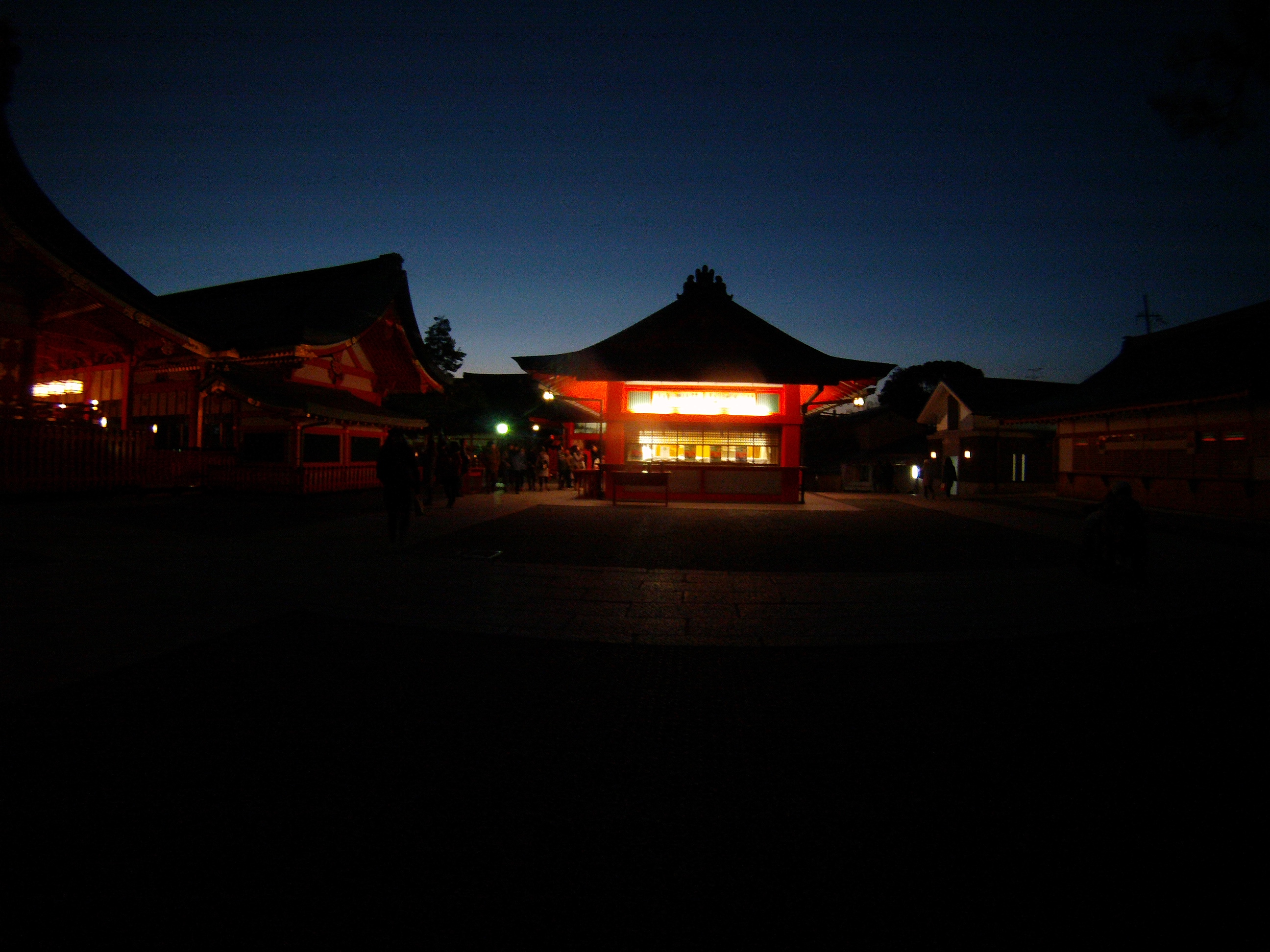
Fushimi Inari Taisha Jinja was probably my favorite site in the city. A traditional Japanese Shrine located at the base of a small mountain near the outskirts of the city. I arrived just before dark and walked the hour and a half loop to the top just as the sun set getting a great view of the city as the lights came on. I descended through the darkness and found the main shrine at the bottom fully illuminated in a bright orange glow. I paid my respects by bowing twice, capping twice then bowing again two times them head out into the night to look for a place to sleep. While unlocking Gaby I befriended a fellow cycle enthusiast who had just graduated from law school. He invited me to “Top Shelf” sushi, and we quickly ran up a tab close to $200 at a nearby sushi bar.

Shrine just after dark
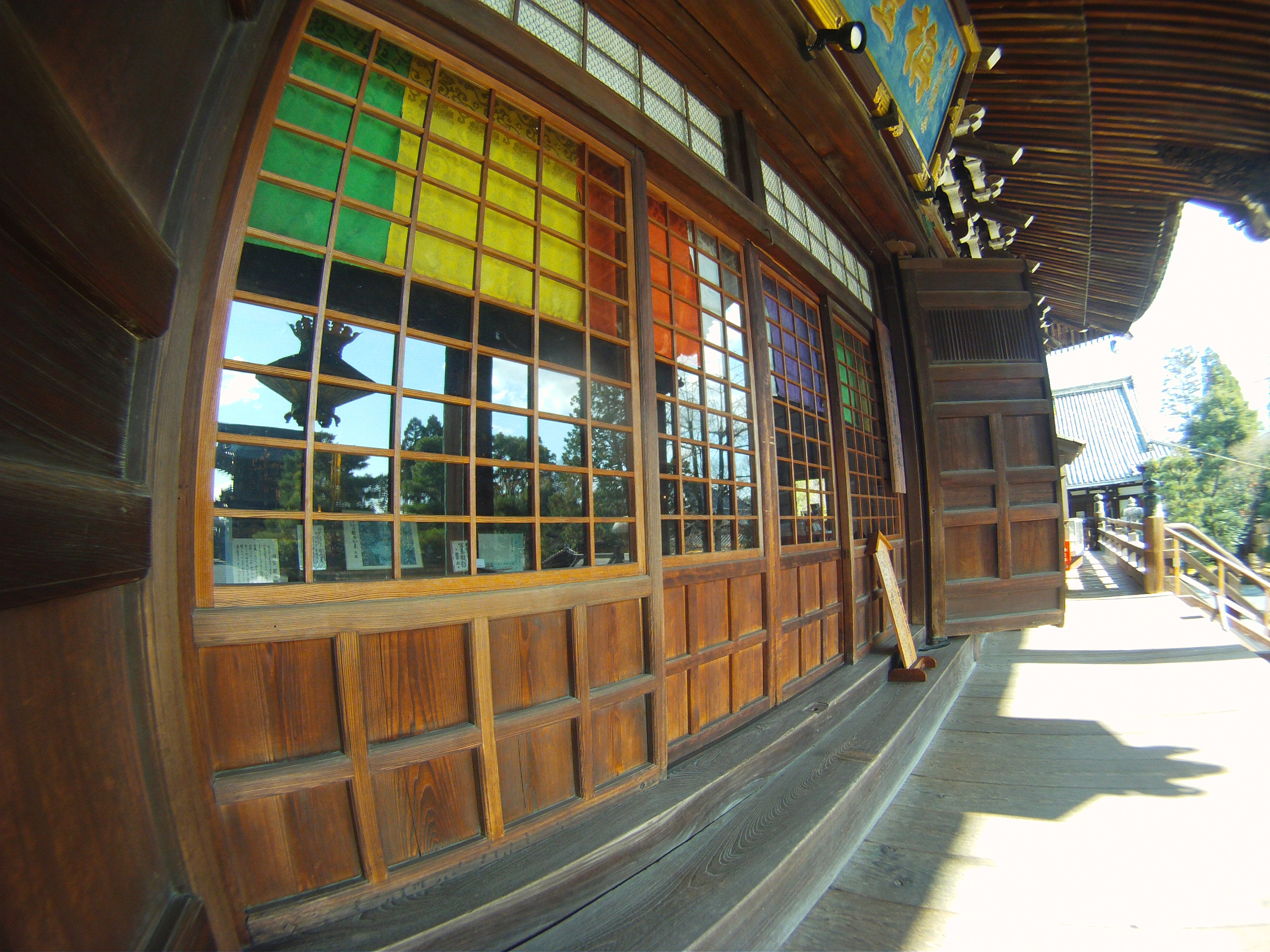

Bamboo forest in Arashiyama Kyoto
While in America I had never been much of a fan of Sashimi (raw fish), as I always found the texture to be rubbery and lacking in flavor. The price for a small order is also usually the same as 3 to 4 rolls so it is hard to justify. On my visit to the top shelf sushi bar I was told, actually pressured, to order anything so I had a whole meal of fresh blue fin tuna, salmon, shrimp and eel. Anyone who has not tried fresh Sashimi should give it a try the flavor is so much better raw than cooked. I can still remember the taste and texture of this meal!


Crossing a bridge with Mt. Fuji in the background
The shortest route from Kyoto to Tokyo was through the busiest and most populated region of Japan. Even through the distance was only about 450 km it took me close to 6 days as my riding options were reduced mainly to the sidewalk. Outside of the countryside there is very little room for a cycle tourist in Japan. The streets are packed with vehicles going too fast and the sidewalks are often too narrow with traffic going too slow. If that is not enough of a barrier there are distraught school kids everywhere on bikes paying very little attention to where they are going, as well as bridges over many of the busy intersections transforming my daily ride into more of a cross fit training session.
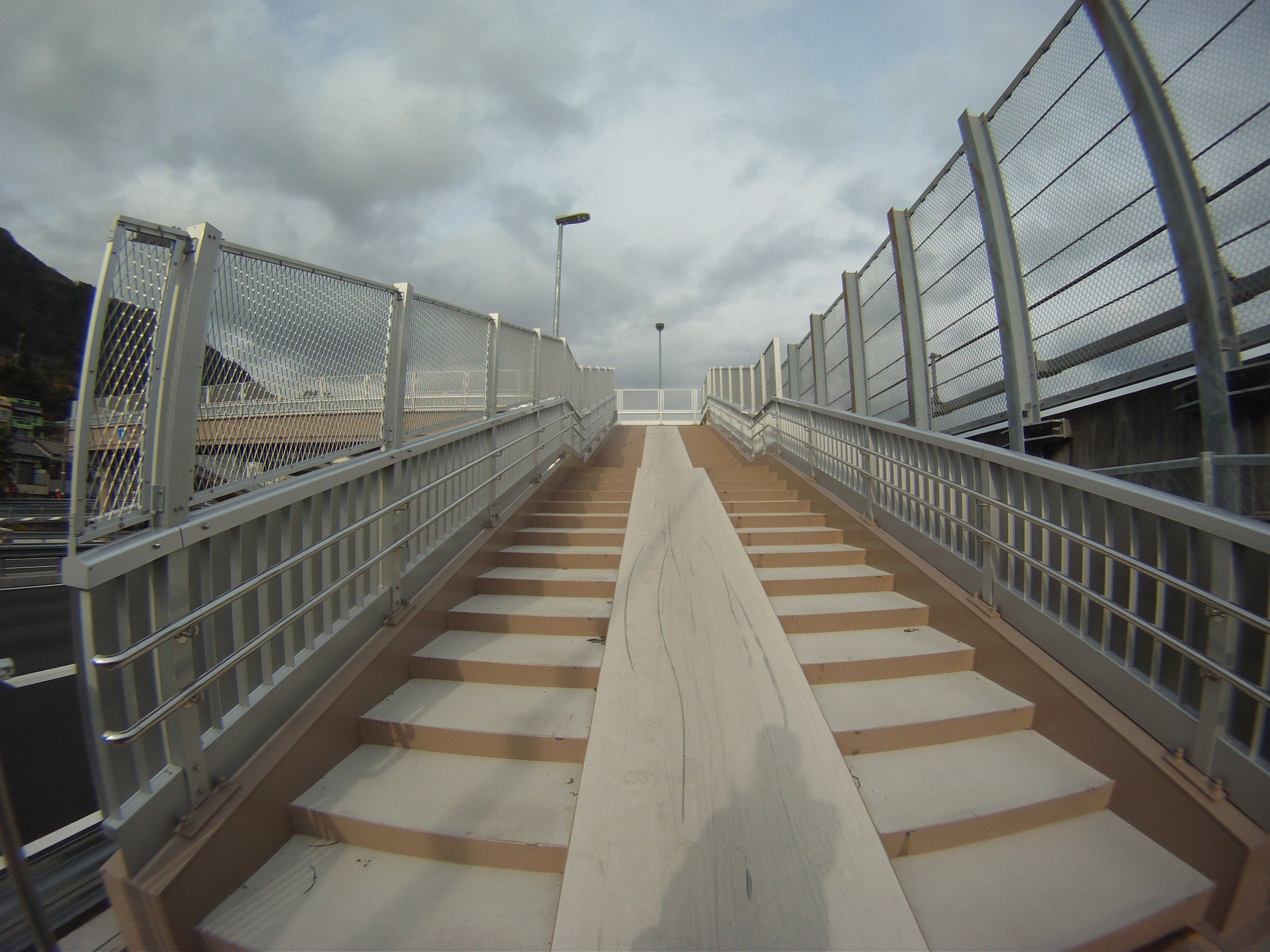
Sidewalks would often give way to this ramps that lead up and over bridges at busy intersections. Pushing a loaded bike up these gets tiring!

Vintage bicycle shop in Kyoto, Grand Bois 650b
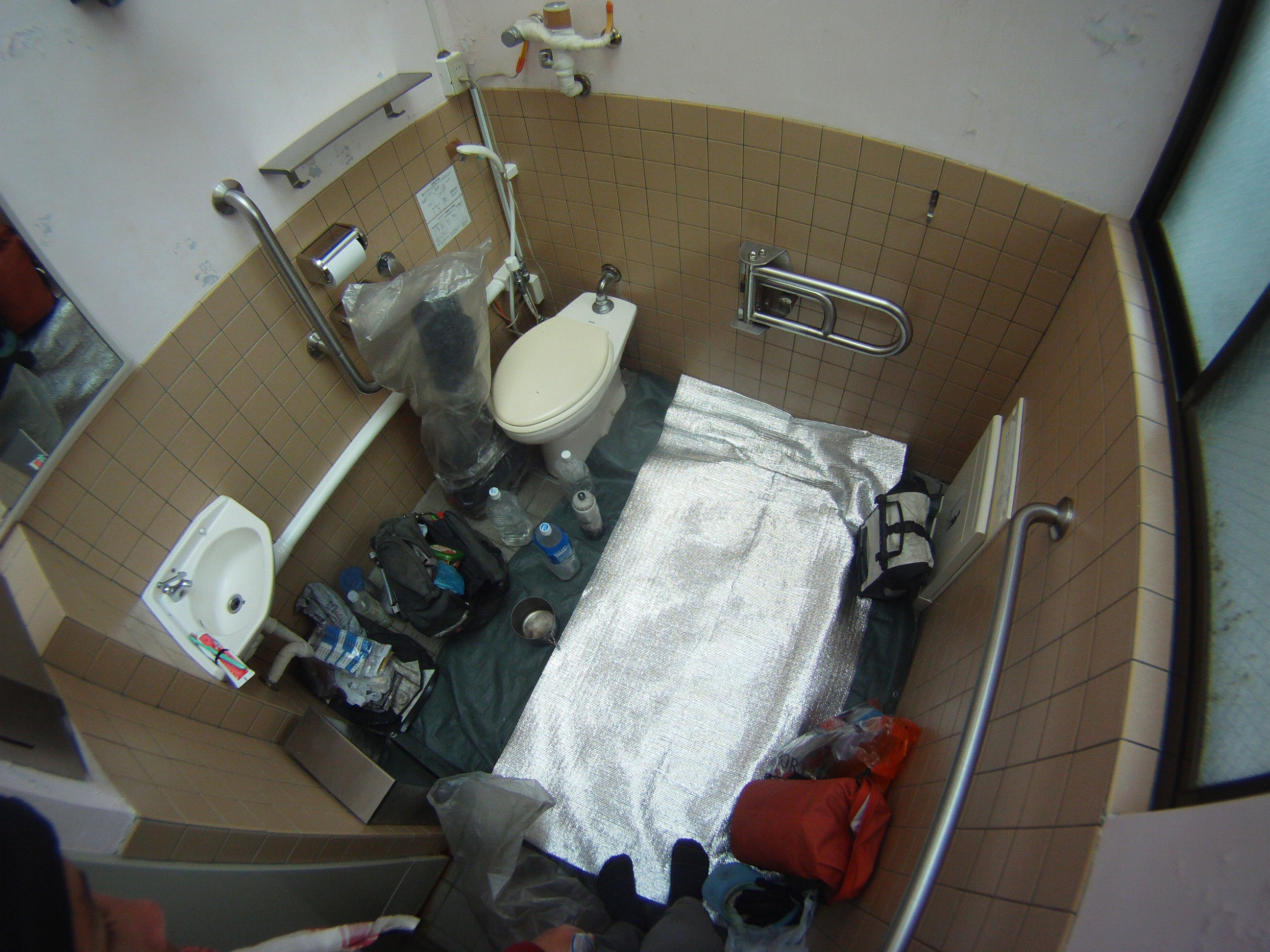
Handicap restroom hotel room on the summit of Hakone
One evening, after rush hour, I pushed myself to pedal another 16 km to the neighboring city of Hakone before setting up camp. It had been several days since I looked at the route online and little did I know that I was about to climb a 3,500 ft mountain in the dark! All of the sudden the city lights disappeared and I was pedaling on a sidewalk walk into the darkness. I tried to convince myself that I was only climbing a small hill but the road continued up and I painfully watched as the kilometers slowly went by. It had been raining all day and evening though I was sweating I could feel the temperature get colder and colder as I approached the summit. After an hour and a half, I reached the summit only to find everything in the city of Hakone closed except for a convenience store. My clothes were drenched in sweat and a street sign displayed the current temperature at -5 C. After eating two steamed meat buns I enquired the distance to the nearest town and was told that it would be another 20 km straight downhill. I was too tired and cold to attempt a descent soaking wet at -5 C so decided to look for a place to camp for the night. Much of the ground was icy, and after pedaling about shivering in the cold I came upon a public restroom that would give me shelter for the night. After a bit of investigation I found that there was a private handicapped section that had a locking door! Delighted I set up camp inside and fell asleep only to be awoken a few hours later by someone vomiting in the neighboring toilet. I didn’t sleep well but at least I didn’t freeze.

My host and friend in Kamakura, Hatashimari teaches me to make my favorite Japanese snack Oni Guri Rice balls

Salt, filling (dried beef), seaweed and rice
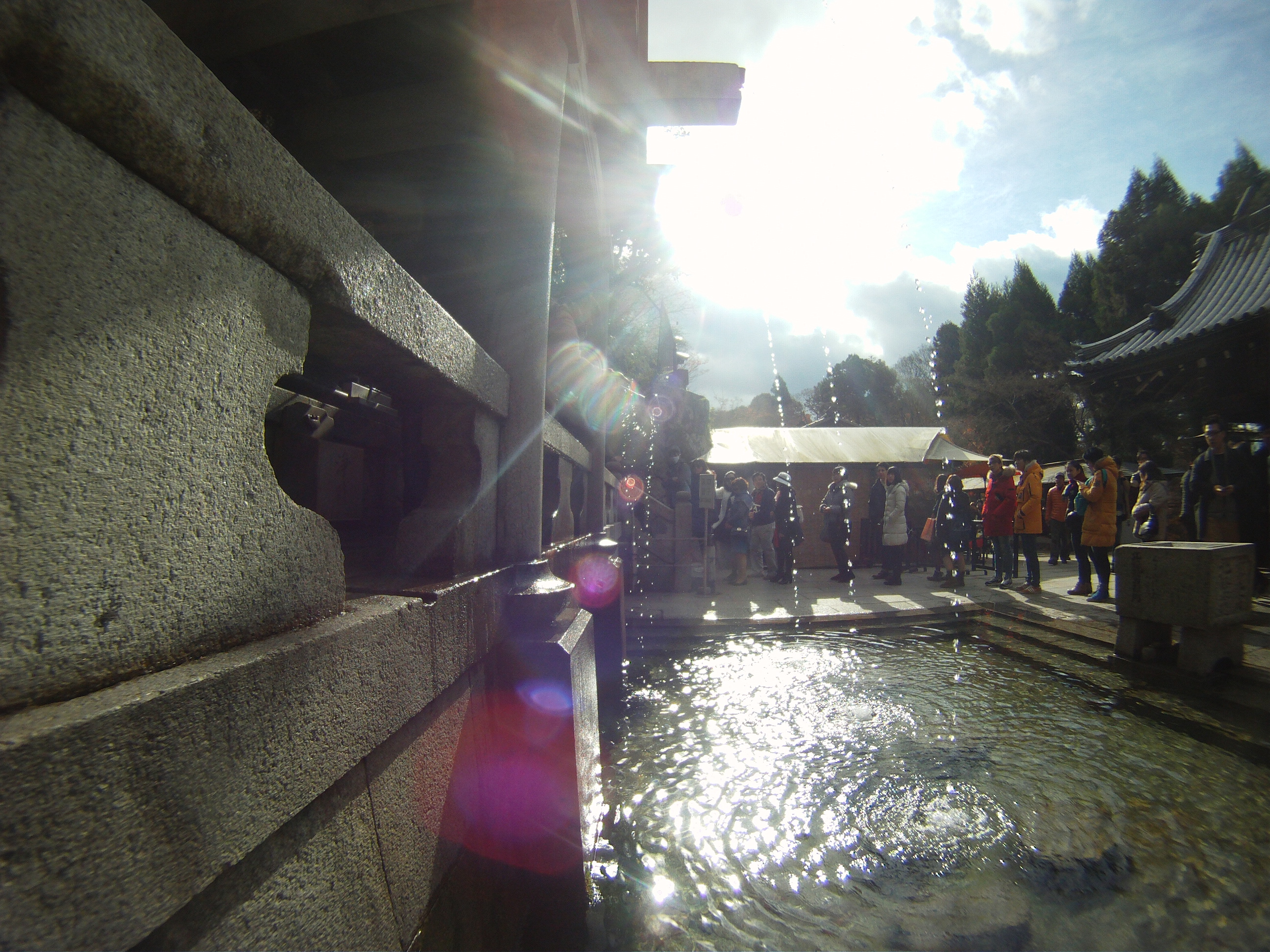
Wishing well at Kiyomizu temple Kyoto
I just arrived in Tokyo after spending a few days in Kamakura. I will spend the next few days here before returning to the states for the holidays. This is my last post from Japan, east Asia was enjoyable but did not quite match my adventurous expectations after visiting the Central Asia. My dreams are filled with memories of the Middle East and I look forward to getting to more exotic lands soon! I am less than ten days away from my 31st birthday; a year ago I was on the Croatian island of Krk with Ljubinka and Nino! I hope to see you all while in America!

Trying to navigate the busy sidewalk and streets en-route to Tokyo, imagine trying to pedal through this chaos for 8 hours!

Courtyard in one of the many Shrines in Kyoto

This Chinese coin is a good example of Asian culture, the outside is circular and symbolizes openness, with a square, conservative, ridged core.
“Hello, nice to meet you, my name is Julian, I am from America” ……
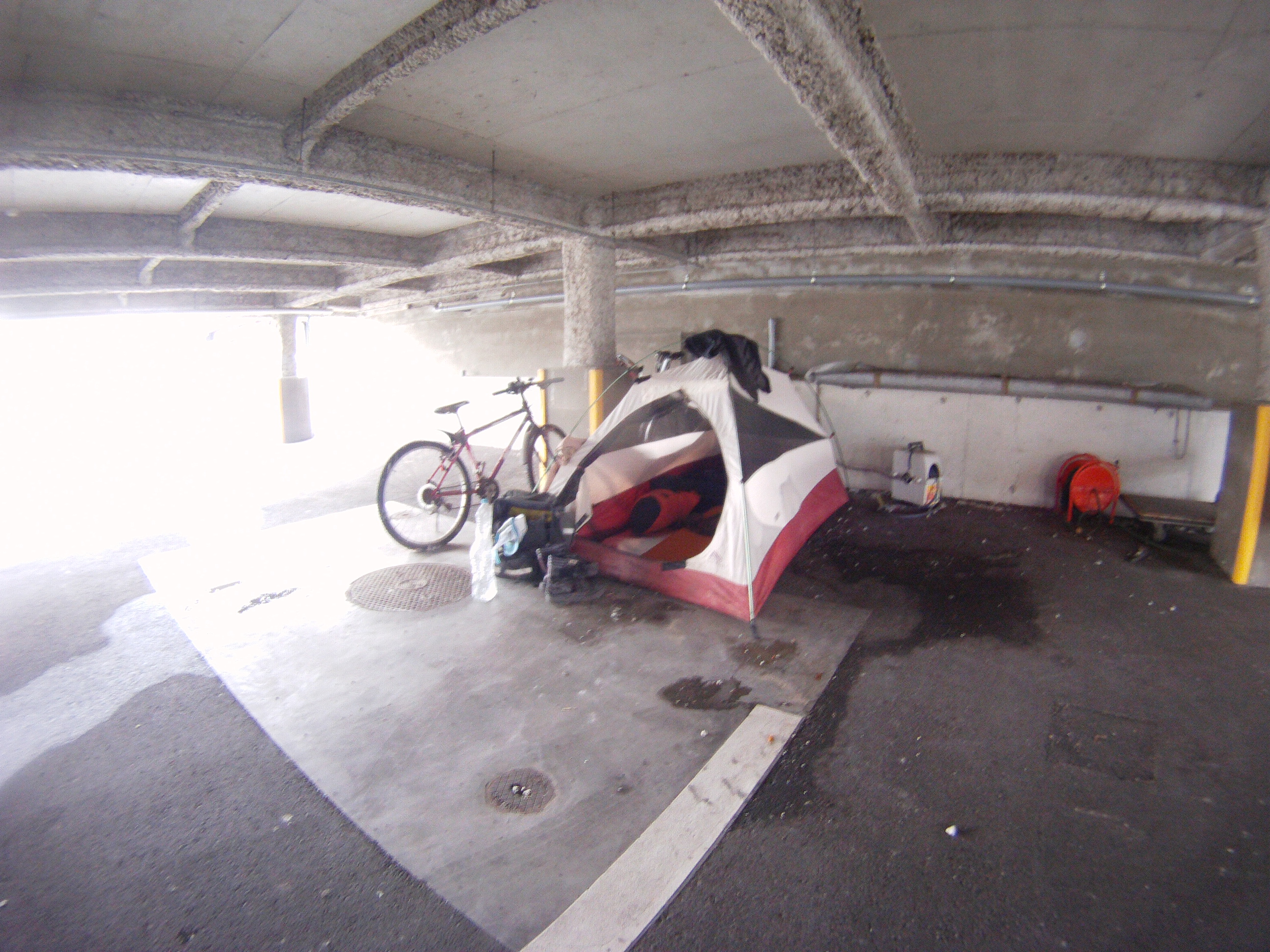
A dry place to sleep until being forced into the rain, this was a vacant parking lot until about 9 am when all the sudden I was surrounded by Toyota’s and Hybrids

My last week has been filled with a strange sense of Japanese hospitality. The weather has been terrible, with cold rain/hail storms blowing in almost everyday and subzero evenings. My tent never has the chance to dry, all day its packed in a wet bag and at night it quickly freezes when its unpacked. To avoid the weather I have slept in some very unusual places that before entering Japan I would have felt uncomfortable sleeping in. This has led many locals to believe that I am homeless and often times when I try to talk with them they will scoff at me and tell me that they don’t have any money! I guess sleeping in a parking garage and being nice does not go hand in hand in Japan. But this gives me a good opportunity to experience the “unseen” side of Japanese culture.
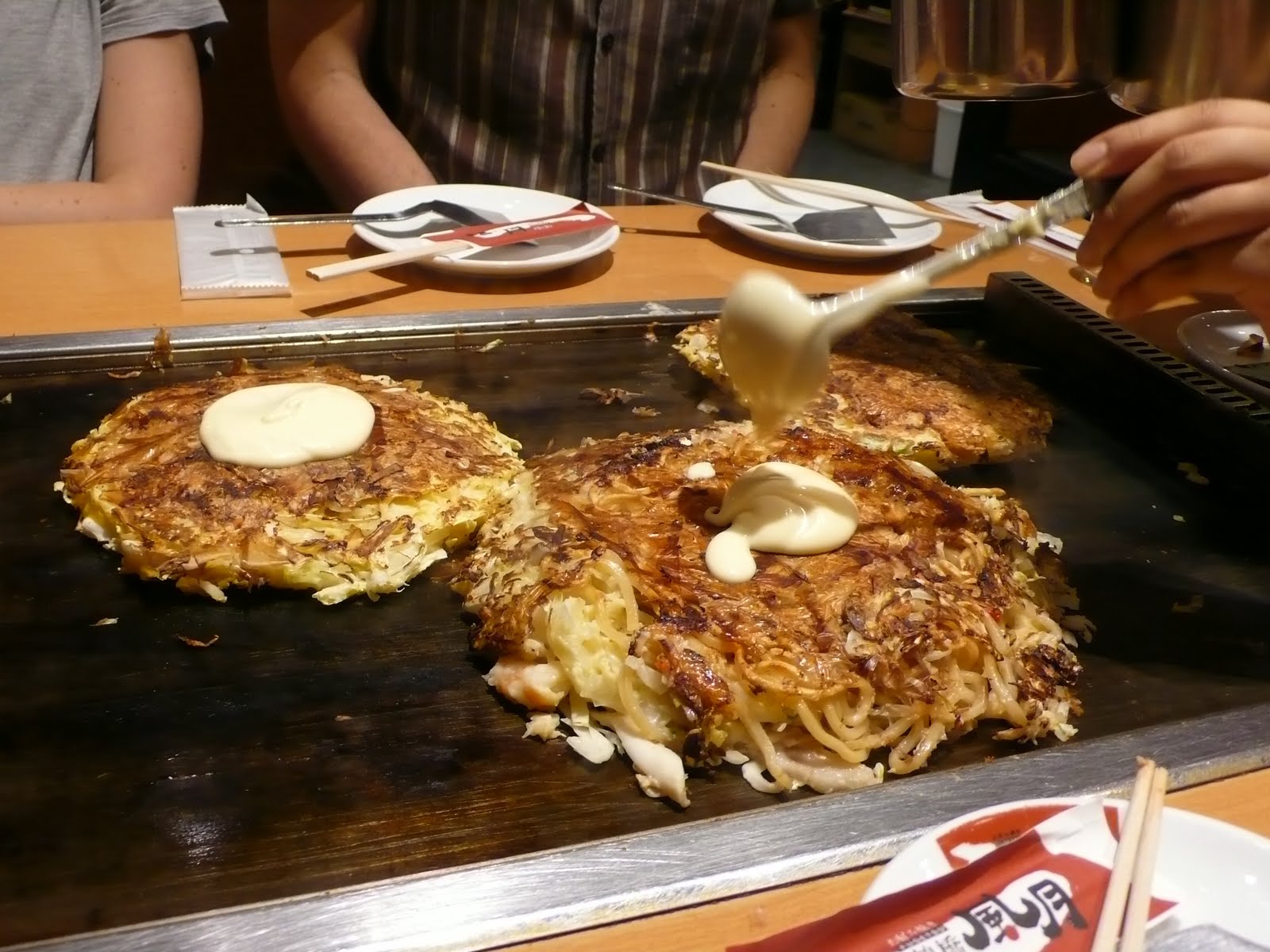
Oconomi Yaki, Hiroshima specialty. Bean sprouts, Noodles, pancake, egg and bacon
On several occasions, after explaining that I am not homeless but rather trying to save money by camping, I have been invited into the homes of Japanese locals. I am quickly overly complemented for my chopsticks skills and knowledge of Japanese cuisine and am almost always offered a large dinner consisting of some sort of seafood, with rice and miso. I think that most Japanese would be surprised to see how much of their culture can be experienced in other Asian countries as well as in Japanese restaurants. Not to say that there is a lot that I have learned solely from Japan but I find that many Japanese are shocked that I know what wasabi is! All three of my dinner experiences have gone pretty much the same, after a great meal, I am bid farewell and accompanied outside where I then depart and camp in the dark cold. Never have I been offered a place to stay! It’s almost as if my host feel that “well he has food in his belly he will be OK camping in the cold”. In all my experiences with invitations from strangers in foreign lands Japan is the only country where I have not been offered a place to stay. On my last occasion, after a fabulous meal of crab and green tea, I pressed my host to offer me a place to stay (probably a Japanese Taboo). It turned out that my host was a doctor at the local hospital so after a few phone calls he organized me a room in the intensive care ward! I think I would have been better in the tent, all night I could hear the sound of coughing and respirators and nurse call buttons, and I dreamt of visiting my father in similar situations.

The making of Matcha Japanese green tea

Japanese mocha with cultural mocha sword cutter

Matcha, Japanese green tea mixed in milk, you can see that my host is ready to send me to the intensive care ward.
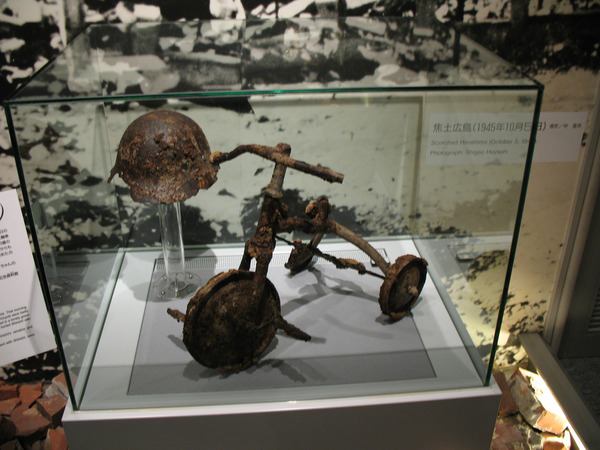
Tricycle of little boy, buried in the aftermath of the war
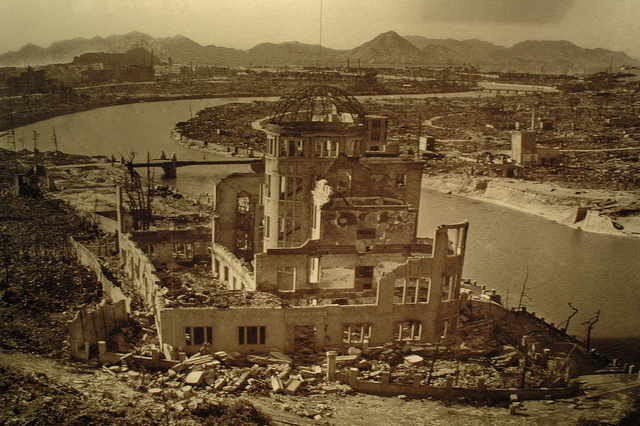
The national bank and the atomic dome were the only structures left standing at ground zero

Depiction of the bomb, which exploded 600 meters above the city maximizing its destructive potential
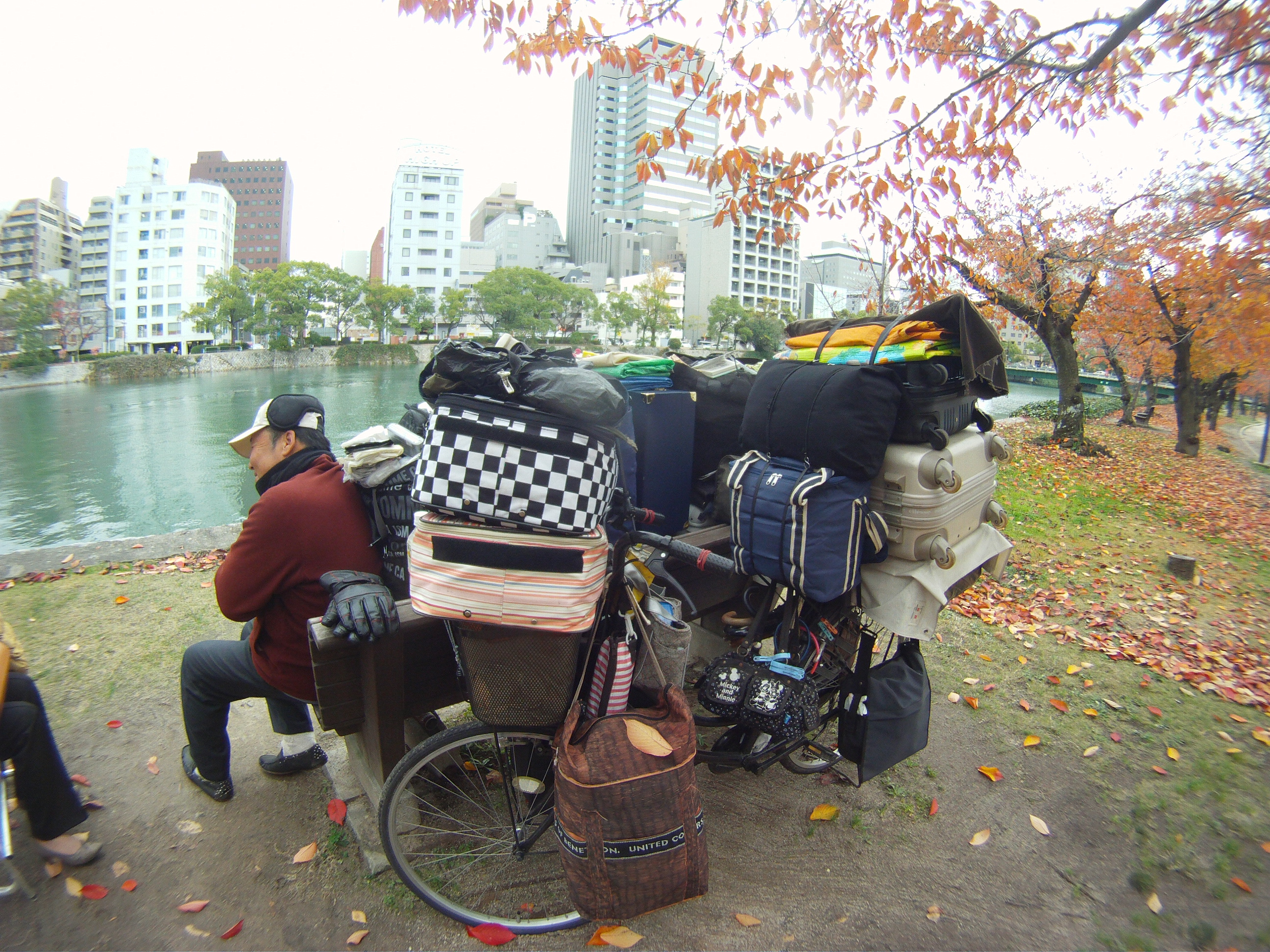
Japanese style cycle touring

These bicycles are extremely popular in Japan, the size of a folding bike but doesn’t fold
Exploring cities on a bicycle in Japan is always a bit challenging, riding from sidewalk to busy street hopping up and down curbs, dodging schools kids racing home from class. With the berth of my bicycle I often wonder if it might be safer for me to ride in road. Hiroshima was no different, a very busy metropolis separated by 5 rivers draining into the bay. This gives the city an almost nostalgic fishing village-like feel even though the population is close to 2 million. My first day I wandered about pedaling the busy downtown shopping district and eating the local cuisine. Other than the historic atomic bomb dome (A historical monument from the war) there is very little sign of the city’s tragic past. Drunk business men in black suits smelling of fried fish and sake bar hop while skinny Japanese women in high heels walk the sidewalks with designer handbags. The nightlife is absolutely crazy, where the street lights are brighter than the sun, and cars are shuffled in a conveyor belt in the public parking lot, I quickly became overwhelmed and missed the solitude of the wild.

Looking out at one of Japans most famous and oldest bridges originally built without nails
Visiting the Hiroshima Peace Memorial museum was extremely emotional but extremely interesting! Looking back I somehow didn’t realize the full extent of which Hiroshima and Nagasaki were affected by the atomic bomb. Both cities were completely leveled!! As I walked past monument after monument I was quickly overwhelmed with a feeling similar to that experienced when visiting Auschwitz in Poland. (I actually wonder if anyone could handle visiting both of them in the same day). Most of the artifacts throughout the museum are pieces of clothing and cherished items from the victims, and it was not hard to start crying when looking at the pictures of innocent children burned beyond recognition, or human remains where only a school backpack is visible. IT was very disturbing to learn that a few minutes before the bomb was deployed, scientific instruments attached to parachutes were dropped to measure the air pressure and radiation so that the full effect of the bomb could be understood. The thousands that lost their lives in Hiroshima were test subjects to the American Military machine.

Cycling the Shimanami hwy, a beautiful network of bridges connecting 5 islands south of Hiroshima

Route 372 American style café, I tried to get a burger at this place but it was close to $15! Everything seems American until you look at the small electric car in the front parking lot
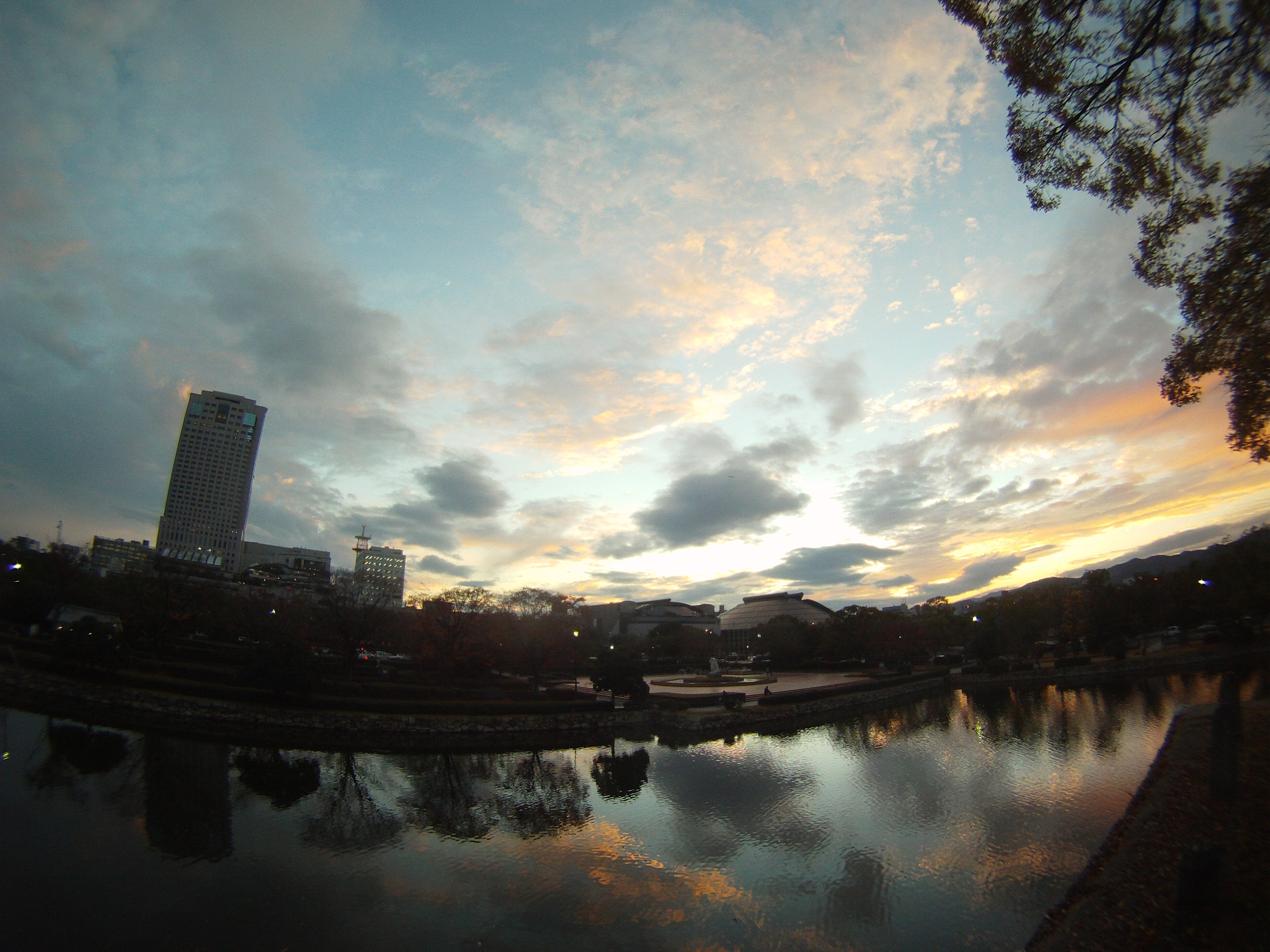
Sunset in Hiroshima
I am now in the ancient capital city of Kyoto, I really enjoyed cycling the Shimanami hwy across the islands to Shikoku. In two weeks I will be back in America for X-mas but I am already sick of the chorales playing in the grocery store.
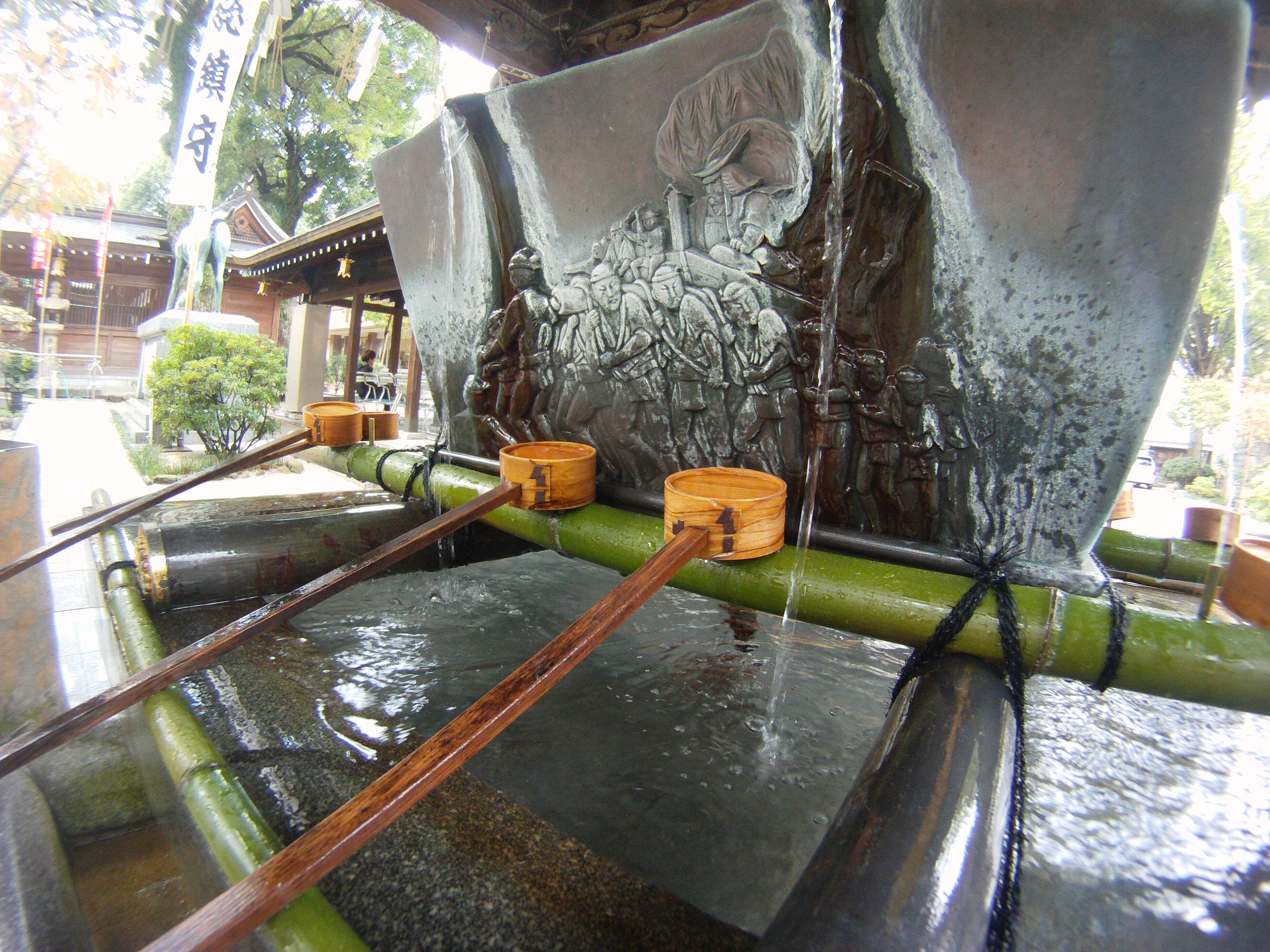
Traditional fountain found outside the local Jinja (Shrine) in Fukuoka. The Japanese practice a washing process similar to that of the Islamic tradition

My first impression of Japan was exchanging Korean Won for Japanese Yen in the ferry terminal. Asking for small bills, the Japanese teller apologetically handed me a stack of older notes. Through the intercom she told me that these bills were over 20 years, and that she was all out of the newer notes. Passing a white envelope beneath the glass I looked inside to see what 20-year-old year Japanese yen looked like.Besides a crease in the center, none of the bills seemed to have any wear, and were all clean and free of any grime or graffiti. To my eye Japanese money that had been in circulation for over 20 years looked brand new. Little did I know that I was about to step into a country unlike any of those I had recently traveled to.
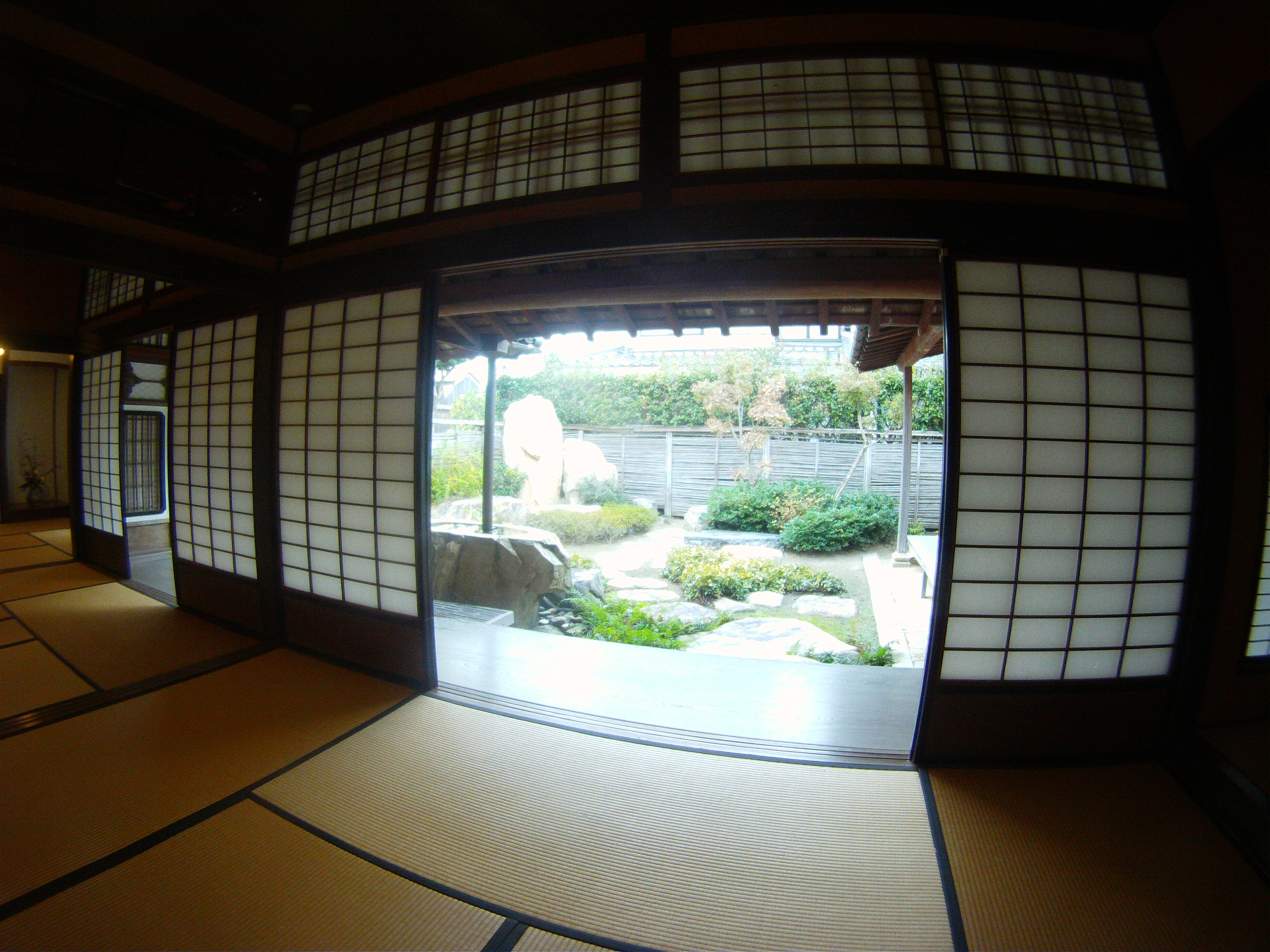
Screened entrance in traditional Japanese house, Hagi

Traditional Japanese screen
In the west we struggle for what seems to come so naturally in Japan. Everyone seems to take responsibility for their own actions and understands their input on society. Public transportation, renewable energy and reusing products is prevalent throughout the land, and there is an underlying sense of unity never before observed. It is almost as if everyone is working together to make Japan their home. I my 4 days I have witnessed so many random acts of kindness and generosity that it has rubbed off on my nomadic every man for himself mentality. In the countryside I watch elders playing with grandkids or sitting on stools in the yard while their son and daughter rake leaves. There are many villages that have literally been left untouched, with the older style homes, sometimes several hundred years old, with porcelain tiled roofs covered in decades of moss. Simple yet elaborate wooden entryways and sliding glass doors. The beauty of the past blends so well with cultures minimalist lifestyle, that I have trouble distinguishing between the old and new customs.

Old iron hardware outside ancient house of Samurai, Hagi

Houses on the canal, Hagi port
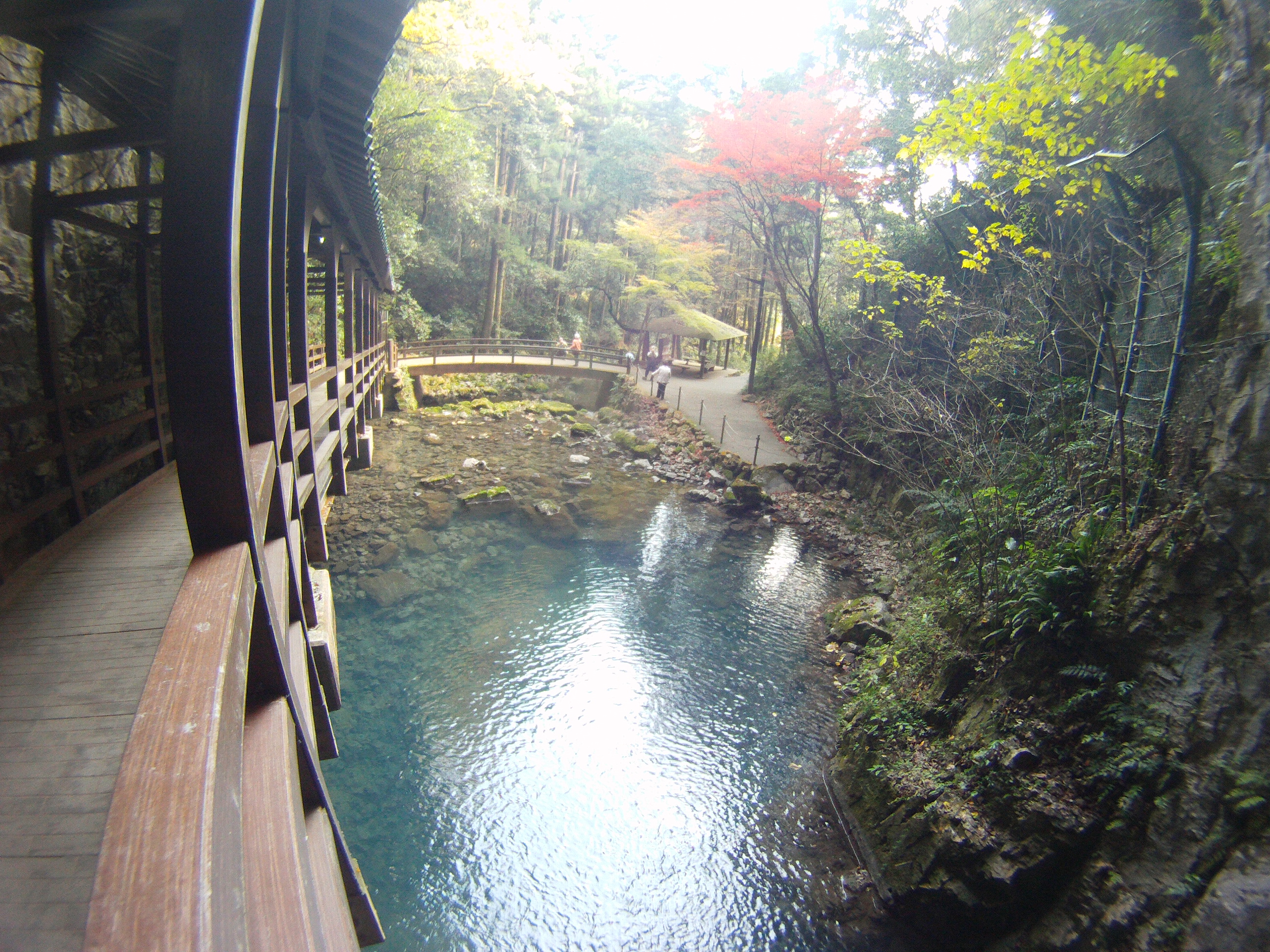
In contrast to Korea, I am completely in awe of the landscape and scenery of the southern regions of Kyushu and Honshu. I feel as if I am cycling through the scenic epitome of Asia, watching thick fog encapsulate lush green bamboo forests, and clear turquoise water slowly wearing away large smooth boulders. But it’s not only beauty, there is so much style and taste that go into the architecture and landscape that really separates Japan from the other Asian countries.
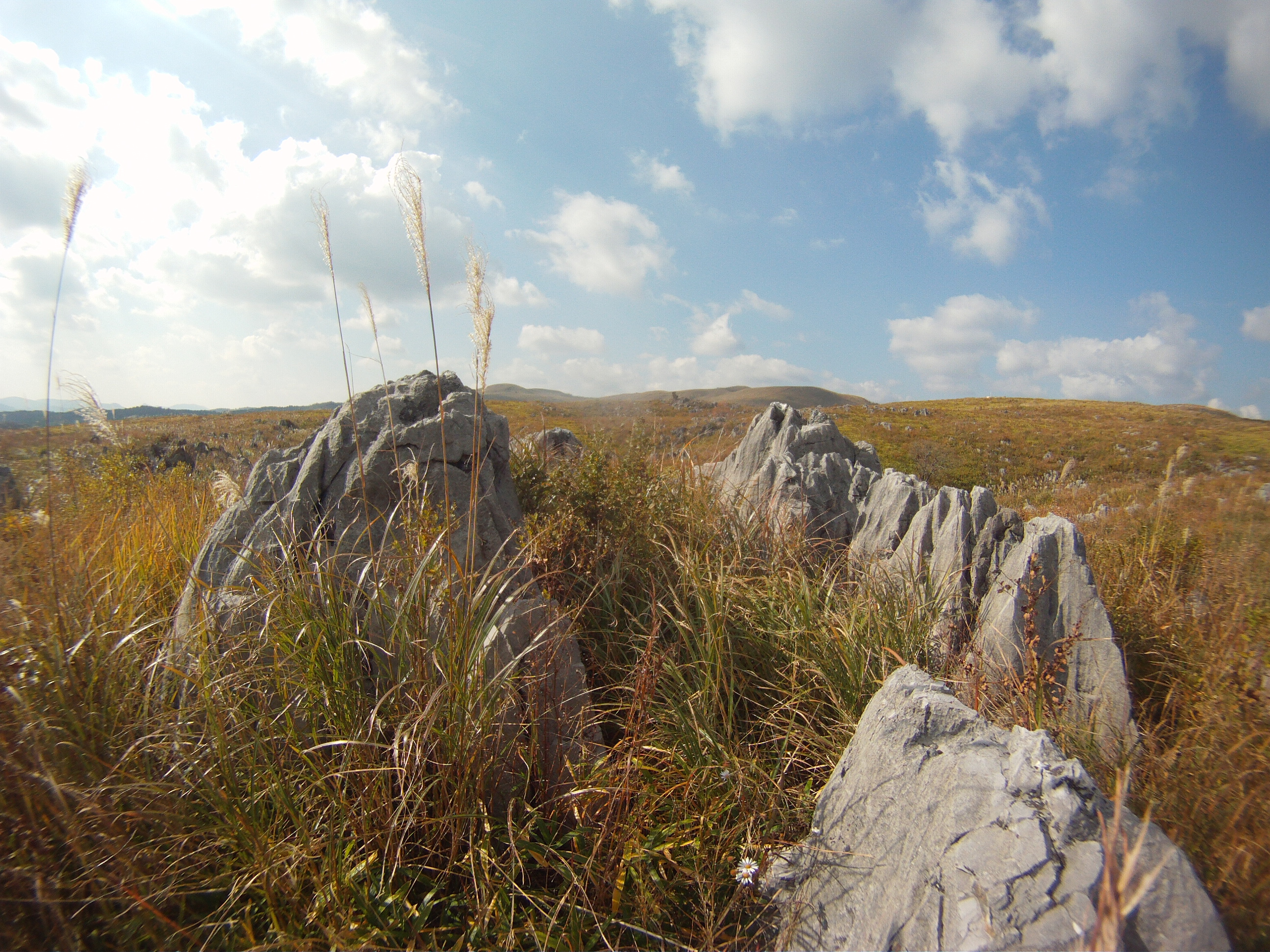
Limestone plains of Akiyoshidai

Extremely tasteful sign found on the hiking trail at Akiyoshidai
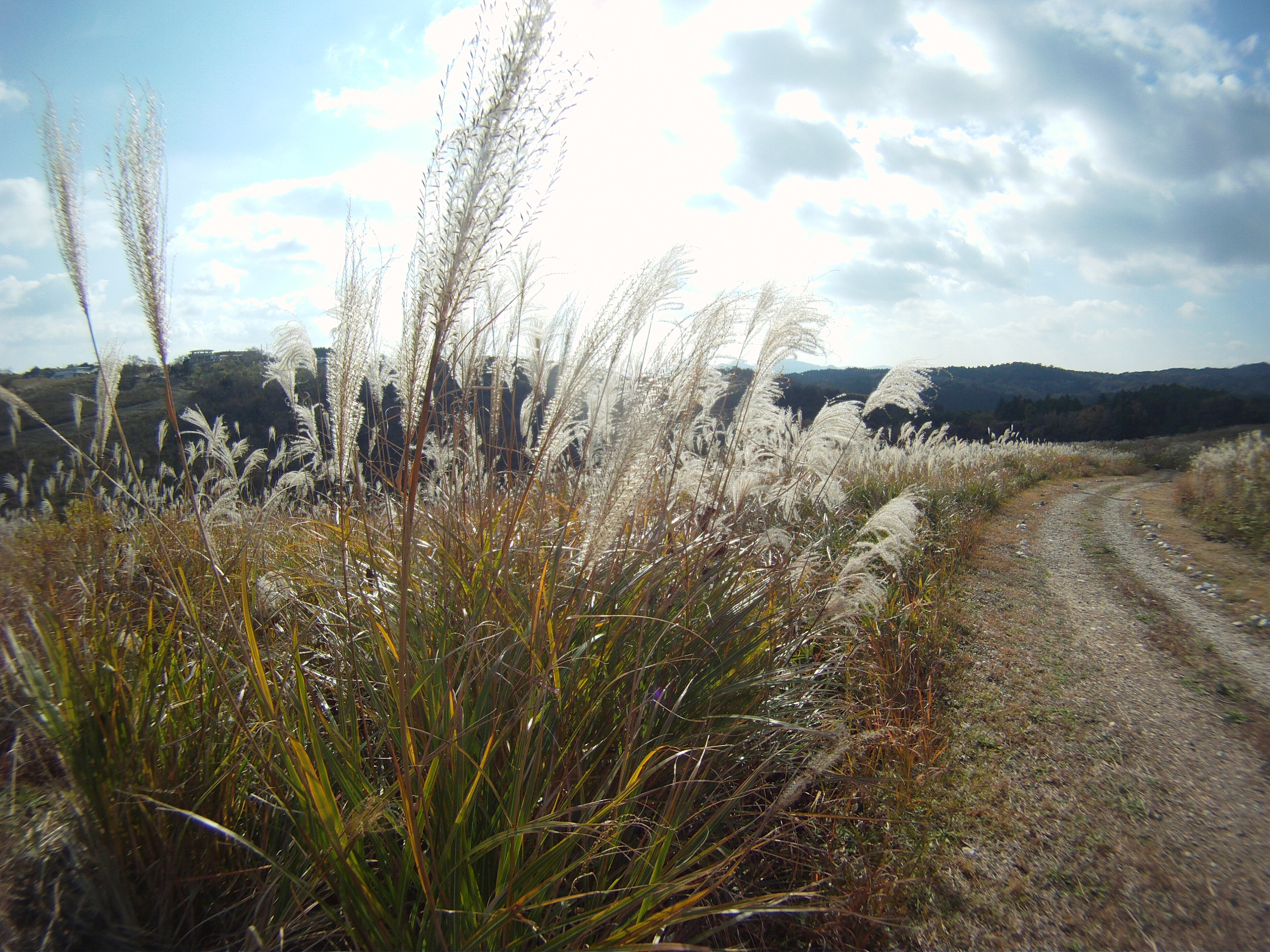
not a bad country road for riding
Besides having no litter, there are literally no trash cans. “Trash” is a word that belongs to the developing world and to us in west, but in Japan all discarded items have their place; plastics, compostables, combustibles, recyclables, etc. Rubbish bins are segregated by material, and I have often had to carry around different forms of waste until finding the right place to dispose of it. In America we generally only have two bins; trash and recycling and most of the country can’t even get this right. I can’t count the amount of times in America that I have seen all sorts of materials dumped in to recycling bins.

Lot of a few hundred bikes supplied to employees at a steel factory, Kitakyushu

Walking to the shrine, Fukuoka
Similar to Korea there is very little confrontation but I have found it very obvious as to what is considered “right and wrong behavior”. Since arriving I have broken the law many times (mostly at stop lights) and I often receive the look of shame. Nothing will be verbalized but you can quickly tell by the look that you are doing something that is considered wrong. It can best be described as a look that says “your parents didn’t teach you that what you are doing is wrong”. The look coupled with the fact that no one else breaks the rules has a drastic effect, and I will often now just wait for the signal to turn green.

Lime stone ore in Akiyoshido cave
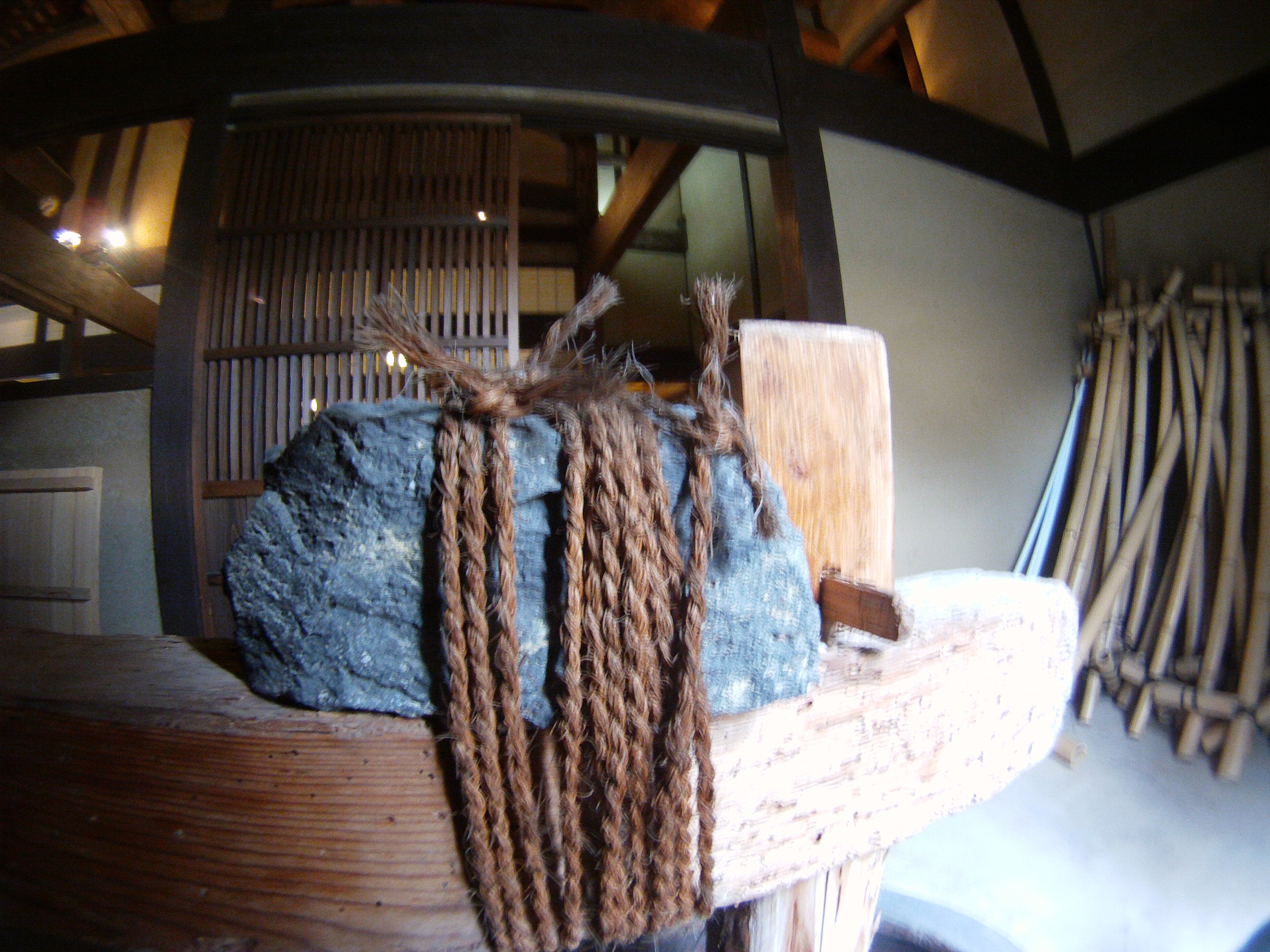
Old fashioned grain grinder found in village near Hagi
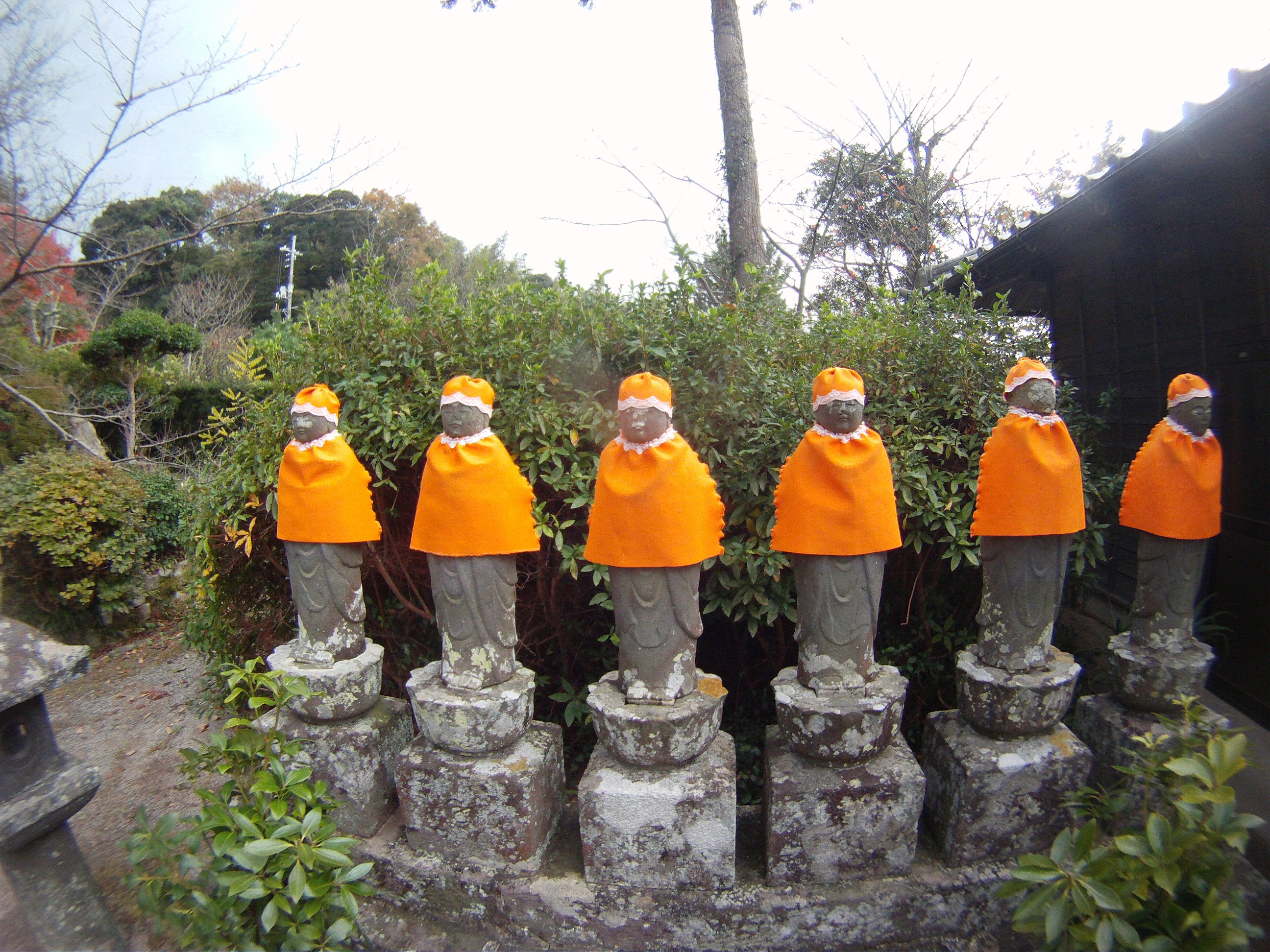
Jizzo, Bodhisattva statues dressed for the winter
Shopping is also an interesting experienced where one can literally enter and exit a store without paying. In grocery and large department stores the emergency exit in the rear of the store is often times another entrance with no employees or alarms to keep one from stealing. In parking lots discounted items are often displayed on large tables where items could easily vanish unnoticed. In the countryside the honor system is in full swing with unmanned fruit stands selling overly priced super fruits (extremely large apples and oranges) with yen collected in plastic jars, sometimes containing up to $100 dollars’ worth. As a boy my parents would always keep a jar full of money on the counter which was used for errands or trips to the grocery store. This seems to be very similar to how the system works over here; where trust is not an issue and there is more responsibility on the individual.

Royal cemetery behind Toko-ji temple Hagi

Wooden sliding glass doors


Sunset Hagi Castle, Sea of Japan
At first it was quite shocking, because I have not felt this way since leaving home. It is completely opposite western culture; where we need locked doors or policemen to stop us from breaking the law. Here everyone already knows what’s right and wrong.
So during my stay in Japan I will often have to remind myself not to be so “American” which will mean the following;
1. Don’t ride on the right side of the road (traffic drives on the left like India, Britain and France)
2. Remember all the lessons my parents taught me as a child.

Everyone is polite and respectful until discount sushi time. 5 pm at supermarket everyone jams and grabs 1/2 priced sushi

Cycling through Kanmon Tunnel connecting Kyushu to Honshu
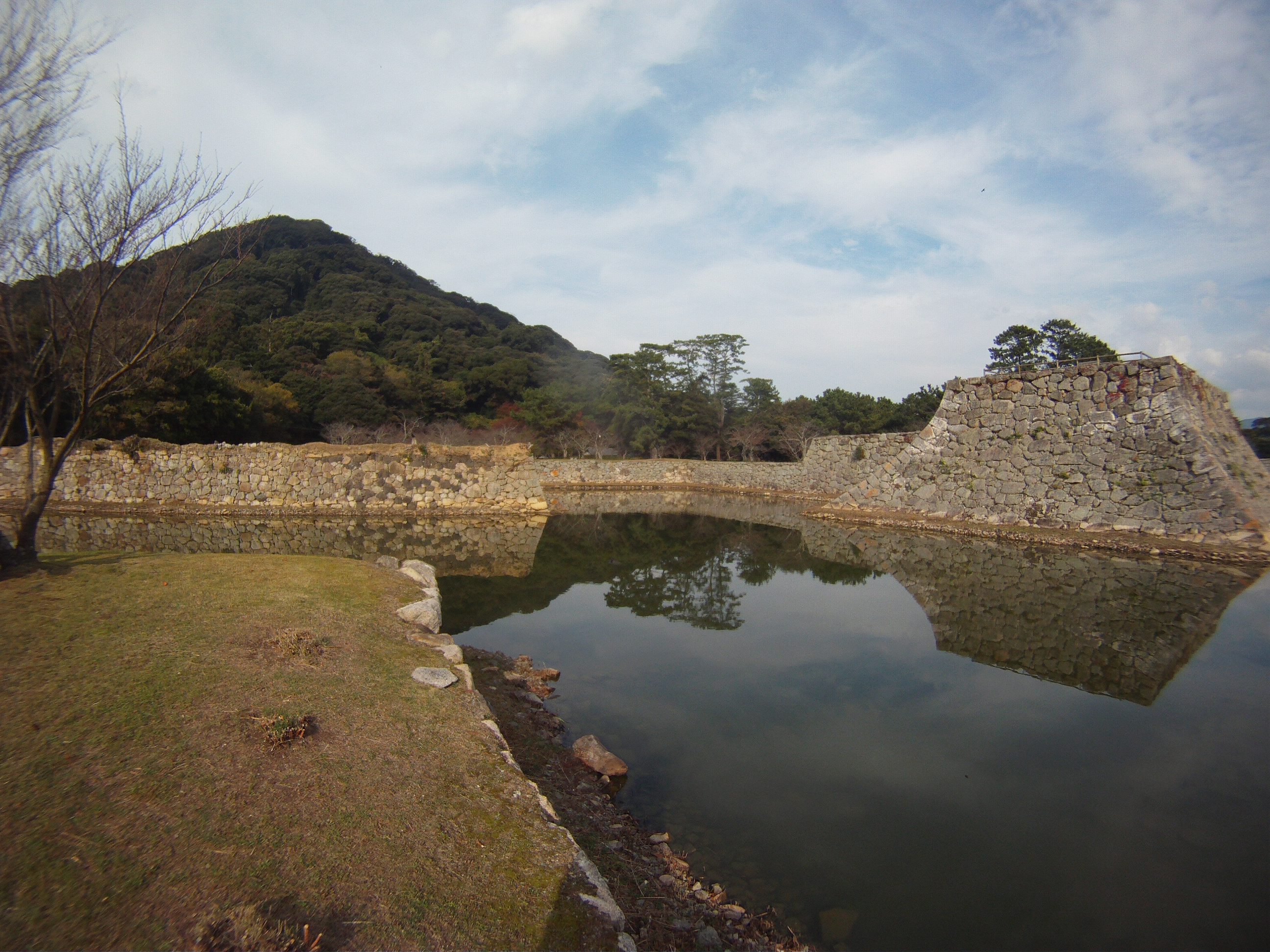
Moat at Hagi castle
Heading now towards Hiroshima, looking forward to visiting ground zero and seeing the peace memorial museum.
Touch base again soon!

Night views of Gyeongju
I really lucked out on boat last night! Trying to find the correct terminal to check Gabriella, I ran into the owner of a limousine service who bought me dinner and upgraded my ticket to first class!! Instead of sleeping in a mixed dorm room with 12 other travelers I had a large room with a double bed, small kitchenette, T.V and bathroom all to myself. Unfortunately the journey was only a few hours, making it really difficult to leave the comfort of the suite for the cold, rainy Fukuoka morning.

Setting up camp at the ferry terminal in Korea
My plans for visiting the beautiful Korean island of Jeju changed when I noticed that November is quickly coming to an end, leaving me with little over a month before heading back to the states for the holidays. Korea, besides being one of the most populated countries in the world, was especially bike friendly! Bike paths can literally be found everywhere and when pedaling on the highways vehicles usually pass with care. The traffic light system is also designed in a (rather annoying) overly cautious manner where 5 seconds will pass between a red light and the green! Making maters worse intersections are usually devoid of sensors, which leads to huge traffic jams during rush hour. During this time I see many vehicles do what I call a “Korean U-Turn” where drivers will often turn around near the intersection at a red light and try to drive into nearby drive way to avoid waiting at the signal.
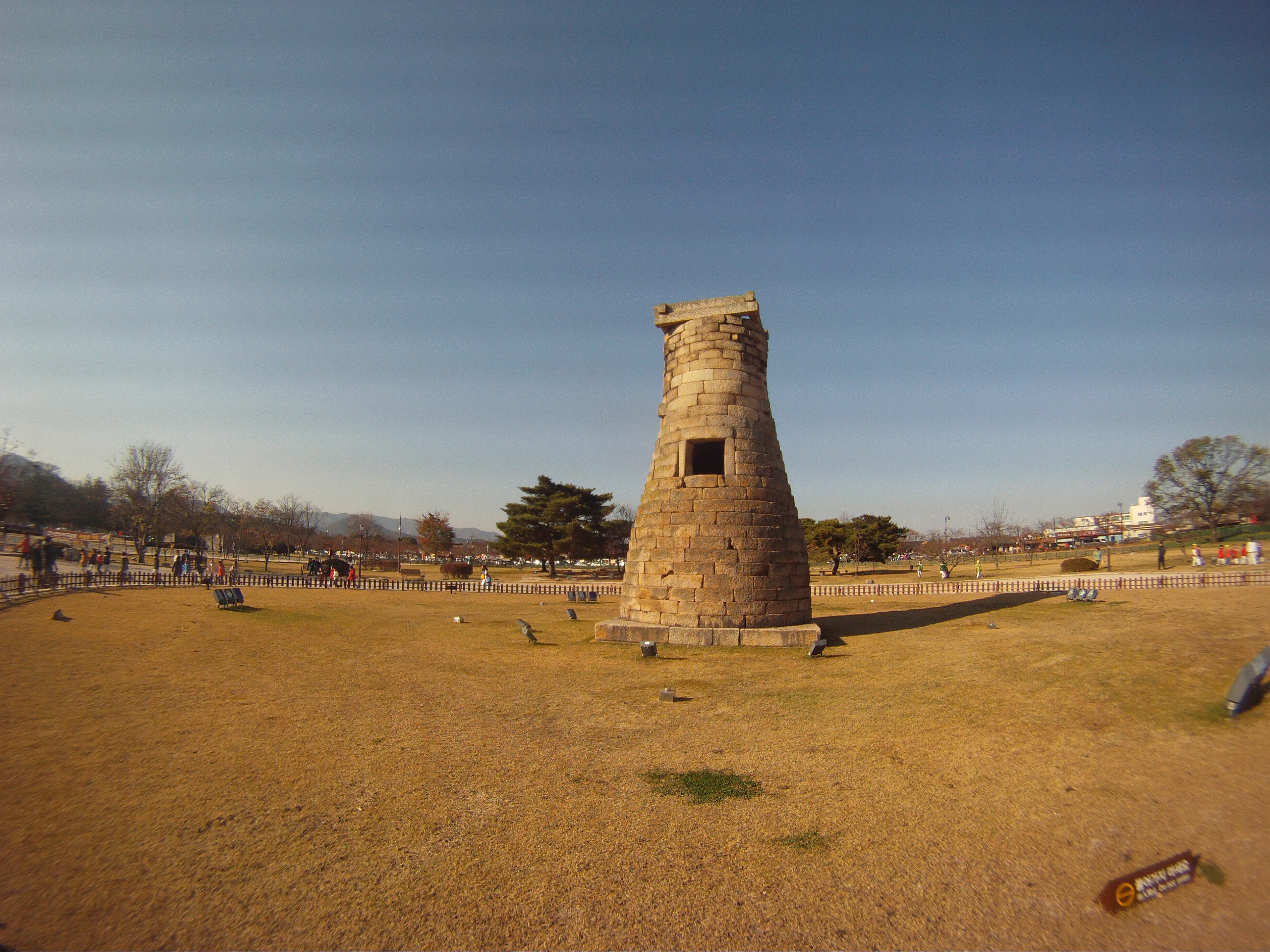
East Asia’s oldest observatory
The mix of people and openness of elders was also quite interesting, especially in the countryside where I was often lectured and sometimes even scolded by elderly women for the following:
1. Not wearing warm enough footwear/clothes. (Sandals are a definite no-no)
2. Camping in the wilderness (they said this will make my mother and father worry)
3. Not eating the correct food (“kimchi and noodles everyday will make you weak and eventually sick”)
Luckily my Korean and their English was extremely limited so the top three pretty much sum up the conversations of many encounters.
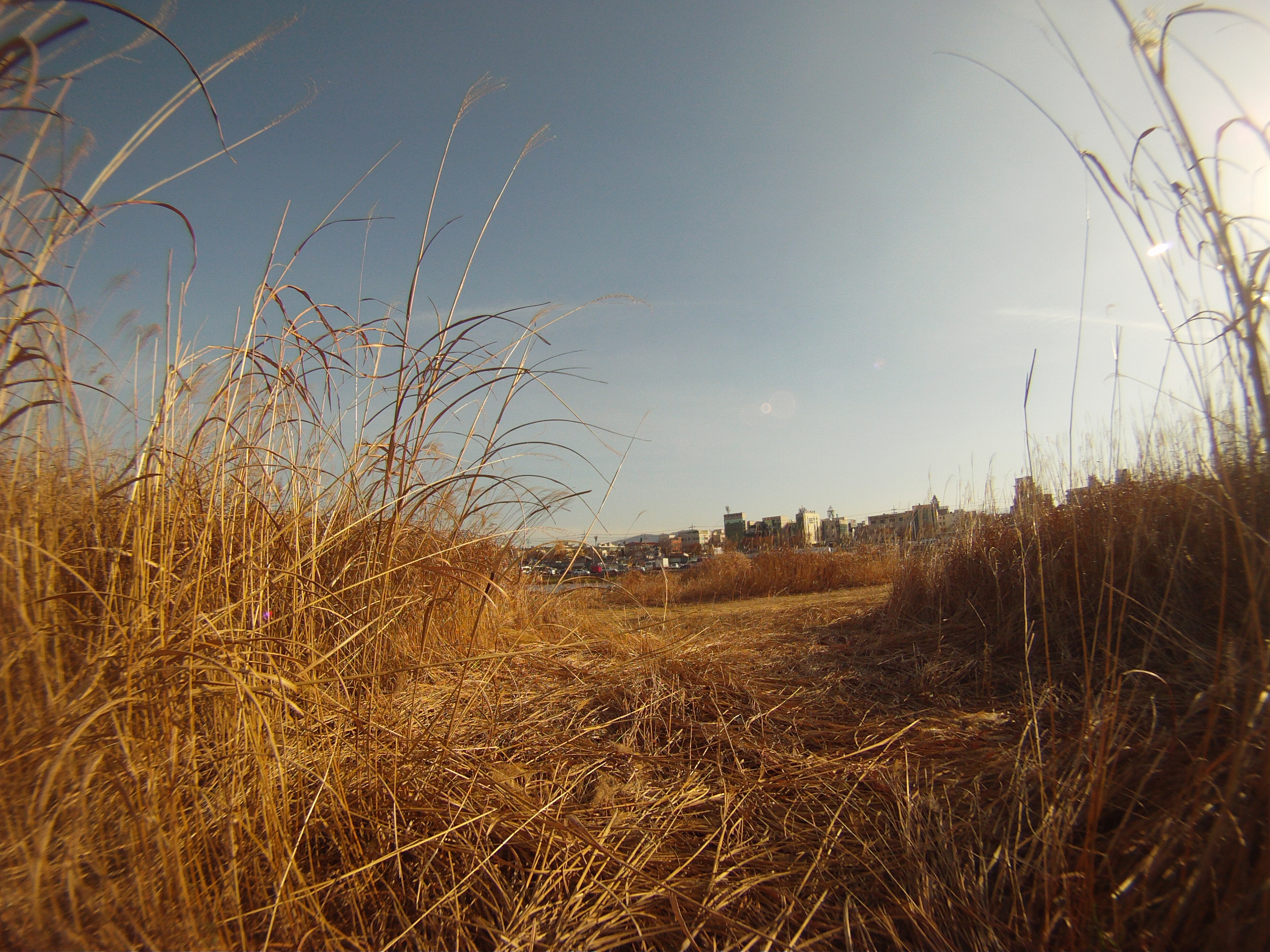
Morning view from my wild campsite
While pedaling through the more inhabited regions I would often set up office at a Starbucks or McDonald’s, which always has free internet and unlimited hot water. The Starbucks’ in Korea almost always take up two floors. The bottom floor is usually empty, and at first you think that you are the only customer. That is until you go up the stairs and see that almost every seat is filled with Koreans on their laptops or cellphones. No one speaks and it’s almost as if you are on the silent floor at the local library.

A very early Korean Pagoda
I must say though that, one could visit Korea solely on the purpose of frequenting the public bath houses (Jim Jill Bang). I stayed at a few of these during my visit, usually pedaling into the city in the late afternoon and asking a local to point me in the direction, (Jim Jill Bang Odi Soy Yo). Almost every major city will have one and on all three occasions I have never seen another foreigner inside. It usually costs less than $10 to; bath using 3 different shower set ups (standing, siting and tub), soak in 3 different pools (very hot, warm and cold), sauna, steam and sleep in a warm wooden room near a wood burning stove. Home cooked food is usually available, but sleeping can sometimes be difficult as cellphones frequently ring at odd hours during the night.

Ancient Confucian academy Gyeongju
Before pedaling to Busan (where I took the ferry to Fukuoka) I spent 4 days exploring the ancient Korean capital of Gyeongju. During Korea’s dynastic period, Gyeongju was the main city in Korea, with 5 different Dynasties calling it their capital. Throughout the city there are hundreds of landmarks ranging from tombs to temples to ancient villages. There are also lots of examples of early works of Buddhist art fabricated at the time when Buddhism was spread to Korea by the Chinese Tang dynasty (early 7th century C.E). The Koreans at this time also adopted Confucianism as well as the Tang Clothing style. Many of the giant tombs in Gyeongju contain Chinese board games, pottery and jewelry.

Tang clothes style adopted by the Koreans in the early 7th century C.E
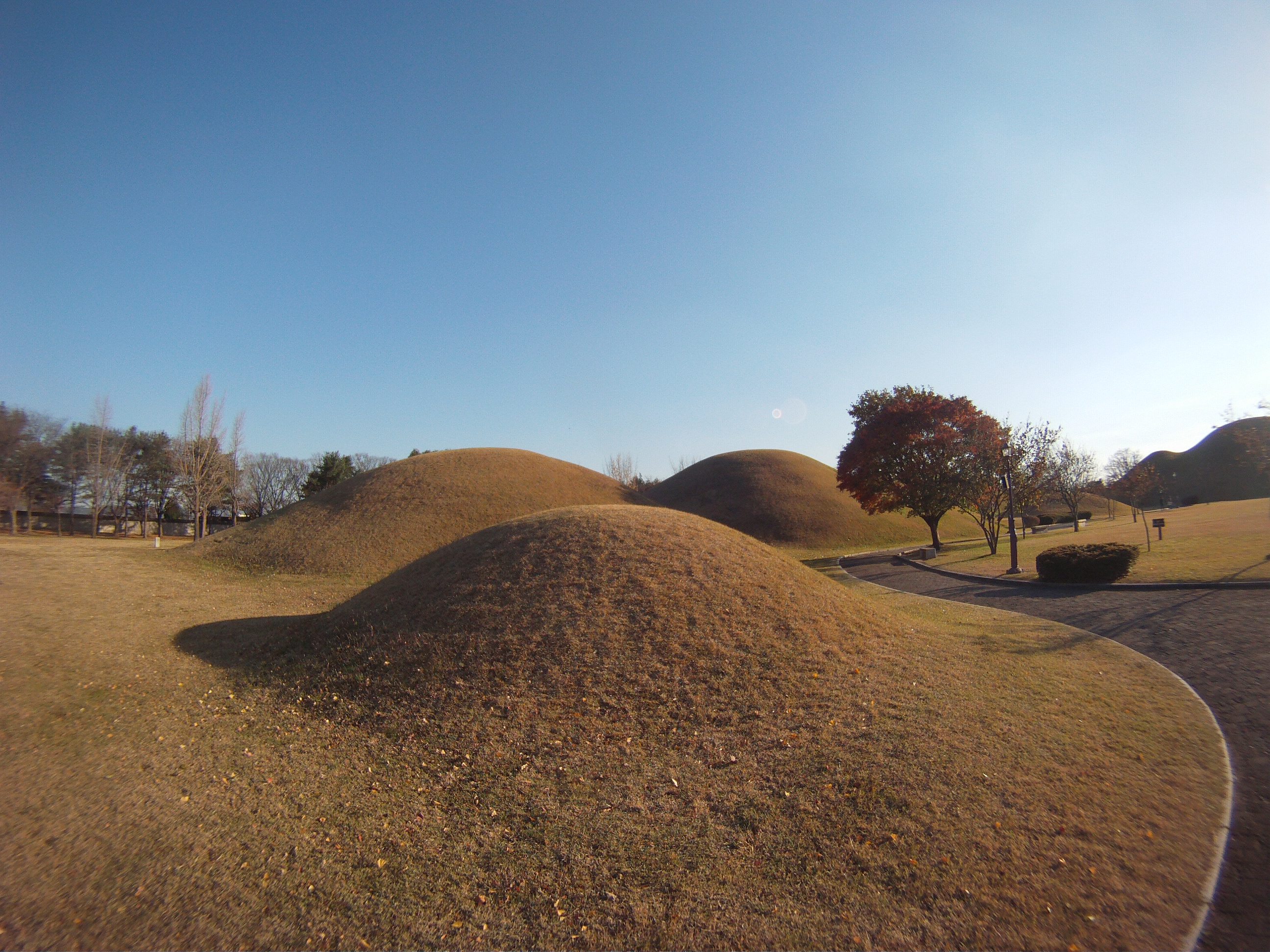
Royalty were buried inside these mounds of dirt

Gyeongju bridge day
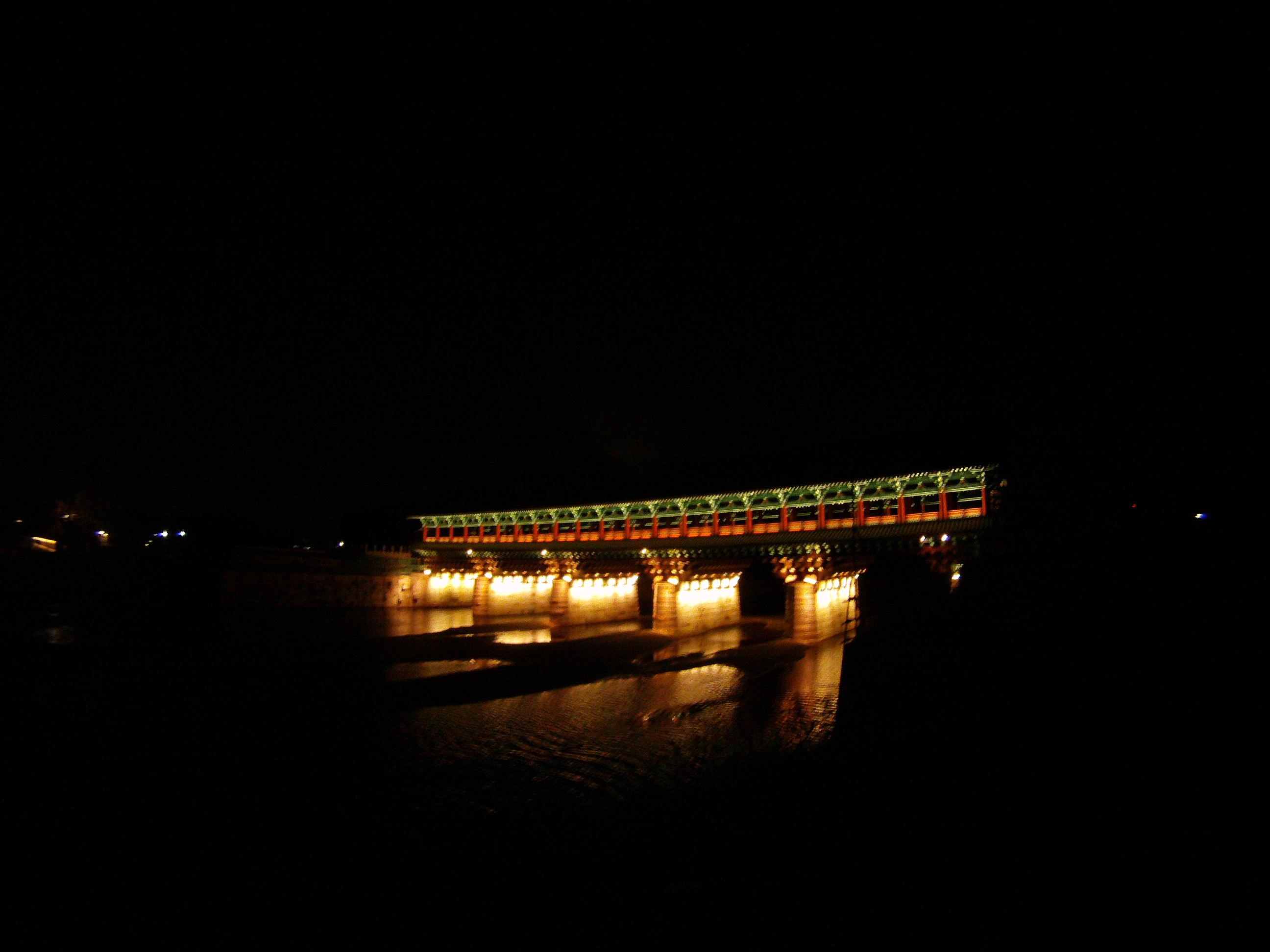
Night
On my last day in the ancient city, I made friends with a “Miss Kim“, a Korean lady in her 80’s who claimed the title of Kimchi master! This is a pretty bold statement in a land of cabbage but I took her word for it as she gave me a tour of the different types brewing in large plastic tubs in her yard. Like my grandparents in Los Angeles (who always adopt and use the latest piece of technology) she boasted that she gave up using the classic black ceramic kimchi pots because she wanted to introduce a new style of fast/flash fermenting, and plastic tubs warmed faster during the day. I tried all different flavors and even drank her home-brewed soy sauce and miso paste.
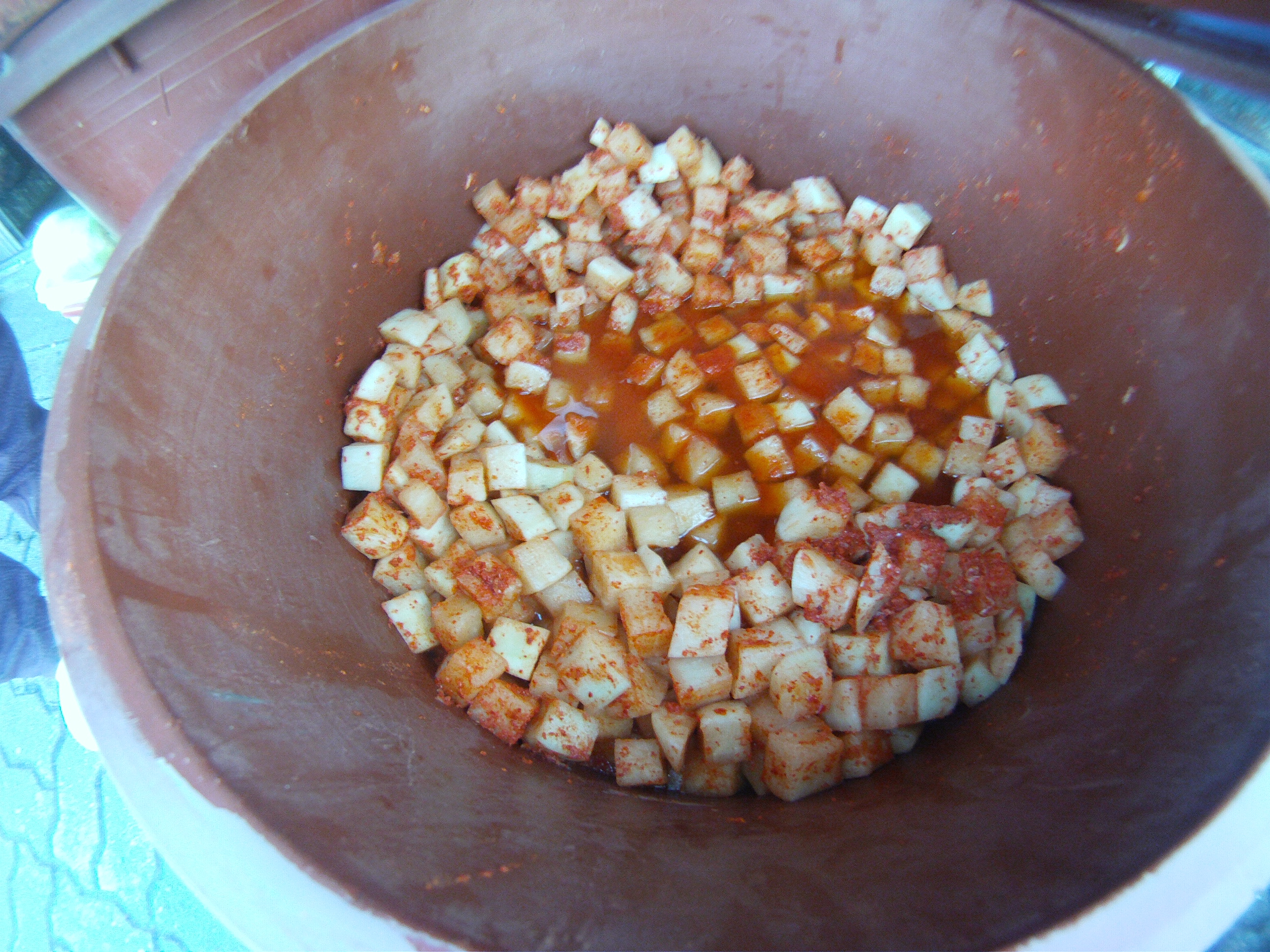
Chopped daikon kimchi

Fermenting soy beans
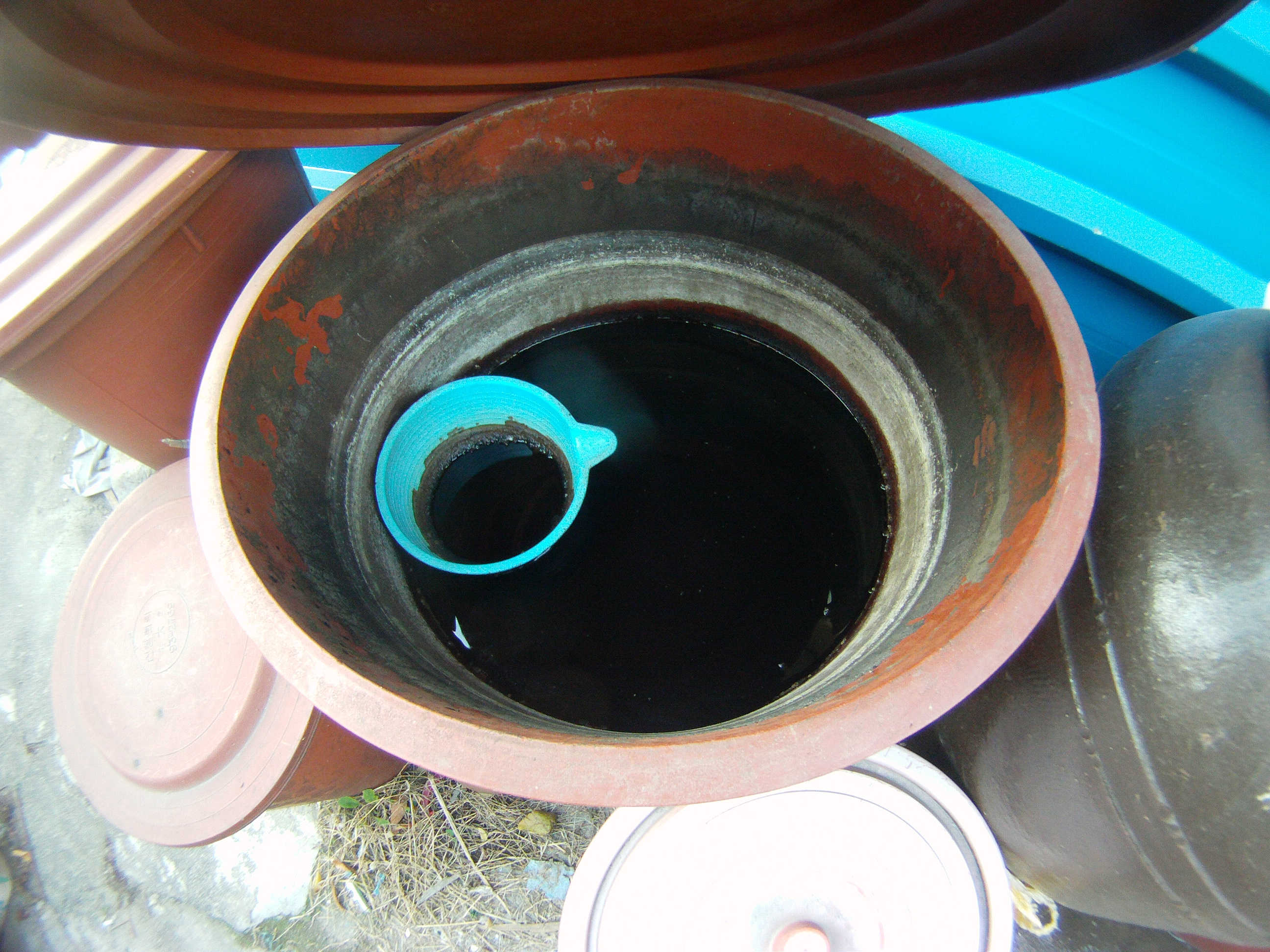
A few months later Soy Sauce

Whole Daikon soaking in salt water
I got totally lost following a bike path headed for Busan and ended up in the center of one of Korea’s largest cities, Ulsan. Aimlessly, I pedaled for close to 45 minutes, taking steep walkways to underground shopping malls and pedaling roads built on bridges that seemed to lead to the heavens. As it got dark, I gave up and decided to fill up my stove and cook dinner in a park. My luck quickly changed at the gas station where I befriended an employee who gave me fruit, crackers, vitamin drinks, gloves and 20,000 won ($20).

Old style Kimchi ceramic pots
20,000 won goes fast in a Korean grocery, store especially when you buy foreign goods! For the first time in a very long time I bought peanut butter, jelly and gummy bears! I was so excited that I woke up several times at night to eat a few bites of peanut butter, and chew on a gummy or two.

Overall I would have to say that the same mechanism that led me like Korea, has also made me dislike it. Many people seem to be stuck in social constructed norms, where situations that don’t fit in with their daily routine are often ignored. This can be said for many countries but it was very noticeable in Korea. I found that many people will ignore me when I ask for directions on the street. If I speak to them in Korean or pronounce a destination in Korean they will tell me that they don’t speak English and walk away. It seems that they would rather ignore than to confront a new situation. Being ignored is great when you are camping in the central park but when you are lost it’s frustrating.
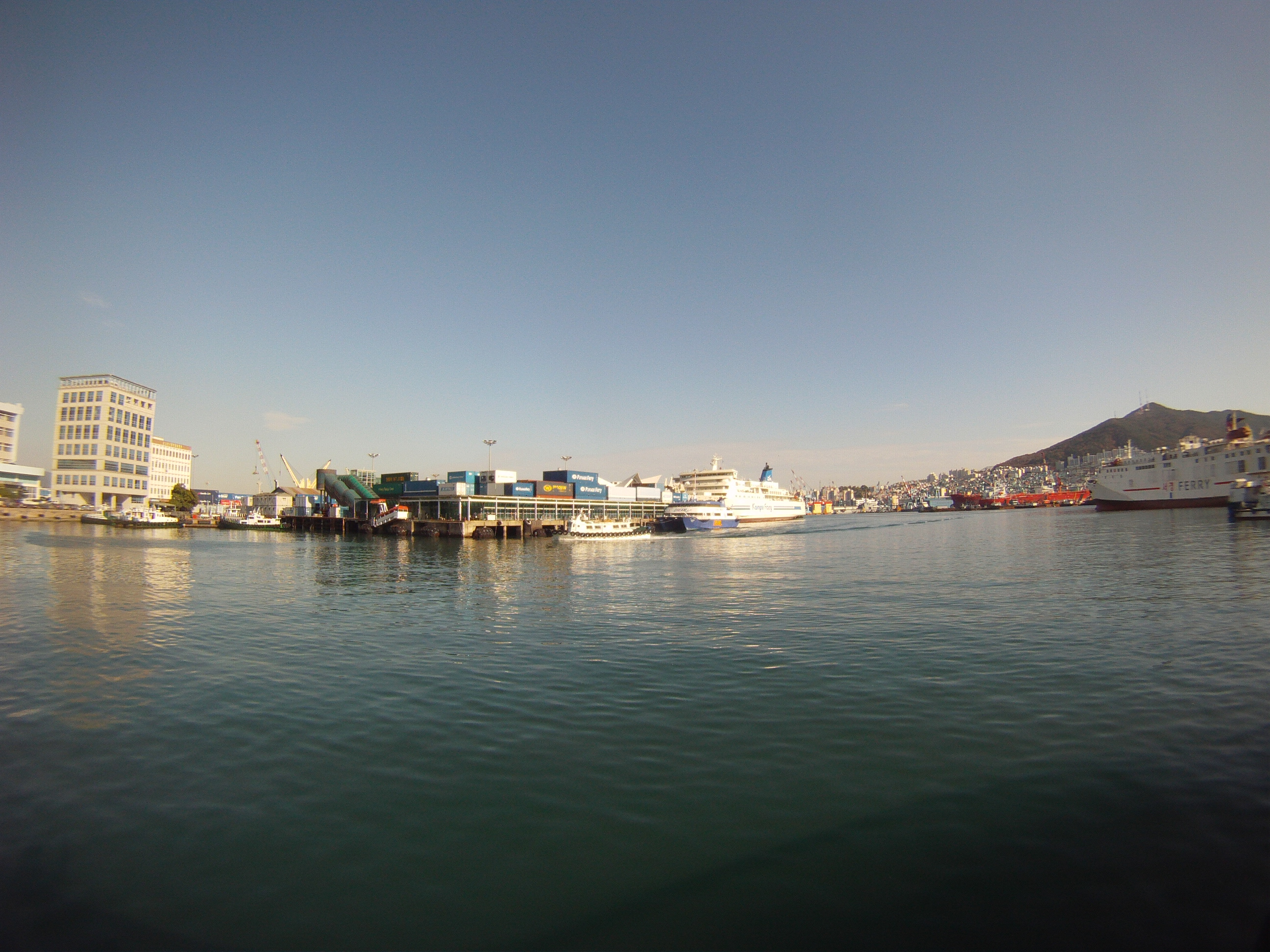
Busan port, so long Korea
Even with these constrictions I met many great and hospitable people, and hold a high regard for Korea. It was an interesting experience traveling there, and I am interested in how Japan will compare.

Confucian temple Gyeongju
Time to find a place to set up my tent in the busy city of Fukuoka! I looked at a few hostels but they are all located up several floors in large buildings with small stair cases/elevators and it just too much work to carry Gaby all the way up to a cramped dorm room for one night. Prices are also pretty steep here so I rather save a few Yen for more peanut butter and gummies.
-Julian
 Last trip with Baba